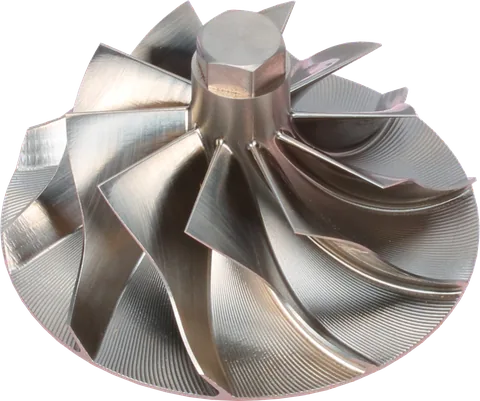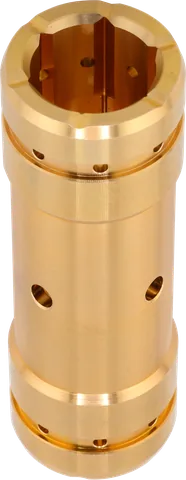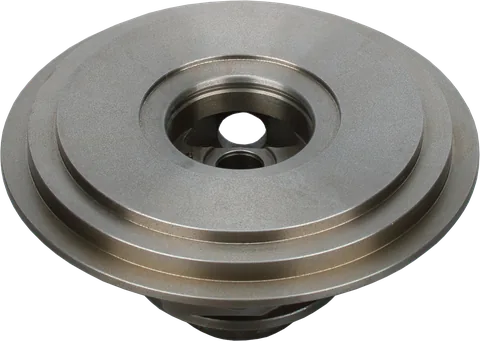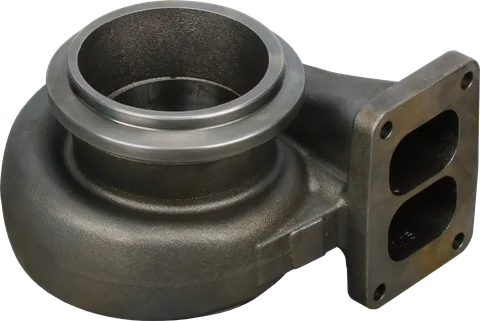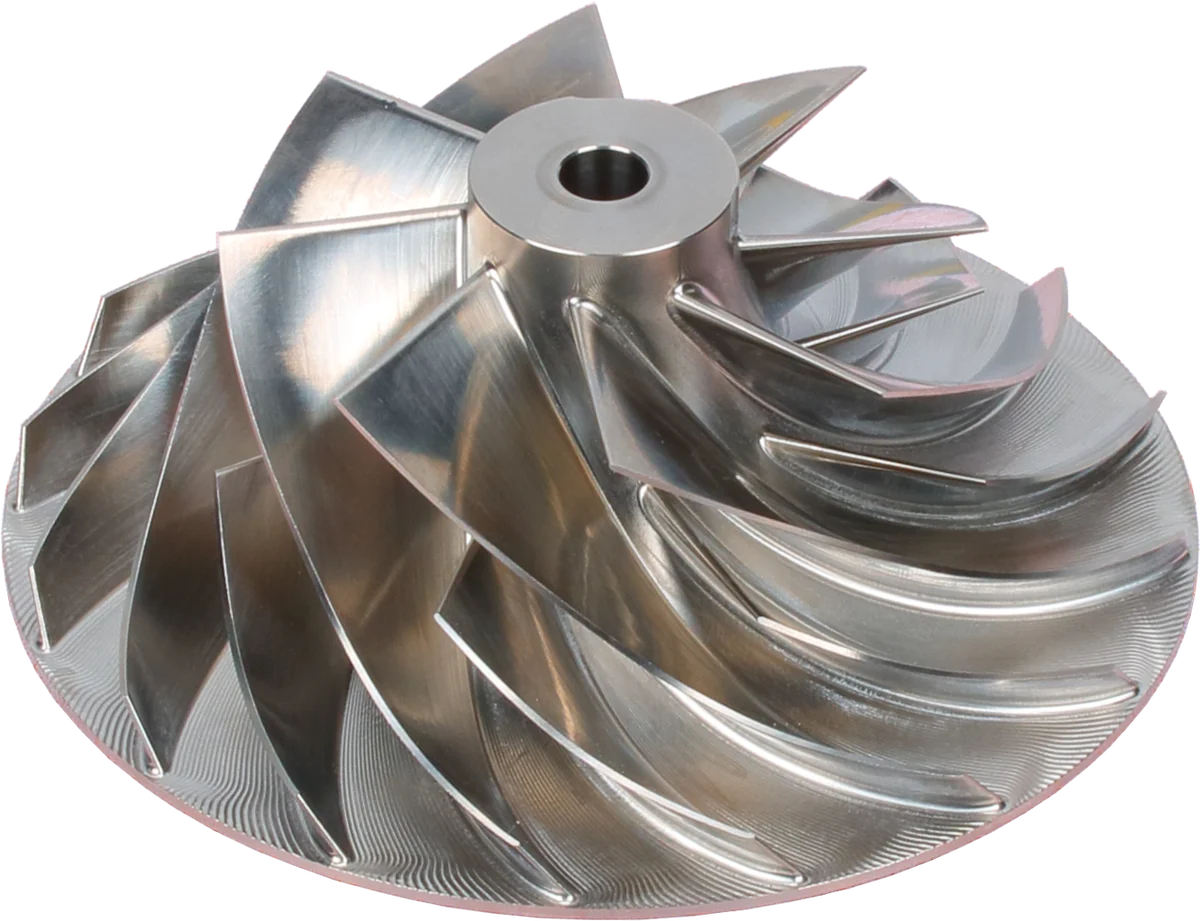
For a stock work truck, a proven cast replacement may be exactly right. For equipment that repeatedly loads and unloads, a properly engineered forged wheel may offer useful fatigue margin. The practical differences in billet vs cast turbocharger wheels come from the material, manufacturing process, and finished design. A machined surface alone tells you little about suitability.
What compressor wheels are made of
Most diesel turbocharger compressor wheels use heat-treated aluminum alloys. Aluminum's low density helps control centrifugal loading, while suitable alloys provide useful strength and can be manufactured accurately at a practical cost.
The wheel accelerates incoming air, and the surrounding compressor passages help turn that velocity into pressure. Compressing air also heats it. Material selection must therefore account for rotational stress, operating temperature, and repeated loading.
For very high pressure ratios and severe compressor temperature duty, some turbochargers use titanium alloys. These provide strength and temperature capability where aluminum becomes limiting, but add cost and mass. Titanium belongs in an engineered rotor and housing combination; it is not a routine substitute during an aluminum-wheel rebuild.
The compressor wheel handles intake air. Its temperature requirements differ from those of the turbine wheel exposed to exhaust.
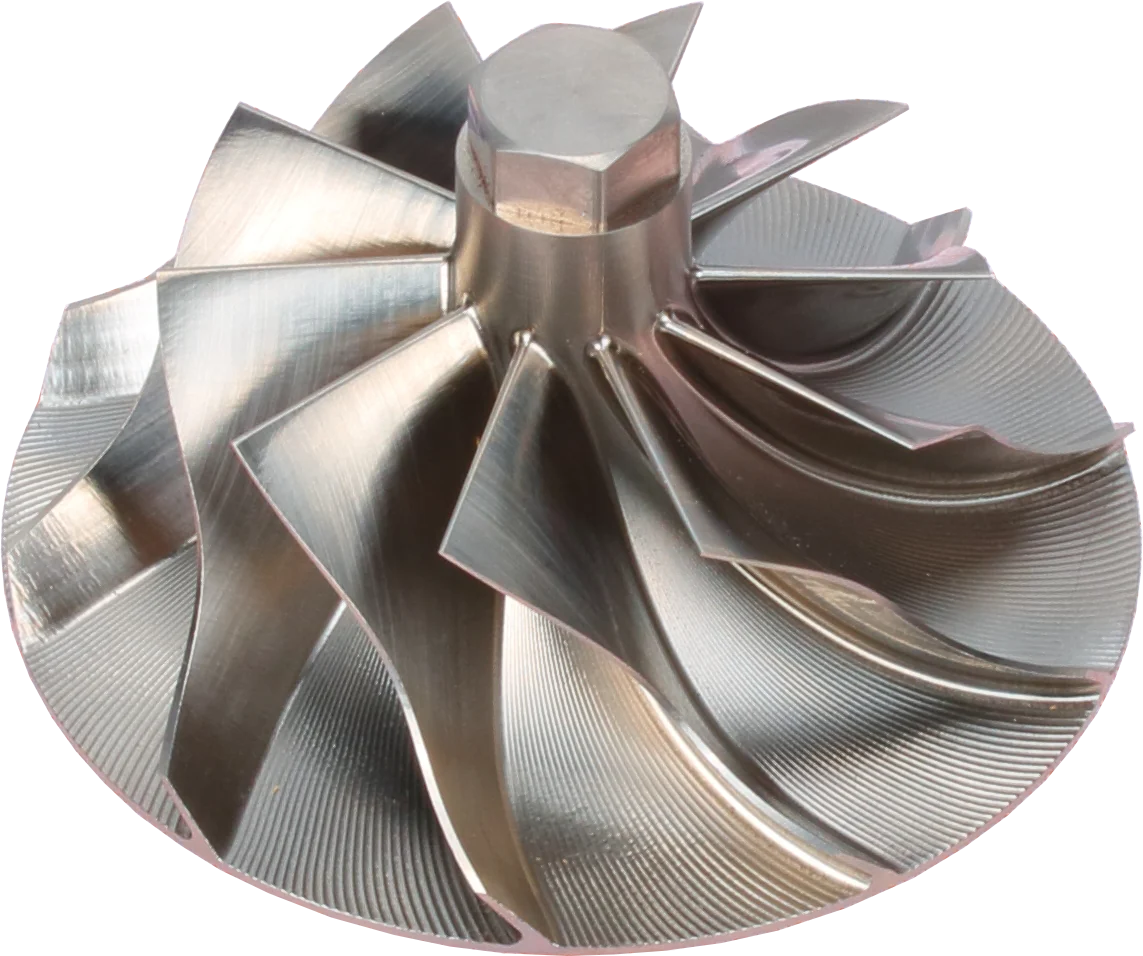
Blades: inspect for chips, bends and contact marks.
Hub: part of the balanced rotating assembly.
Outer blade tips: check for housing rub.
Product photograph from 2026. Numbers identify the features explained below.
How casting shapes the standard wheel
A cast aluminum compressor wheel starts as molten alloy that solidifies in a mold. Precision casting routes include plaster molds formed around removable rubber patterns and investment-type methods. These allow manufacturers to form curved, overlapping blades and complex passages.
After casting and heat treatment, mounting surfaces and other critical features are machined, and the wheel is balanced.
Casting provides an economical way to produce established wheel designs in volume. However, molten metal must fill thin passages and solidify consistently. Those requirements constrain blade thickness and geometry. Cast designs often use thicker blade sections than comparable forged-milled designs.
Potential defects include gas pores, shrinkage voids, and trapped inclusions. A defect in a highly stressed location can start a fatigue crack.
That does not make every casting defective. Reliable cast wheels depend on controlled production, suitable inspection, and a design that accounts for the material's properties. Many standard diesel applications are well served by that combination.
What a forged, milled wheel changes
The upgrade commonly intended by “billet compressor wheel” is a forged milled compressor wheel. It is machined from forged aluminum bar stock, typically using a 5-axis CNC machine to cut the hub, blades, and air passages.
Proper forging can produce a finer, more controlled grain structure and reduce casting-type porosity. The resulting fatigue properties still depend on alloy selection, stock quality, and heat treatment. Machining creates the shape; it does not create the forged grain structure.
Machining also frees the designer from some mold-filling constraints. It can support thinner blades and more control over blade thickness, curvature, and hub shape. Tool access, strength, and vibration behavior still impose limits.
These wheels often cost more as replacement parts because of the stock, machining, inspection, and production volume involved. Paying more is worthwhile when those differences deliver a documented benefit for the application.
The billet vs cast compressor wheel comparison
| Factor | Cast wheel | Forged-milled wheel |
|---|---|---|
| Starting material | Alloy solidified in a shaped mold | Forged stock machined into the finished wheel |
| Internal structure | Depends strongly on casting and heat-treatment control | Can offer more consistent structure with fewer casting-type voids |
| Blade geometry | Mold filling and solidification constrain thin sections | Greater freedom to machine thin, complex sections |
| Fatigue potential | Suitable for its validated operating duty | Can provide additional margin with appropriate material and design |
| Temperature capability | Depends on alloy, heat treatment, and loading | May improve with a suitable alloy; requires a specific rating |
| Purchase price | Often lower for standard replacements | Often higher for a documented upgrade |
| Performance | Determined by the complete compressor design | Also determined by the complete compressor design |
For commercial service, the billet vs cast compressor wheel comparison becomes useful when the supplier connects these differences to operating limits and durability evidence for your application.
What matters during diesel service
Fatigue is often the strongest reason to consider forged billet turbocharger wheels for diesel engines. Every substantial change in wheel speed changes centrifugal stress. Repeated acceleration and unloading can gradually initiate and grow cracks; vibration adds another fatigue demand.
A delivery truck, transit bus, or loader can experience frequent load changes. A generator may spend longer periods at a steadier load. Both need durable wheels, but their combinations of cycling, temperature, and operating hours differ.
A suitable forged alloy can also provide better strength retention at elevated temperatures than a common cast alloy. That can improve durability margin during sustained hot operation. However, compressor outlet air temperature is not identical to wheel metal temperature, and “billet” is not a temperature specification.
Keep three claims in perspective:
- More power requires evidence. Thinner blades may allow useful design changes, but manufacturing method alone does not establish airflow, efficiency, or horsepower.
- Longer fatigue life is application dependent. Better material properties help only when wheel geometry, surface condition, attachment, and operating loads are also suitable.
- More temperature margin has limits. Use the rating for the actual alloy and wheel design. A forged wheel does not authorize operation beyond the turbocharger's speed or temperature limits.
If a previous wheel failed, identify the cause before selecting another material. Overspeed, foreign-object damage, rubbing, or incorrect assembly can defeat either construction. Changing wheel material does not correct those conditions.
Boreless vs through-bore turbocharger wheels
A through-bore wheel has a central hole through which the shaft passes. A boreless design avoids a hole running completely through the wheel and uses a different attachment arrangement.
Removing the through-hole can reduce a stress concentration in the hub and improve fatigue performance. The benefit depends on the surrounding geometry and how loads pass through the attachment.
“Boreless” and “billet” describe different features. Neither establishes compatibility or a safe operating speed by itself. Match the wheel to the specified shaft, backplate, retaining arrangement, and assembly procedure. Similar outside dimensions do not make different hub designs interchangeable.
Quality checks before installation
Material claims need support from manufacturing and inspection records. A good-looking wheel can still have the wrong blade profile, an unsuitable attachment, or an internal defect.
| Check | What to verify | Why it matters |
|---|---|---|
| Identification | Exact wheel specification and compatible turbo assembly | A broad turbo model designation may cover different configurations |
| Blade profile | Approved contour, thickness, tip geometry, and surface condition | Small geometry differences can affect clearance, loading, and operation |
| Cracks and damage | Blade roots, hub, backface, edges, and bore where present | Cracks, bent blades, and impact damage are reasons to reject the wheel |
| Balance | Component balance and the required rotor or CHRA verification | A balanced loose wheel does not establish acceptable assembled behavior |
| Material quality | Alloy, heat treatment, manufacturing route, and traceability | The word “billet” does not define mechanical properties |
Visual inspection cannot rule out every hidden flaw. Qualified suppliers should have an appropriate inspection and acceptance process, including surface or internal examination where required. Ask what supports the material claim and how questionable parts are rejected.
Before ordering a wheel for a rebuild:
- Confirm inducer and exducer dimensions, wheel height, backface profile, and required clearances.
- Match the shaft interface, bore or thread, retaining arrangement, and rotation.
- Obtain the assembly procedure and operating limits for that exact turbocharger.
- Confirm the required balance verification for the rebuilt rotor or CHRA.
Use OEM service data or the applicable manufacturer's specifications for measurements, attachment procedures, and acceptance limits. Avoid applying a generic clearance or tightening value to a different assembly.
Should I buy billet turbocharger wheels?
Start with the turbocharger part number, engine rating, and actual duty cycle. Then compare complete, compatible options rather than shopping by wheel appearance.
| Your situation | Sensible starting choice | Evidence to request |
|---|---|---|
| Standard truck or farm engine at its original rating | Proven cast replacement or complete CHRA | Exact application match and dependable manufacturing quality |
| Bus, loader, or other equipment with frequent load changes | Evaluate a validated forged-milled option | Fatigue suitability for the intended speed and load cycling |
| Marine engine or genset under sustained heavy load | Choose by approved operating conditions | Material specification and temperature limits |
| Pickup or commercial engine with increased output | Select a properly matched turbo assembly | Supported airflow, speed limits, and control compatibility |
| Repeated wheel damage or an unexplained failure | Diagnose the failure before changing specification | Evidence identifying the cause and the required correction |
A higher-priced forged wheel can make sense when the application benefits from its validated fatigue or temperature capability. For an engine operating comfortably within its original specification, a quality cast replacement can remain the practical choice.
Also compare the installed repair cost. A wheel requiring different housings, machining, or additional development may be poor value beside a compatible complete turbocharger or CHRA.
Parts for this guide
 KTR90-2 CCW Compressor Wheel for KOMATSU SAA6D125E-3 Turbocharger
KTR90-2 CCW
Compressor wheel
In Stock
 314523 CW Turbocharger Compressor Wheel Replacement for Caterpillar 3116T
314523 CW
Compressor wheel
In Stock
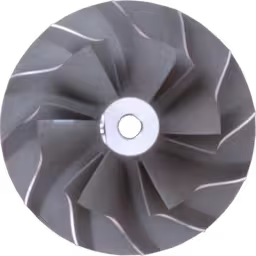 812971-0002 CW Compressor Wheel for Mazda BT-50 2.2 TDCi
FOR 812971-0002 CW
Compressor wheel
In Stock
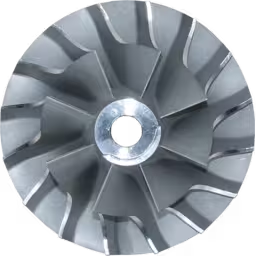 3523202 CW Compressor Wheel for IVECO 4LGK Turbocharger
3523202 CW
Compressor wheel
On backorder — orders accepted
Common Questions
Will a billet wheel make more horsepower?
Only if its tested design supplies useful airflow within the engine's operating limits and the rest of the system supports it. Manufacturing method alone does not establish a power gain.
Is a cast compressor wheel reliable for daily diesel work?
Yes. A correctly specified, well-made cast wheel can provide dependable service within its intended duty cycle. Investigate repeated failures before assuming the manufacturing method is the problem.
Does billet always mean forged?
No. Billet describes the stock being machined; it does not prove that the stock was forged. Ask the supplier to identify the alloy, forging process, heat treatment, and application rating.
Can I install a billet wheel in my existing turbocharger?
Only when it is a verified match for that exact assembly. Outside diameter alone does not confirm blade clearance, backplate compatibility, attachment, or operating limits. The rebuilt rotor or CHRA also needs the specified balance verification.
Can a billet wheel handle hotter discharge air?
A suitable forged alloy and validated design may provide more temperature margin than a standard casting. There is no universal billet temperature rating. Use limits for the exact wheel and turbocharger.
How should I settle the billet vs cast compressor wheel choice?
Choose the correctly specified replacement with evidence supporting your duty cycle. A proven cast assembly is sensible for standard service; a documented forged option can justify its price when fatigue or temperature margin matters.
How does forging strengthen turbocharger wheels?
Proper forging can refine grain structure and reduce casting-type porosity. Alloy, stock quality, and heat treatment still matter.
Why do billet turbocharger wheels fail?
Overspeed, foreign-object damage, rubbing, or incorrect assembly can defeat either construction.
Contact LeadTurbo with your turbocharger part number, engine model, and typical duty cycle for help choosing a replacement turbocharger, CHRA, or compressor wheel.