For a diesel mechanic, apprentice or shop owner, the useful question is what the training prepares someone to do. Installing a complete turbo, diagnosing a repeat failure and rebuilding a rotating assembly require different capabilities. Choose learning that matches the work, then verify those skills at the bench.
What does turbo certification mean?
There is no single official turbo certification. The phrase usually refers to turbocharger training, but it can also mean a broader trade credential, approval for a vehicle modification, or quality evidence supplied with a rebuilt unit.
Start by asking who issues the document and what it covers. A technician's trade credential, a course completion certificate and a company's quality-system certificate answer different questions. None replaces the service instructions and acceptance criteria for the exact turbo being repaired.
For a workshop, define the job before choosing a course. An installer needs to identify the application and correct the original fault. A rebuilder also needs to qualify reusable parts, control assembly and arrange the required balance verification.
Formal trade credentials: Canada and the United States
Canada: Red Seal
A Red Seal endorsement is a seal on a provincial or territorial trade certificate showing that the holder has the knowledge and skills to practise the trade across Canada. To receive the endorsement, the candidate must pass the Red Seal exam.
Not all trades are Red Seal trades. Those that are include Automotive Service Technician, Heavy Duty Equipment Technician, Truck and Transport Mechanic and Agricultural Equipment Technician.
The Red Seal occupational standard for Automotive Service Technician includes turbocharger systems among the engine systems covered. For the other trades, check that trade's occupational standard. The endorsement covers a trade; it is not a turbocharger-only qualification or evidence of specialist rebuilding experience.
United States: ASE
ASE certification requires passing an ASE test and having relevant hands-on work experience. For repair technicians, the experience requirement is one to three years, depending on the test; formal training can substitute for part of it. Certification must be renewed by retesting every five years.
A9 Light Vehicle Diesel Engines and T2 Diesel Engines for medium/heavy trucks are the diesel-engine tests most relevant to this work. Check ASE's study guides for the current task lists rather than assuming either test establishes specialist turbo rebuilding competence.
For Canadian technicians, ASE accepts a valid provincial automotive trade certificate as evidence for the one- and two-year experience requirements. Red Seal and ASE are North American examples of broader credentials; neither offers turbocharger-only certification.
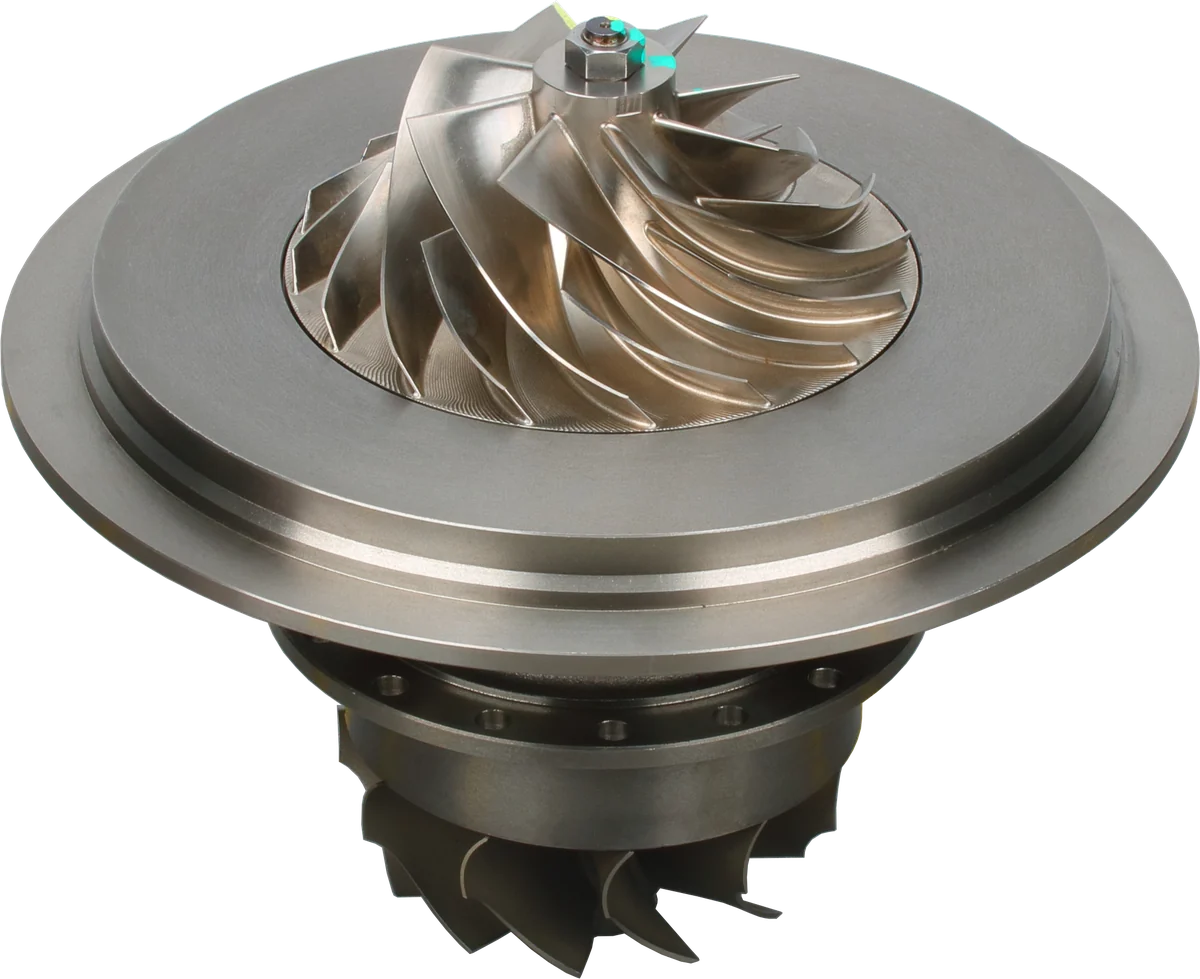
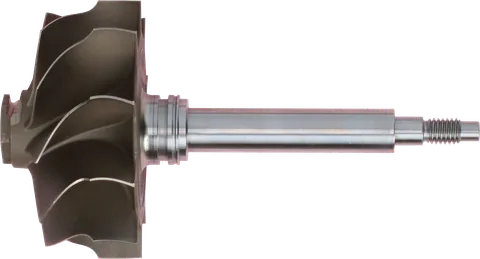
Compressor wheel: transfers shaft power to the air.
Bearing housing: supports the lubricated rotating assembly.
Turbine wheel: exhaust energy drives the shaft.
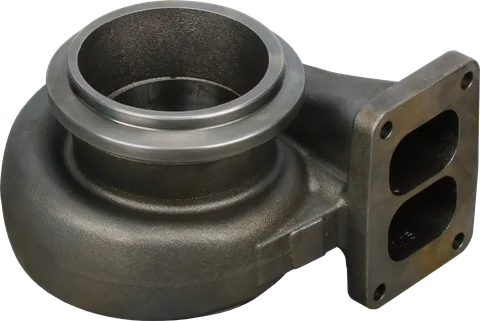
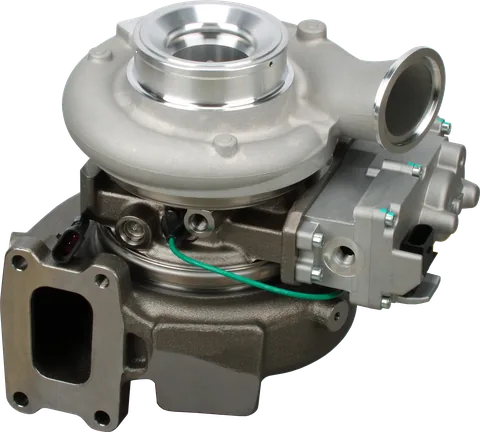
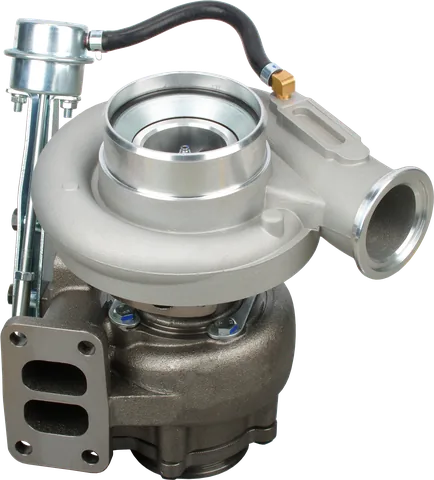
Product photograph from 2026. Numbers identify the features explained below.
Turbocharger training courses: what a certificate means
Focused courses can connect engine knowledge with turbo-specific faults. Before enrolling, ask whether the material covers diagnosis, installation, internal repair or only product familiarization. Check how learning is assessed and whether supervised practical work is included.
Manufacturer online courses
Manufacturer turbo training is often delivered online: some turbocharger manufacturers offer free, on-demand video training for automotive professionals and enthusiasts. Typical topics include turbo basics and operating conditions, the inside of the CHRA, oil and gas sealing, reducing the risk of oil contamination and actuator types. A certificate of completion may be awarded; it shows the course was completed and is not a licensed or accredited credential.
Installer and aftermarket training
Aftermarket suppliers and rebuilders also run installer courses on topics such as an introduction to turbochargers, bearing failures, oil leaks and foreign object damage. Cost, format and whether a certificate is issued vary by provider, so ask before enrolling.
For turbocharger repair training, ask specifically about measurement, reusable-part assessment, assembly and balancing. An installer syllabus alone does not establish that those workshop skills are taught or assessed.
Comparing credentials and training
Read the scope behind the document before treating it as proof of capability.
| Type of certification or training | Who issues it | What it proves | What it does not prove |
|---|---|---|---|
| Red Seal endorsement | Provincial or territorial trade certification authority through Red Seal | The holder passed the Red Seal exam and meets the trade endorsement standard. | Turbocharger-only qualification or specialist rebuilding experience. |
| ASE certification | ASE | The holder met the applicable test and experience requirements. | Competence to rebuild every turbo model. |
| Manufacturer online course certificate | Course provider | Completion of the stated course. | A trade licence, accreditation or verified workshop competence. |
| Installer or aftermarket training course | Training provider | Training in the stated topics; check what assessment or documentation is included. | Internal repair competence unless it was taught and assessed. |
| In-shop experience and mentoring | Workshop; any record is internal | Documented tasks and observed skills, where records are kept. | An independently issued credential or competence beyond the work observed. |
Skills a competent turbo technician needs
Use this checklist to turn turbo technician training into observed work. Have the learner explain the decision, use the correct service information and record the result. Recognizing a component in a video is different from accepting or rejecting it after measurement.
- Identify the turbo and verify fitment. Record the complete part number and confirm the engine application, connections and controls. The fitment-checking guide explains why a similar-looking unit or shared engine family is insufficient.
- Diagnose the cause before replacement. Separate turbo damage from intake leaks, lubrication faults and engine or control problems. The pre-replacement diagnosis guide provides the investigation sequence; a replacement cannot correct an external cause.
- Measure shaft movement correctly. Assess radial and axial movement against the exact model's specification using its prescribed method. The shaft-play guide explains why finger feel and movement at a wheel tip cannot establish bearing clearance.
- Check the connected systems. Inspect oil supply and drainage, crankcase ventilation, intake and charge-air plumbing, and exhaust paths. The oil feed and drain guide covers line routing and contamination risks; record corrections before installing the replacement.
- Install and pre-lubricate correctly. Keep connections clean, use the specified seals and follow the engine's priming and startup procedure. The installation checklist organizes the checks, including any required actuator setup.
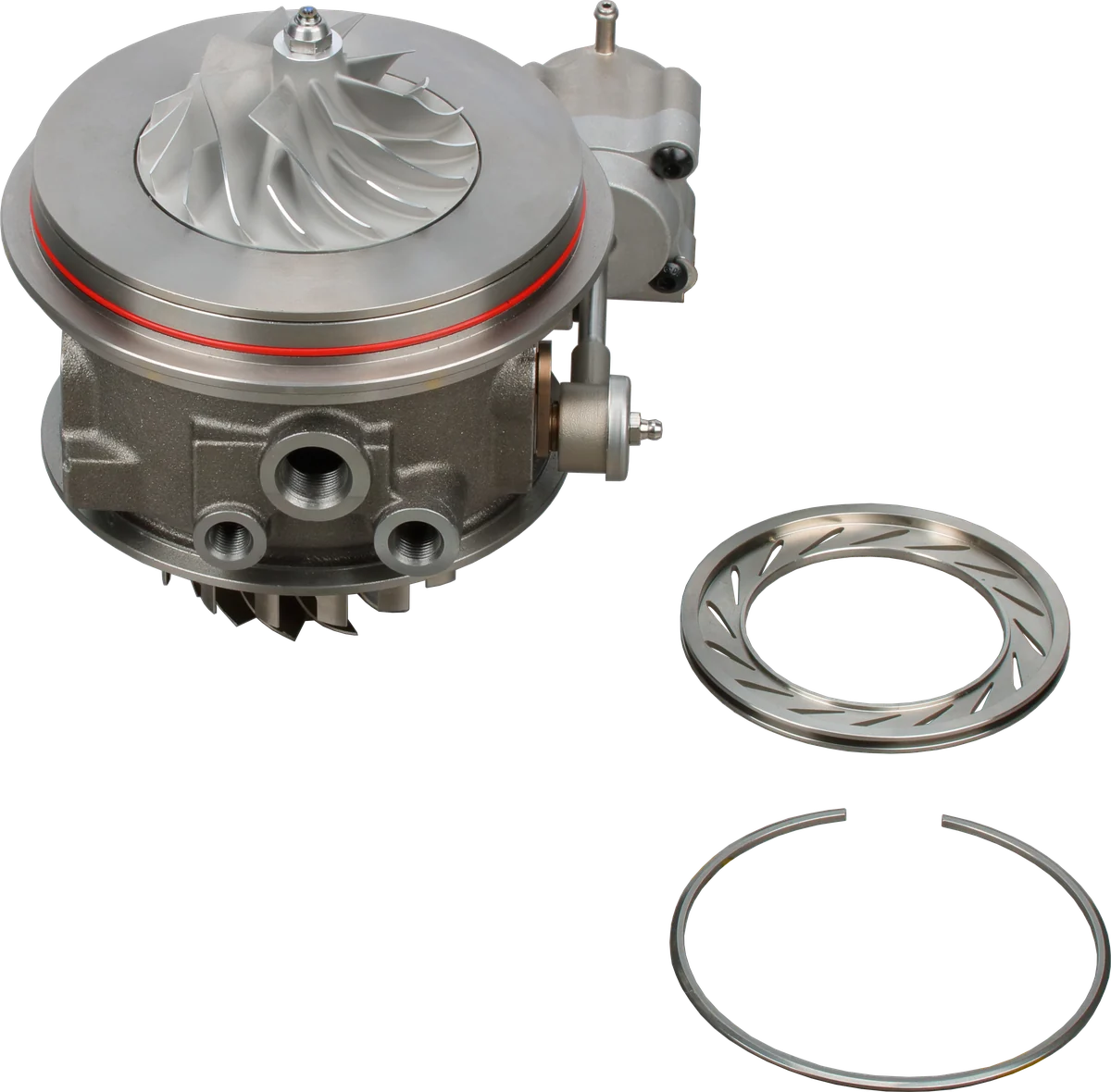
- Choose a defensible repair scope. A CHRA replaces the centre housing rotating assembly, while a kit replaces selected service parts; neither repairs rejected outer housings or faulty controls. Compare CHRA and complete-turbo replacement, then use the repair-kit selection guide to check compatibility and contents.
- Control assembly and balancing. The rebuilding guide covers clean assembly and qualifying reusable parts. The balancing guide explains component and assembled-core verification, including high-speed checks where specified; alignment marks cannot verify balance.
- Document failure analysis. Preserve identification, photographs, measurements and findings before cleaning away evidence. The failure-analysis and warranty guide explains useful records; separate observed damage from the suspected initiating fault.
Progress from supervised inspection and installation to internal repair only when the equipment, service data and demonstrated skills support it. A mentor should review decisions as well as finished assemblies. Keep a task record so shop owners can see what someone has actually performed and where specialist support remains necessary.
What buyers should ask a turbo rebuilder or supplier
A claim of turbo rebuild certification needs a definition. Ask whether it refers to the technician, a course, the company's management system or the supplied unit, and request evidence tied to the actual job.
- Quality management system certification. A certificate such as ISO 9001 concerns a company's quality management system. Check the named business, scope and validity; it does not certify every product or the technician's rebuilding skills.
- Inspection and balancing records. Request results traceable to the supplied unit and ask which checks were performed. A balance report addresses the recorded balance work, not every aspect of durability or installation. The turbo testing guide distinguishes the purposes of different checks.
- Part-number traceability. Ask for the assembly reference and a record connecting supplied parts to the repair. Traceability supports investigation and repeat orders; a number on a label alone does not establish compatibility or quality.
- Written installation requirements. Clarify oil-line, cleaning, priming and actuator requirements before fitting the unit. Instructions help the installer protect the repair but do not show that those steps were actually completed.
- Written warranty terms. Read coverage, exclusions, installation conditions and the claim procedure. A warranty describes responsibilities and remedies; it is not a test certificate or proof that a failure cannot occur.
Keep these documents with the work order. Where records are missing or unclear, resolve the gap before accepting a claim of certification as evidence of quality.
Vehicle-modification approval
If turbo certification means approval to add or upgrade a turbo on a road vehicle, the rules come from the local inspection or emissions authority. They differ by province, state and country. Check with the relevant authority before modifying the vehicle; a training certificate does not establish vehicle approval.
Matching parts to the repair
LeadTurbo supplies complete turbochargers, CHRAs/cores and repair kits, and can help confirm a part number once the required repair scope is established.
Common Questions
Is there a single official turbo certification?
There is no single official turbo certification. Red Seal and ASE are broader trade credentials, while turbocharger courses can provide focused learning. A course completion certificate does not by itself establish competence to diagnose, install or rebuild every turbocharger.
Can I get turbo certification online?
Online turbocharger training can build theoretical knowledge. Manufacturer online courses may award a certificate of completion, but it is not a licensed or accredited credential. Add supervised workshop practice and model-specific service information before taking responsibility for repairs.
What are turbo certification requirements?
Requirements depend on the credential. Red Seal requires passing its exam for the endorsement. ASE requires an applicable test and relevant experience, with formal training able to replace part of that experience. A course provider sets its own completion requirements.
What does a search for red seal turbocharger mean?
It usually points toward turbocharger knowledge within a broader Canadian trade. The Automotive Service Technician occupational standard includes turbocharger systems. Red Seal does not offer a turbocharger-only credential; check the occupational standard for the trade you intend to practise.
Does a course certificate qualify someone to rebuild turbos?
A certificate alone does not establish rebuilding competence. The technician needs inspection and measurement skills, correct service data, suitable assembly equipment and access to the specified balancing process. Supervised work should demonstrate those skills before independent rebuilding.
What should I request with a certified rebuilt turbo?
Ask what certified means and who issued the certification. Request part-number traceability, inspection and balancing records, installation requirements and written warranty terms. A company quality-system certificate describes its management system; it does not certify each turbo or the individual technician.