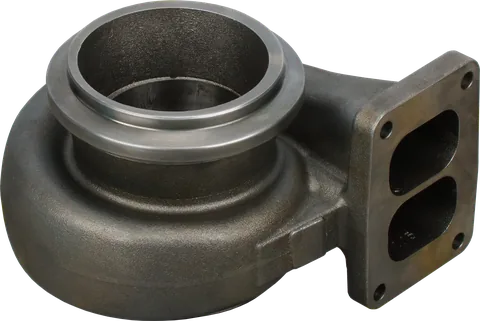
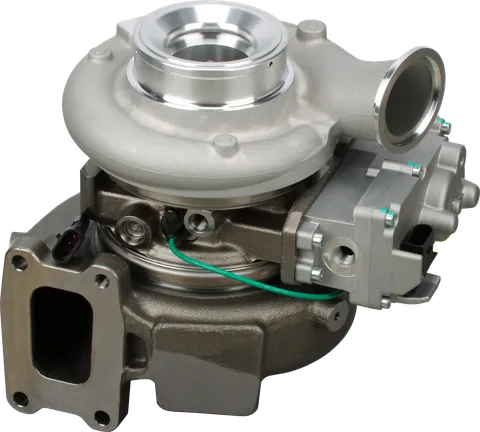
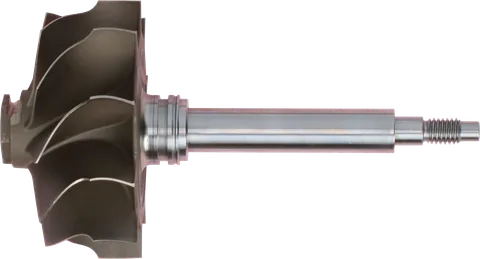
For mechanics and equipment owners, diesel turbocharger history helps explain why a ship, a highway tractor, and a pickup can use such different turbo systems. The basic arrangement stays recognizable: exhaust drives a turbine, the turbine drives a compressor, and the compressor supplies denser intake air. Turning that idea into durable hardware took decades.
Who invented the turbocharger?
Alfred Büchi is widely credited with inventing the exhaust-driven turbocharger through his 1905 patent. His proposal linked an exhaust turbine with intake compression as part of a broader engine system. It established the principle behind modern turbocharging, although the patent was not a ready-made production turbo for a truck.
Practical success required efficient compressors and turbines, reliable bearings, suitable materials, and an engine matched to the available airflow. Poor compressor or turbine efficiency could erase the expected gains. Progress depended on a usable combination of components, followed by steady improvements in manufacturing and control.
Milestones in the history of the turbocharger
Adoption overlapped across industries. These milestones describe broad changes, without treating every prototype or limited-production application as a turning point.
| Period | Widely known milestone | Why it mattered |
|---|---|---|
| 1905 | Büchi patents an exhaust-turbine charging concept | Establishes the central principle. |
| 1920s | Büchi's pulse-charging work; the first turbocharged diesel passenger ships enter service (1926–27) | Shows commercial value under sustained load. |
| Late 1910s–1940s | Aircraft turbosupercharger trials (1918) lead to wide use on high-altitude World War II aircraft | Helps maintain power at altitude. |
| 1930s–1950s | First turbocharged locomotives and trucks appear; turbo trucks reach series production in the 1950s | Brings boost into everyday heavy-duty service. |
| 1960s–1980s | First production turbo gasoline cars (1962); first production turbo-diesel passenger car (1978) | Extends turbocharging into smaller road vehicles. |
| 1990s onward | VGT and electronic engine controls spread | Gives designers more control across operating conditions. |
| Recent decades | Staged boost evolves and electric assistance develops | Supports demanding airflow targets and faster response. |
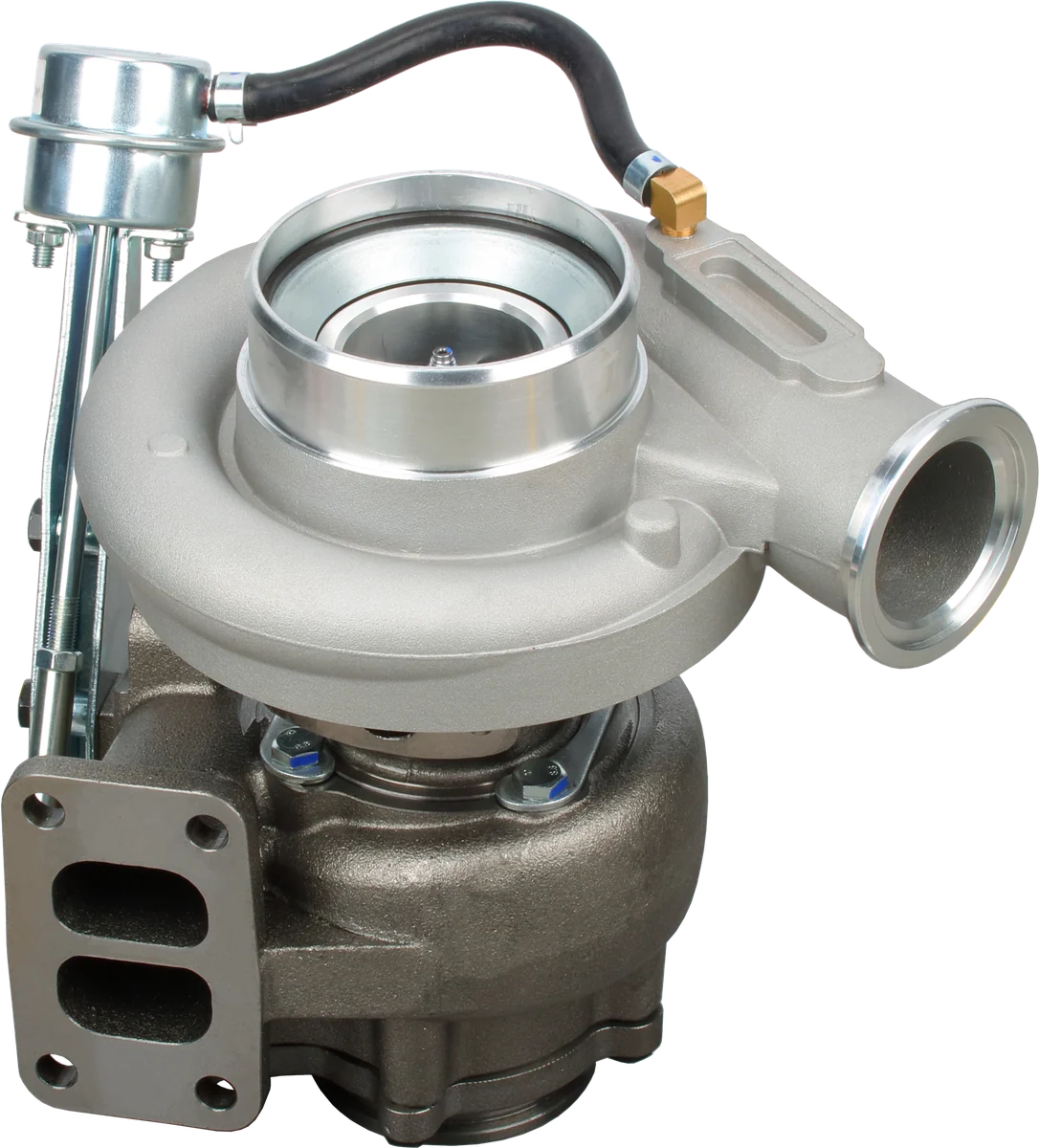
Compressor housing: guides the compressed air.
Turbine housing: guides exhaust gas to the turbine.
Actuator: check its type, linkage and calibration.
Product photograph from 2026. Numbers identify the features explained below.
Why large diesels were an early proving ground
Marine and stationary engines offered room for early hardware and long periods of loaded operation. Under those conditions, a turbine had a sustained supply of exhaust energy, and additional air could support more fuel and more useful output from a given engine size.
Locomotive diesels became another important application as diesel traction expanded. Operators wanted substantial power from machinery that had to keep working through long service intervals. These marine and rail applications helped establish the value of turbocharging before its widespread use in passenger vehicles.
Early marine installations included four-stroke engines. Large, low-speed two-stroke marine diesels became a major turbocharging application around mid-century. Their charging systems also had to support scavenging: moving fresh air through the cylinders to clear exhaust gas.
Low-, medium-, and high-speed diesels pulled design in different directions
These speed labels refer to engine crankshaft speed. Their boundaries vary by industry, but they explain three different sets of demands. A slow-turning ship engine and a fast-running pickup diesel can both depend heavily on turbocharging.
| Diesel category | Common applications | Main demand on turbo design |
|---|---|---|
| Low-speed | Large marine propulsion engines | Move enormous air volumes efficiently during long periods of loaded operation. |
| Medium-speed | Marine engines, locomotives, and larger generator sets | Combine fuel efficiency, durability, and response to load changes. |
| High-speed | Trucks, buses, pickups, construction and farm equipment, smaller marine engines and generator sets | Fit compact installations and respond across changing speed and load. |
Low-speed two-stroke engines made efficient scavenging and sustained airflow central concerns. At starting and very low load, auxiliary blowers may provide air while exhaust energy is insufficient.
Medium-speed engines encouraged durable systems that could handle long operating hours and changing electrical or propulsion loads. High-speed diesels pushed compact packaging and rapid response, supported by advances in aerodynamics, bearings, materials, and manufacturing.
Engine speed alone does not identify the best architecture. Duty cycle, displacement, required output, and installation limits all matter. Generator sets, for example, span several engine categories.
Aviation opened a parallel development path
Aircraft turbocharging developed alongside early industrial work. At high altitude, thinner air reduces the oxygen available to a piston engine. Compressing the intake air helps preserve power within the engine's design limits.
During the World War II era, turbochargers served on many high-altitude piston aircraft. These installations demanded heat-resistant hardware and careful boost regulation under changing atmospheric conditions. Some aircraft used mechanically driven superchargers, and some combined forms of supercharging.
This branch of turbocharger development emphasized high-altitude performance, heat resistance, and boost control. Industrial designers continued to emphasize long service life and efficient operation under sustained load.
Trucks brought turbocharging to the road
In the history of the turbocharger, road transport added a demanding combination of limited space, frequent speed changes, and sudden requests for torque. Trucks could not spend every working hour at one favorable operating point.
Heavy truck turbocharging expanded from the middle of the twentieth century. Compact designs, improving durability, and growing production experience helped it become practical for freight service. Buses, construction equipment, and agricultural machinery also benefited from obtaining useful output without simply increasing engine size.
Passenger vehicles added further constraints, including noise, cost, and smooth response. Production turbocharged gasoline cars appeared in the 1960s, with broader visibility in the 1970s and 1980s. Turbocharged passenger diesels entered production in the late 1970s and spread further afterward.
These were different engineering routes. Gasoline applications had to manage knock and demanding exhaust temperatures. Diesel applications relied on coordinated air and fuel delivery to build torque while controlling smoke. Charge-air cooling and more capable fuel systems helped both types mature.
Fuel costs and later emissions requirements broadened the reasons for using a turbo. Producing more power from the same displacement remained valuable, while better air management also supported efficient combustion across a wider working range.
Early vs modern turbocharger designs: from fixed hardware to active control
Early production systems commonly used fixed turbine geometry. As applications widened, controlling airflow across the operating range became increasingly valuable. Better electronics let manufacturers coordinate turbo operation with fueling, engine protection, and emissions strategies.
The first production variable-geometry turbos appeared in the late 1980s, and VGT spread across vehicle diesels from the mid-1990s. By changing the turbine's effective flow area, VGT broadened what a single turbo could accomplish. Its historical importance lies in making the turbocharger an actively managed part of the engine.
| Development | What it contributed | Practical consequence |
|---|---|---|
| Wastegate control | Bypasses some exhaust around the turbine to regulate boost | Adds a control device to an otherwise fixed-geometry layout. |
| Variable geometry | Adjusts turbine flow capacity as conditions change | Requires the correct actuation and control setup. |
| Two-stage turbocharging | Uses compression stages in series to share the pressure rise | Adds plumbing and system-matching requirements. |
| Electric assistance | Adds motor power to the turbo shaft | Adds electrical and thermal integration requirements. |
Two-stage turbocharging has a longer engineering history than its modern electronic controls. It became useful wherever a single stage could not efficiently meet the required combination of airflow and pressure rise. Modern controls improved the ability to manage such systems across changing conditions.
An electrically assisted turbocharger adds a motor to help drive the turbo shaft when exhaust energy is limited. This extends control over air delivery during transitions, with added electrical and cooling requirements.
Today's turbo technology trends
The main trends connect familiar goals with tighter integration. Designers still need airflow and durability, but now evaluate the turbo as part of the complete engine and, where applicable, the electrified powertrain.
- Higher pressure ratios where needed: More demanding power-density and combustion targets can require greater compression. The limits include compressor efficiency, discharge temperature, turbo speed, and engine loading.
- Better efficiency across the duty cycle: Reducing aerodynamic and mechanical losses helps the engine deliver useful work with less wasted energy. Useful performance across ordinary working conditions matters.
- Closer emissions coordination: Turbo controls interact with exhaust gas recirculation and aftertreatment operation. Results depend on combustion, calibration, and exhaust treatment working together.
- Electrification: Motor assistance can improve air delivery during transitions. Some integrated motor-generator designs can also recover energy when operating conditions provide a suitable surplus.
These directions do not mean every new engine needs the most complicated system. A generator supplying a steady load and a pickup in stop-and-go traffic have different priorities. Added hardware must justify its cost, energy use, cooling needs, and service requirements over the actual duty cycle.
What to check before buying a turbocharger
The history of the turbocharger explains why replacement requirements differ so much between generations of equipment. External appearance tells only part of the story; the turbo belongs to an engine system designed around particular airflow and control characteristics.
Useful checkpoints include:
- Identify whether the equipment uses fixed geometry, variable geometry, or staged boosting.
- Treat actuator configuration and engine calibration as part of the application.
- Use the original application and part identification to guide replacement decisions.
- Keep the machine's duty cycle in view when assessing its requirements.
No historical milestone makes one design the right choice for every diesel. A straightforward turbo on a well-matched industrial engine can still be exactly the right tool for the job.
Common Questions
Who invented the turbocharger?
Alfred Büchi is widely credited with the exhaust-driven turbocharger through his 1905 patent. Practical production systems followed after years of work on compressors, turbines, materials, and engine matching.
Were turbochargers used on diesels before passenger cars?
Yes. Large diesel applications, especially marine engines, established turbocharging well before passenger cars. Locomotives and commercial vehicles also became important markets, while piston-engine aviation developed its own turbocharging applications.
Why did aircraft need turbochargers?
Air becomes less dense as altitude increases. Compressing the intake air helped piston aircraft engines retain power at altitude, within their operating limits. This made turbocharging especially valuable for high-altitude wartime aircraft.
Did gasoline turbos come before passenger diesel turbos?
Production turbocharged gasoline passenger cars appeared in the 1960s. Turbocharged diesel passenger cars reached production in the late 1970s. Widespread adoption took longer and varied by market.
Is VGT newer than fixed-geometry turbocharging?
Yes. Fixed-geometry systems were established first. Variable-geometry turbochargers became more common in vehicle diesels from the 1990s onward, giving engine controls greater authority over airflow, response, and exhaust pressure.
Are electrically assisted turbos standard on modern diesels?
No. Electrically assisted turbocharging is one development path, but adoption varies by application. Many working diesels still use conventional exhaust-driven turbochargers, including fixed-geometry, variable-geometry, and two-stage systems.
How does a turbocharger use exhaust gases?
A turbocharger uses exhaust gases to drive a turbine, which drives a compressor that supplies denser intake air. That extra air can support more fuel and more useful output from a given engine size. Efficient compressors and turbines, along with proper engine matching, help deliver those gains.
Why is turbocharger boost low at startup?
In low-speed two-stroke marine diesels, boost can be low at startup because exhaust energy may be insufficient. Auxiliary blowers may provide air during starting and very low load to support scavenging, which moves fresh air through the cylinders to clear exhaust gas.
For help finding a replacement turbocharger or parts, contact us with the turbo part number and engine details.