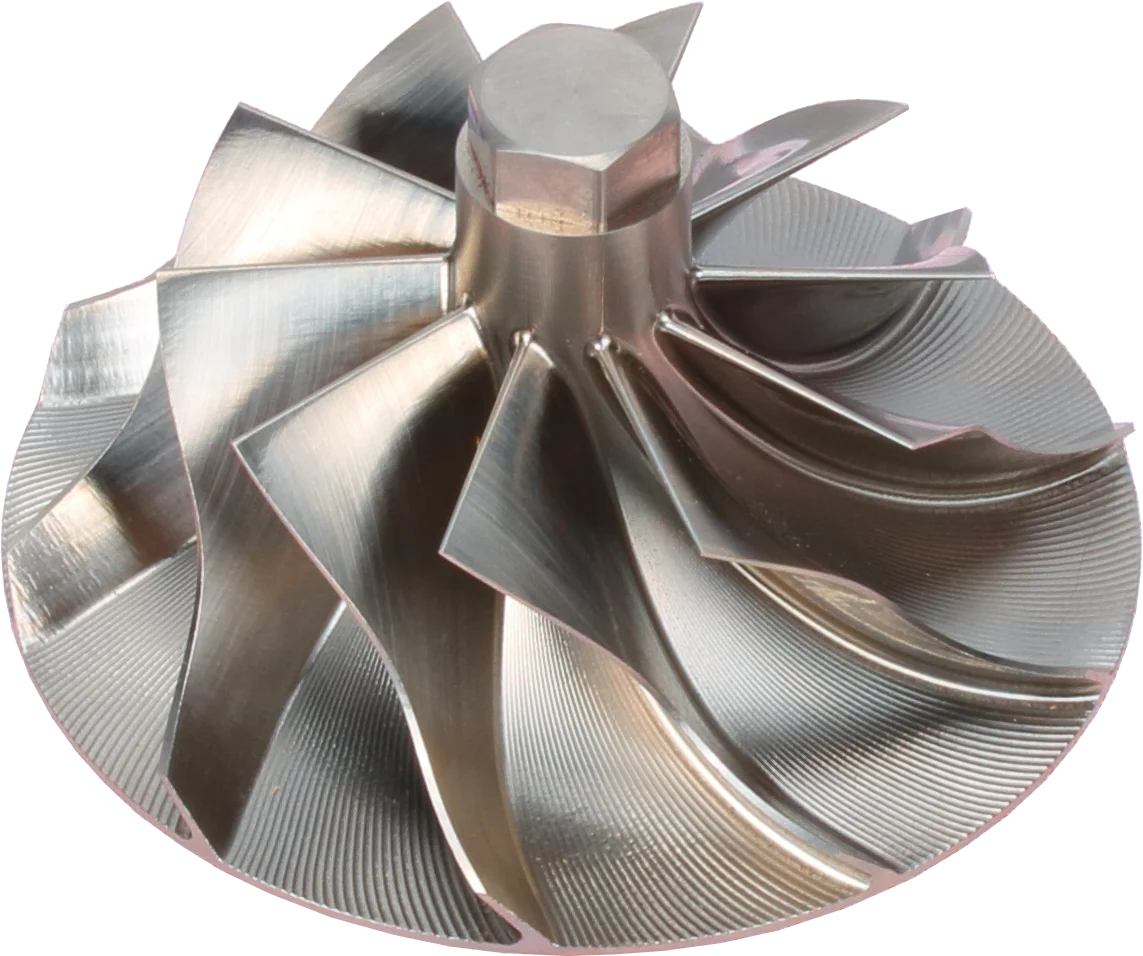
Understanding Turbo Overspeed vs Overboost
Overspeed means the rotating assembly exceeds its allowable operating speed. Sometimes called turbo overspinning, it can involve a brief excursion or repeated operation beyond the turbocharger’s validated limits.
Engine RPM does not directly set turbo RPM. Exhaust gas supplies power to the turbine, while the compressor consumes power to move and compress air. Bearings and other losses consume some power too.
When turbine power exceeds compressor demand and mechanical losses, the shaft accelerates. At steady speed, those demands balance. Wastegate or variable-geometry turbine controls change turbine power to help achieve the engine’s requested operating conditions.
This explains why there is no universal “safe boost” number. Shaft speed depends on airflow, compressor inlet conditions, pressure ratio, and the characteristics of the particular turbocharger.
Turbo overboost is a pressure condition; turbo overspeed is a shaft-speed condition. They can occur together, but either can occur without the other. A manifold pressure reading cannot establish whether a turbo is within its speed limit.
What Drives Excess Turbo Speed?
Several faults can move a turbo outside its intended operating range. To understand what causes diesel turbocharger overspeed, consider how each fault changes compressor demand or turbine drive.
| Condition | How it can increase speed demand or turbine drive | Useful first check |
|---|---|---|
| Charge-air leak | The controller may increase turbine drive while compressed air escapes before reaching the engine | Inspect and pressure-test charge pipes, boots, and intercooler |
| High altitude | Lower inlet pressure raises the pressure ratio needed for a given outlet pressure | Review barometric pressure, operating elevation, and calibration |
| Restricted intake | Pressure loss before the compressor increases its required pressure ratio | Inspect the filter, inlet duct, and hose condition |
| Wastegate stuck closed or VGT stuck too closed | Turbine drive cannot be reduced as intended | Compare commanded operation with actual mechanical movement |
| Aggressive tuning | Higher airflow or pressure requests can exceed the turbo’s operating envelope | Verify the installed calibration and hardware requirements |
| Incorrect turbo | The requested engine airflow and pressure may require excessive shaft speed | Verify the exact turbo specification and application |
Boost leaks can produce overspeed with low boost
A split intercooler boot or leaking charge-air cooler lets compressed air escape downstream of the compressor. If the controller keeps trying to reach target manifold pressure, it may command more turbine drive.
The compressor then handles air that never reaches the engine. Depending on the leak, control strategy, and available exhaust energy, speed can rise even while the scan tool reports underboost.
This is not inevitable: the controller may limit fueling, reduce torque, or enter a protective mode. Nevertheless, repeated full-load testing with an unresolved leak can make the situation worse.
High altitude and intake restrictions change inlet conditions
On a mountain climb, atmospheric pressure falls. To maintain the same absolute compressor outlet pressure, the compressor must produce a larger pressure ratio. Maintaining engine airflow under those conditions can require more shaft speed.
The concern about turbocharger overspeed at high altitude is therefore not simply whether the boost gauge reads higher. Even the same gauge boost can represent a more demanding compressor operating point at elevation.
A blocked filter or collapsing inlet hose creates a similar pressure problem locally by lowering pressure at the compressor inlet. Actual risk depends on airflow and the controller’s response; an intake restriction does not automatically prove overspeed.
Control faults, tuning, and mismatch can overwhelm the design
A wastegate stuck closed prevents the intended exhaust bypass. A VGT mechanism stuck in an excessively closed position may maintain too much turbine drive for the operating condition. VGT “closed” generally means a smaller nozzle opening, not a completely sealed exhaust path.
Incorrect actuator setup, damaged control lines, or faulty position feedback can also interfere with control. Command percentages vary by application, so a high scan-tool percentage does not universally mean open or closed. See wastegate vs. VGT boost control.
Aggressive tunes can request more pressure or airflow, change turbine control, or weaken protective limits. A turbo that physically bolts on may also have the wrong wheel, housing, or actuator specification for those demands. Confirm turbo fitment before ordering.
How Overspeed Damages the Compressor Wheel
As rotational speed increases, centrifugal loading rises sharply. For the same geometry, rotational stress increases approximately with the square of speed, so a modest speed increase can create a substantial stress increase.
Excessive loading can contribute to fatigue cracks in highly stressed areas, including the bore region on bored-wheel designs and blade roots. Repeated loading, temperature, existing defects, and previous damage influence how cracks develop. A severe event can also cause immediate overload failure without a long fatigue history.
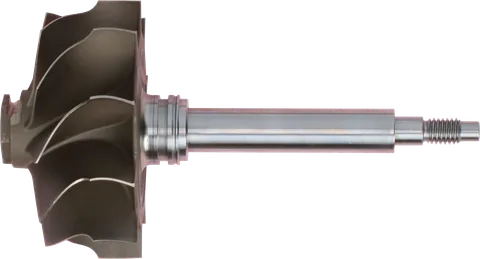
Wheel growth, shaft movement, or associated bearing damage can reduce clearance enough for blade tips to contact the housing. Tip rub may remove material and disturb balance, adding vibration and further damage.
A compressor wheel burst can send fragments into the compressor housing and charge-air system. Debris may remain in hoses or the intercooler, creating a risk for the engine and replacement turbo.
None of these findings identifies overspeed by itself. Foreign-object damage, bearing failure, manufacturing defects, and other causes can produce overlapping evidence. Wheel material also matters, but “billet” is not a guarantee against failure; see the compressor wheel materials guide.
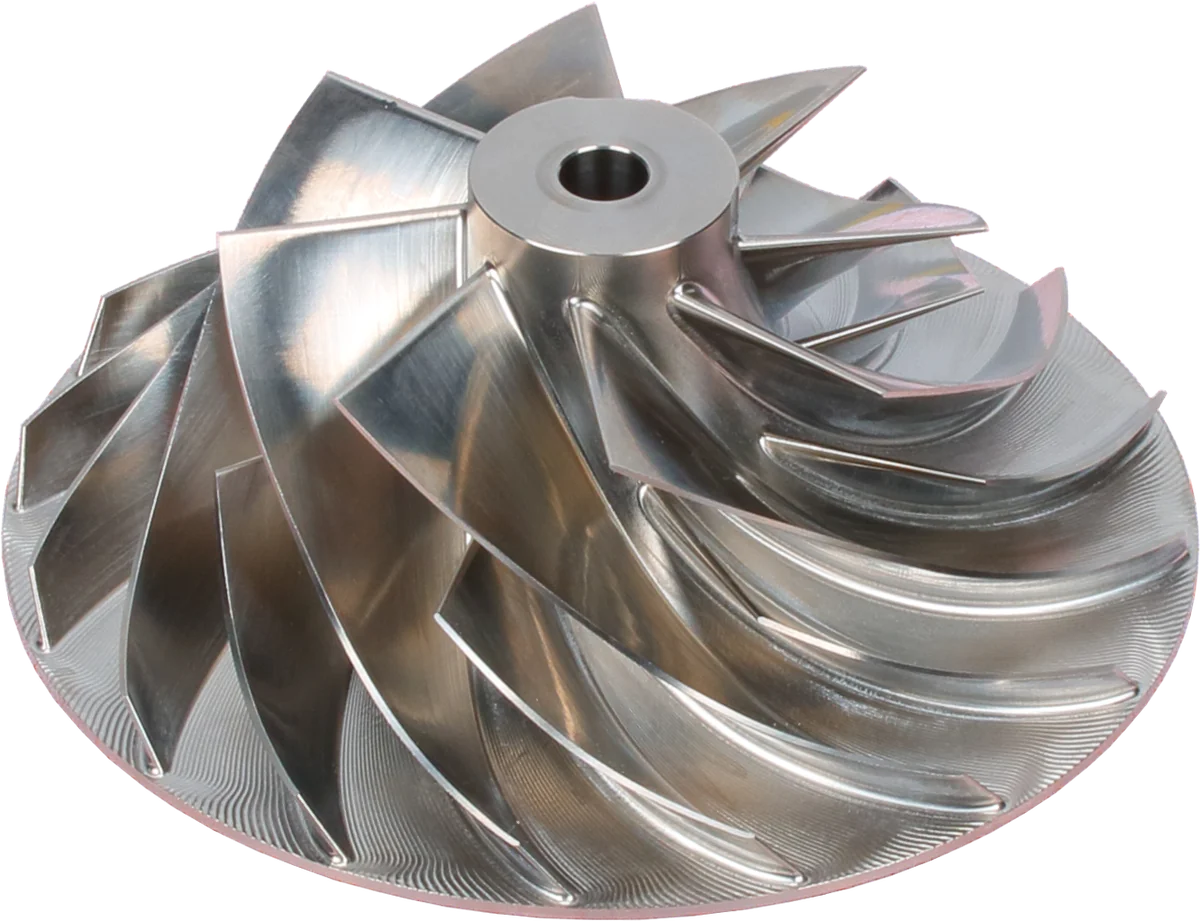
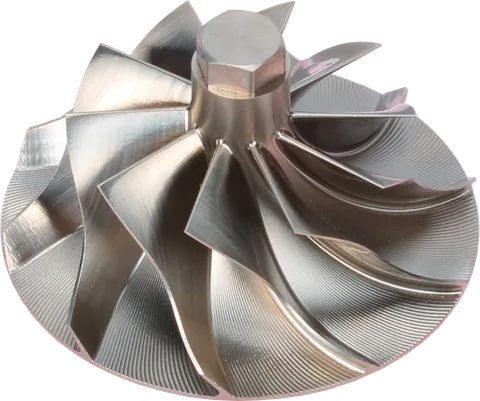
Blades: inspect for chips, bends and contact marks.
Hub: part of the balanced rotating assembly.
Outer blade tips: check for housing rub.
Product photograph from 2026. Numbers identify the features explained below.
Warning Signs to Take Seriously
There may be no obvious early turbocharger overspeed symptoms, particularly without a turbo speed sensor. Possible clues include:
- Overboost or underboost faults during acceleration, towing, or climbing.
- Actual boost repeatedly overshooting its target.
- Persistent boost shortfall while the controller requests increasing turbine drive.
- A new whistle, siren-like sound, scraping noise, or sudden change in turbo sound.
- Loss of power, protective operating mode, or smoke accompanying a boost-control problem.
- Visible blade damage, housing contact marks, or fragments in charge plumbing.
These are reasons to investigate, not a diagnosis. A whistle may come from an air leak, and bearing-related vibration can produce tones unrelated to excessive shaft speed. Listening cannot reliably measure turbo RPM.
If the turbo develops scraping, severe new noise, heavy smoke, or visible wheel damage, stop safely. Do not perform another hard acceleration run to see whether the symptom returns.
How to Diagnose Turbocharger Overspeed Before Replacement
1. Preserve the operating evidence
Before clearing codes, record fault codes, freeze-frame data, and the circumstances of failure. Note towing load, elevation, recent tuning, intake work, and whether symptoms began after another repair.
Where available, review:
- Requested and measured boost or manifold pressure.
- Barometric pressure and intake-air temperature.
- Airflow readings and engine load.
- Wastegate or VGT command and position feedback.
- Measured turbo speed, if the application provides a valid signal.
Confirm whether each pressure channel is absolute or gauge pressure. With the engine off and pressures equalized, manifold and barometric readings should be reasonably consistent within the applicable specifications.
A logged overspeed event from a functioning speed sensor is stronger evidence than a boost code. Without direct speed data, diagnosis usually depends on several supporting findings.
2. Check the complete air path
Inspect the filter, airbox, inlet duct, clamps, and flexible hoses. Look for loose liners or hoses that can collapse under suction.
Pressure-test the charge-air system using the vehicle’s service procedure and specified test pressure. Check intercooler seams, boots, connections, and relevant bypass valves. Do not apply unrestricted shop air.
A leak that is difficult to see at idle may open under load. Oil staining around a joint can help locate a leak, but staining alone does not confirm its size or cause.
3. Verify boost-control operation
Check control hoses, electrical connections, linkage, and actuator travel. Use supported diagnostic tests to compare requested movement with actual response.
Do not shorten a wastegate rod or change VGT stops to compensate for low boost. That can mask an airflow fault and increase turbine drive. Electronic actuators may require application-specific calibration or adaptation after replacement.
4. Inspect damage without destroying evidence
With the engine off and cool, follow the service procedure to inspect accessible wheel surfaces and housing clearances. Photograph the wheel, contact marks, and any recovered debris before cleaning.
- Check blade edges for impact damage.
- Look for circumferential rub marks inside the housing.
- Assess shaft movement against the correct service criteria.
- Inspect the downstream charge-air path if material is missing.
- Keep broken pieces for examination.
Do not spin a suspect turbo with compressed air. A visual inspection also cannot reliably exclude cracks hidden at the bore or below the surface. Fracture analysis or specialist inspection may be necessary to distinguish fatigue from overload.
Use the broader failed turbocharger diagnosis guide to check competing causes rather than assuming every broken compressor wheel oversped.
Preventing a Repeat Failure
Correct the cause before installing replacement parts. A fresh rotating assembly remains exposed to the same leak, restriction, control fault, or unsuitable calibration.
Maintain the specified air filter, repair charge-air leaks promptly, and keep actuator setup within the service requirements. Use a turbo matched to the engine and intended operating range.
For modified applications, evaluate airflow, pressure ratio, and speed limits across the expected conditions, including altitude. A single boost target does not describe the whole operating envelope. Compressor maps can help, but they must apply to the actual compressor configuration.
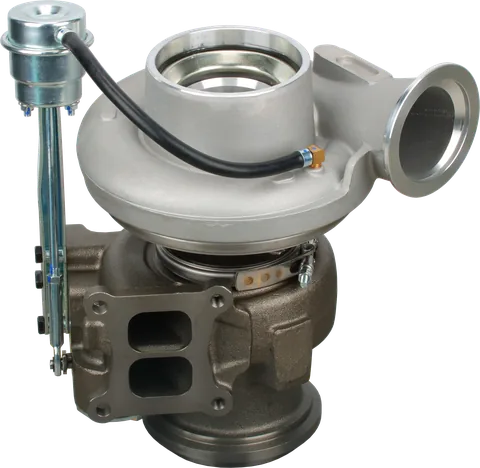
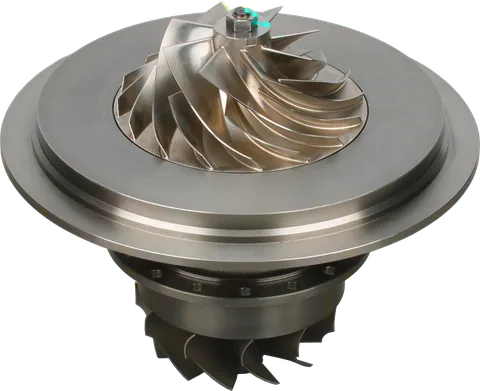
After a wheel failure, address retained debris and inspect damaged housings before deciding between a CHRA and a complete unit. Follow the replacement turbo installation checklist, then verify control operation under a suitable service test.
Common Questions
Can a turbocharger overspeed without overboost?
Yes. A charge-air leak, restricted inlet, or low atmospheric pressure can make the turbo run faster while manifold pressure stays normal or below target. Boost pressure alone cannot confirm that shaft speed is safe.
Does an overboost code prove turbo overspeed?
No. An overboost code indicates that the control system detected excessive pressure under its diagnostic criteria. Check sensor accuracy, actuator operation, and boost-control hardware. Establishing overspeed requires additional evidence.
Can high altitude damage a turbo?
High altitude can increase the speed required to maintain a given manifold pressure because compressor inlet pressure is lower. Correct factory controls may reduce output to protect the turbo. Risk increases when tuning overrides those protections or another fault adds demand.
Does a billet compressor wheel prevent overspeed failure?
No. Manufacturing method alone does not establish a wheel's safe operating speed. Material, geometry, manufacturing quality, temperature, and fatigue history all matter. Any wheel can fail if operated beyond its validated limits.
Can I keep driving with suspected turbo overspeed?
Avoid heavy load and further boost testing until the cause is checked. If there is scraping, a sudden siren-like noise, heavy smoke, or visible wheel damage, stop safely and arrange recovery. Continued operation can spread debris or worsen engine damage.
Is CHRA replacement enough after turbocharger overspeed?
Only if the housings and remaining components are serviceable, debris is addressed, and the original cause is corrected. Damaged housings or faulty boost-control hardware may require a complete turbocharger or additional repairs. A replacement CHRA does not fix the condition that caused overspeed.
For help identifying a suitable replacement, contact LeadTurbo with your turbo part number, vehicle details, fault codes, and symptoms.