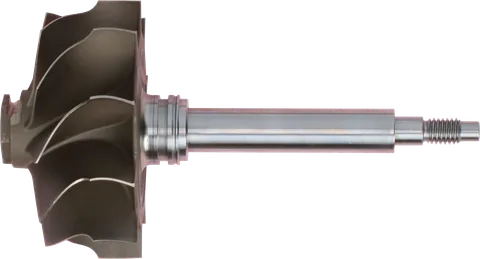
EGT means exhaust gas temperature. A sustained rise under familiar operating conditions can signal an air shortage, a fueling problem or excessive load. A damaged turbine wheel makes the investigation urgent, but its appearance alone cannot identify the cause. Establish where the temperature was measured before comparing it with any limit.
First, reduce load and identify the measurement
If an overtemperature alarm appears, reduce engine load according to the operating instructions. Avoid lugging a vehicle; choose an appropriate gear within its speed limits. For equipment or generator sets, reduce the driven load. If the temperature stays above its limit, follow the manufacturer's shutdown procedure instead of continuing the job.
Duration matters as much as the peak. A short acceleration event and an hour at heavy load impose different demands. On marine and stationary engines, verify that the actual duty matches the rating. An overload can hold the fuel system near its maximum while component temperatures continue rising.
| Probe location | What it tells you | Important limitation |
|---|---|---|
| Exhaust manifold, before the turbo | Temperature entering the turbine at that measurement point | A collector reading can conceal an unusually hot individual cylinder. |
| Immediately after the turbo | Gas temperature after the turbine extracts energy | Usually lower under load; the difference from pre-turbo EGT is not fixed. |
| Near or within aftertreatment | Conditions at a catalyst or particulate filter | Regeneration and chemical reactions can heat this location independently of turbine-inlet temperature. |
The exhaust gas temperature a diesel can tolerate depends on the engine, turbocharger, probe position and permitted exposure time. Confirm Fahrenheit versus Celsius and distinguish continuous limits from temporary allowances. When comparing pre-turbo vs post-turbo EGT, never convert a post-turbo reading to pre-turbo EGT by adding a fixed offset.
How does turbocharger boost affect EGT at different fuel rates?
A compressor heats air as it raises pressure. Charge cooling determines how much of that heat reaches the intake manifold. At a fixed fuel rate, more fresh air can lower EGT. When higher boost supports more fuel and power, however, the engine releases more energy per cycle and must reject more heat through the exhaust, oil and coolant.
That increase in diesel thermal load affects piston crowns and ring areas, the cylinder head, exhaust valves and turbine blades. Excessive temperatures weaken components; uneven heating and repeated temperature changes add thermal stress. EGT is a useful warning signal, but it is not a direct measurement of piston temperature or cylinder pressure.
Diesels normally operate with excess air. Within normal firing operation, adding fuel without enough additional oxygen generally raises EGT. Losing fresh air at the same fuel delivery can have a similar effect. Local fuel-rich regions may produce soot even though the cylinder's overall mixture remains lean.
Manifold pressure is only part of the air picture. The same indicated boost can accompany different air mass when intake temperature or cylinder filling changes. Compare airflow and temperature together when assessing how much oxygen reaches the cylinders.
Injection timing also matters. Fuel that burns late in the expansion stroke has less opportunity to produce useful work before the exhaust valve opens. More energy then leaves with the exhaust. Consequently, EGT alone cannot tell you the air-fuel ratio, and a lower reading does not prove every component is operating safely.
What causes high EGT on a diesel under load?
Start with what changed: load, weather, intake restriction, recent repairs or calibration. Several faults can occur together.
| Possible cause | Why EGT can rise | Useful check |
|---|---|---|
| Dirty air filter or restricted intake | Less fresh air reaches the compressor and cylinders. | Measure inlet restriction under the specified operating conditions; inspect ducting for collapse. |
| Boost leak | Compressed air escapes before it reaches the cylinders. | Compare requested and actual boost, then test the charge-air system using the OEM procedure. |
| Poor intercooler performance | Hotter charge air is less dense; internal blockage can also restrict flow. | Check intake temperature, external fouling, pressure loss and any dedicated coolant circuit. |
| Damaged, mismatched or poorly controlled turbocharger | Air delivery is inadequate for the fuel demand. | Verify the turbo specification and wastegate or variable-geometry operation; check for exhaust leaks before the turbine. |
| Too much or late fuel | Excess quantity or delayed combustion increases exhaust heat. | Check calibration history, injection timing and injector condition. |
| Exhaust restriction | Higher outlet pressure impairs turbine operation and cylinder gas exchange. | Measure at specified ports; investigate restricted aftertreatment, a damaged muffler or an exhaust brake that stays applied. |
| High ambient temperature, altitude or overload | Hot or thin air reduces available oxygen; excessive load raises fuel demand. | Compare conditions and load with the engine's rating and required derating. |
At altitude, maintaining the same manifold pressure may require a higher compressor pressure ratio. The controller may limit fuel to protect the engine and turbocharger. Defeating that derate can increase temperature and overspeed risk. On electronically controlled engines, also check faults that affect fresh-air delivery, including incorrect exhaust gas recirculation operation.
Black smoke can support an air or fueling concern, but its absence does not clear the engine. A particulate filter can hide visible soot. Compare measured airflow and operating data instead of relying on exhaust appearance.
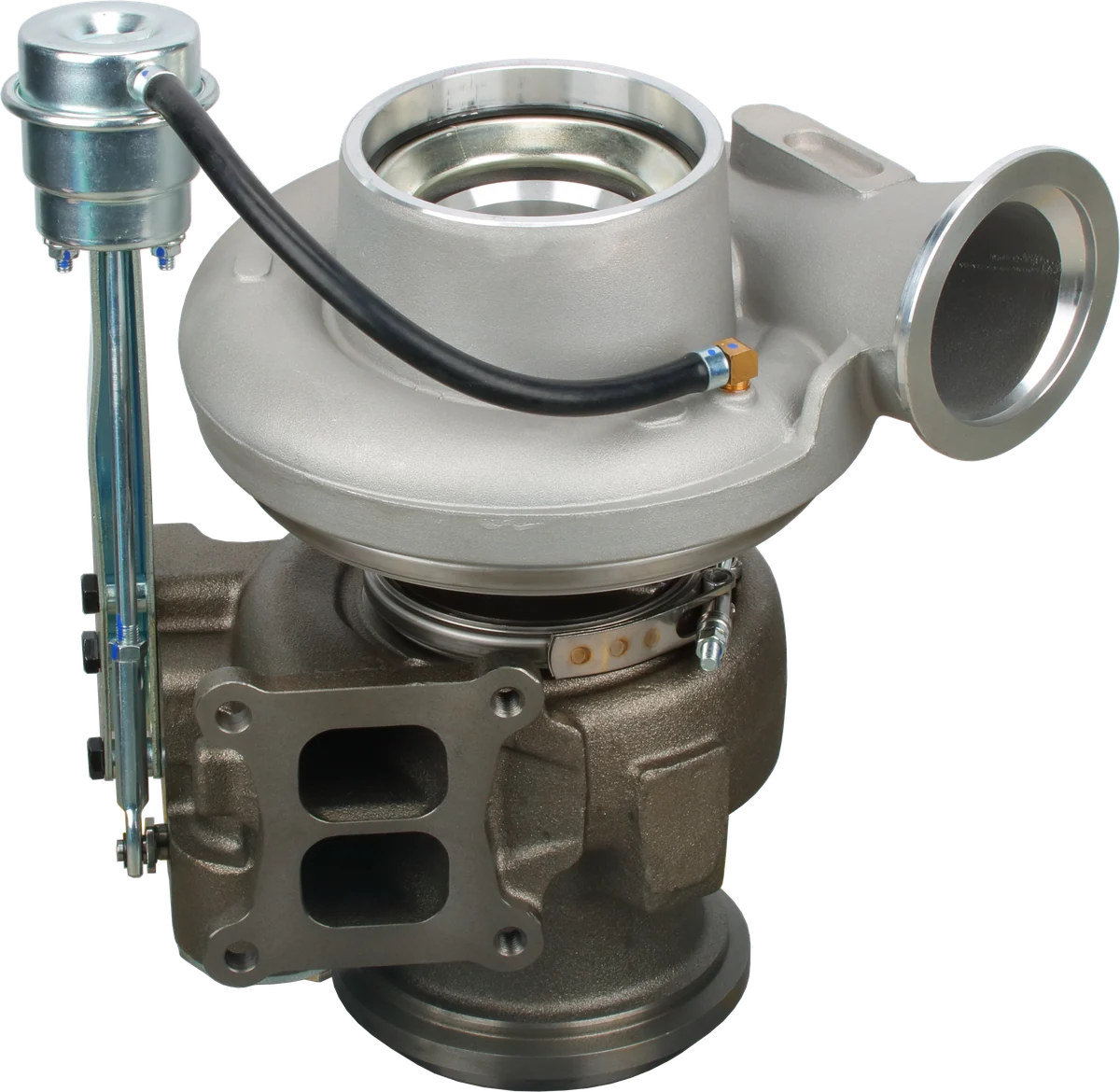
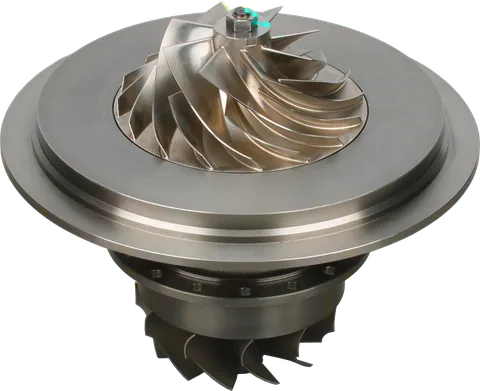
Compressor housing: guides the compressed air.
Turbine housing: guides exhaust gas to the turbine.
Actuator: check its type, linkage and calibration.
Product photograph from 2026. Numbers identify the features explained below.
What happens when the turbine is too small or too large?
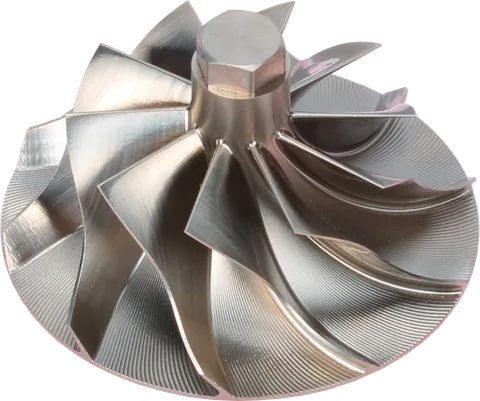
A turbine wheel or housing that is too restrictive for sustained output can drive up exhaust manifold pressure. The pistons work harder to push exhaust out, and more hot residual gas may remain in the cylinders. EGT can climb even while the boost gauge looks strong. This often becomes most apparent at higher exhaust flow.
An oversized turbine assembly can have the opposite problem at low speed: insufficient turbine power to build the required boost promptly. If fueling exceeds the available air during that period, EGT can rise. Electronic fuel limiting may instead produce a noticeable loss of torque. At higher flow, a larger turbine may reduce restriction, but that does not make it the right match for every duty cycle.
Evaluate the engine's entire operating range. A vehicle that repeatedly accelerates and a generator that holds a steady load need different matching priorities.
How OEMs control heat
Manufacturers balance airflow, combustion and heat rejection together. These measures explain the repair target; most are not adjustments to make casually in the field.
| OEM measure | Engineering purpose | Practical repair direction |
|---|---|---|
| More usable airflow | Match compressor, turbine, ports and controls to the required fuel rate. | Restore the specified air path and turbocharger performance before considering changes. |
| Valve overlap scavenging | With a favorable pressure difference, fresh air clears hot residual exhaust while both valves are open. | Verify valve timing and clearances; overlap changes require engineering validation. |
| Charge cooling | Reduce intake temperature and increase charge density. | Restore heat-exchanger airflow and coolant circulation where fitted; correct leaks and restrictions. |
| Stronger component cooling | Control metal temperatures through coolant flow, oil cooling and piston cooling where provided. | Check the radiator, fan, coolant circuit, oil cooler and piston cooling jets as applicable. |
| Correct injection strategy | Match timing, duration, pressure and spray quality to load. | Restore the approved calibration and repair verified injector or timing faults. |
Scavenging depends on the pressure difference during overlap; exhaust pressure can exceed intake pressure and cause reverse flow. Simply adding overlap may therefore worsen conditions. Likewise, advancing injection solely to lower EGT can increase peak cylinder pressure and emissions. Use the engine's approved settings.
A high EGT diesel diagnosis checklist
Conduct diesel turbocharger checks for high EGT at a repeatable operating point and stay within the manufacturer's test limits. Record evidence before replacing parts.
- Validate the temperature signal. Confirm the sensor location, correct probe and instrument configuration. Check wiring and sensor plausibility using the service procedure, especially if the reading jumps suddenly.
- Capture the operating conditions. Record engine speed, load, fuel demand, boost, intake temperature, coolant temperature, ambient conditions and regeneration status. Save active and stored fault codes before clearing anything.
- Inspect the air path. Check the filter restriction indicator, intake hoses and charge-air connections. Pressure-test leaks to the manufacturer's limit; evaluate intercooler heat transfer separately from leak tightness.
- Verify turbo control. Compare requested boost with measured boost and commanded actuator position with actual response. Confirm the installed unit's specification, especially when diagnosing high EGT after turbocharger replacement.
- Measure exhaust restriction. Use the prescribed pressure ports and test conditions. A normal boost reading does not exclude excessive exhaust manifold pressure or a downstream blockage.
- Check fueling and combustion. Review recent tuning, injector work and timing repairs. Use approved injector and cylinder-balance tests. A single hot cylinder points toward a different investigation than uniformly elevated readings.
- Check heat rejection. Inspect cooling-pack cleanliness, fan operation and coolant and oil temperatures. If component overheating is suspected, assess internal cooling functions using the engine service procedure.
- Confirm the repair under controlled load. Compare readings at the same probe location, speed and load, allowing for ambient differences. Increase load only while temperatures and other operating limits remain acceptable.
When a turbine wheel has suffered heat damage, document it and establish the cause before installing replacement parts. Repairing an air leak or fueling fault protects the next turbocharger. A brief unloaded run is not enough to verify a fault that appears only during sustained work.
Common Questions
What EGT is too high for a diesel engine?
Use the engine and turbocharger manufacturer's limit for the specified probe location, duty cycle and duration. There is no universal safe temperature. A brief transient allowance is not a continuous operating limit.
Does higher boost always lower EGT?
No. More fresh air at the same fuel rate can lower EGT, but extra boost may come with hotter intake air, higher exhaust restriction or added fuel. Judge the airflow and combustion conditions together.
Can EGT be high while coolant temperature is normal?
Yes. Exhaust valves, piston crowns and the turbine can experience excessive heat before bulk coolant temperature changes noticeably. A normal coolant gauge does not rule out a combustion or airflow problem.
Is high EGT during regeneration normal?
Some exhaust sensors read higher during an approved regeneration because the system deliberately heats the aftertreatment. Identify the sensor and regeneration status, then compare against the manufacturer's procedure. Do not assume a turbine-inlet overtemperature alarm is normal regeneration.
Can replacing the turbocharger fix high EGT?
It can if the installed turbocharger is damaged, incorrectly matched or unable to deliver specified airflow. Replacement alone will not correct overfueling, late injection, charge-air leaks or exhaust restrictions. Correct the cause before putting a replacement under load.
Can high EGT damage a turbocharger?
Yes. Excessive exhaust temperatures can weaken turbine blades, while uneven heating and repeated temperature changes add thermal stress. If an overtemperature alarm appears, reduce engine load according to the operating instructions. If the turbine wheel has heat damage, identify and correct the cause before installing a replacement.
Contact LeadTurbo with your turbocharger part number, engine model and application details when you need help selecting a replacement turbocharger or CHRA.