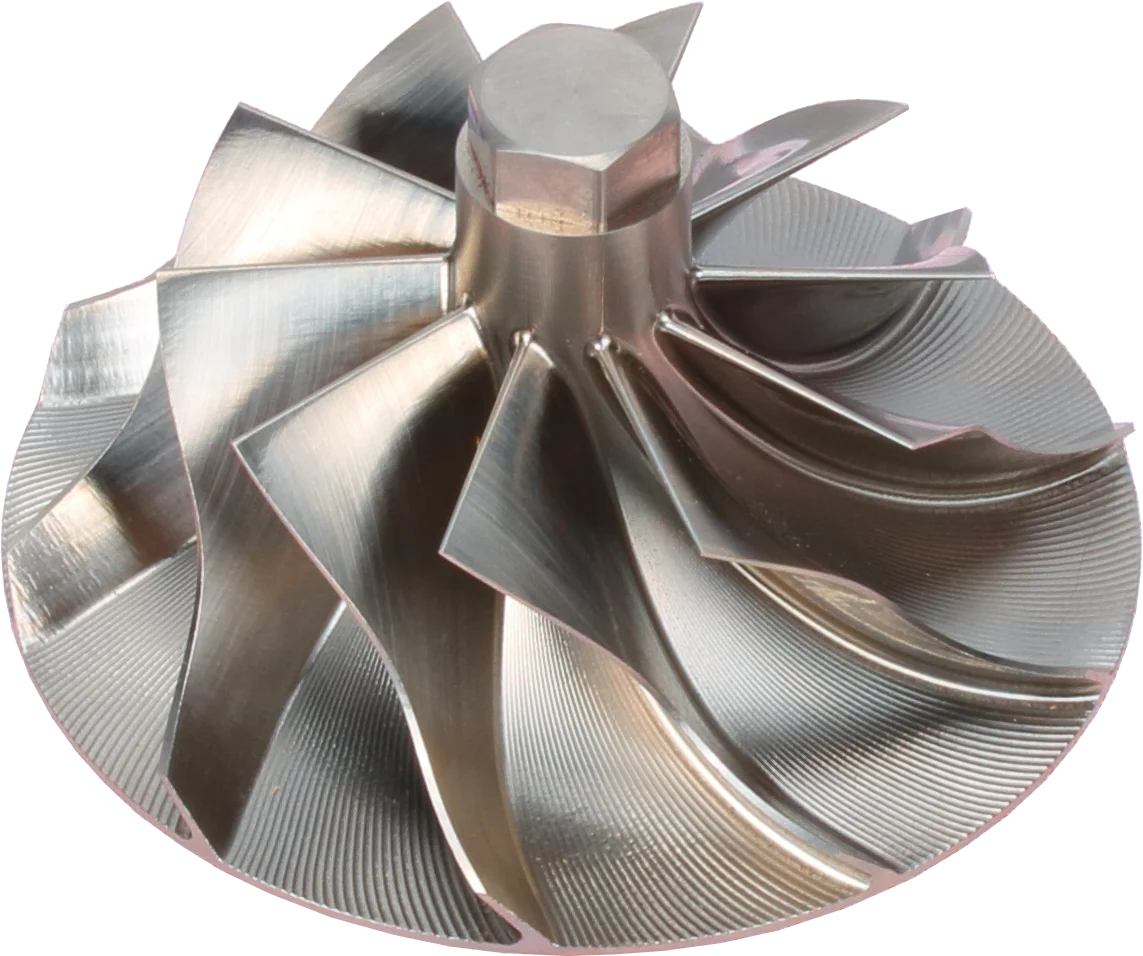
A quick “ch-ch-ch” after a gear change and repeated chattering while pulling uphill deserve different investigations. Both may involve surge, but the operating conditions determine what to check.
“Turbo flutter” describes a sound. “Surge” describes an aerodynamic condition. That distinction matters when deciding whether you have a bypass-valve problem, a poor turbo match, or a noise from somewhere else.
What Physically Happens During Compressor Surge?
A compressor needs enough airflow to operate stably at a given pressure ratio. When it is asked to maintain too much pressure for the available flow, airflow through parts of the compressor can separate and stall.
Surge is the resulting instability of the compressor and connected air system: pressure and flow oscillate instead of remaining steady. In severe surge, air briefly flows backward through the compressor before forward flow recovers. This cycle can repeat, producing pressure pulses and a chattering or fluttering sound.
Local aerodynamic stall and whole-system surge are related, but they are not interchangeable terms. Not every disturbance involves complete flow reversal.
The compressor wheel does not repeatedly reverse its direction of rotation. It continues spinning while the air and pressure forces fluctuate around it.
How to Read a Compressor Map
A compressor map shows where a particular compressor can operate and how efficiently it compresses air. It is more useful for turbocharger selection than a peak horsepower rating alone.
| Map feature | What it means | Why it matters |
|---|---|---|
| Horizontal axis: mass flow | Mass of air passing through the compressor per unit time, commonly corrected for inlet conditions | Shows the airflow the compressor must handle |
| Vertical axis: pressure ratio | Absolute compressor outlet pressure divided by absolute inlet pressure | Shows how much pressure increase the compressor must produce |
| Efficiency islands | Contours connecting points of equal compressor efficiency | Higher efficiency means less added heat and power demand for the same pressure increase |
| Surge line | The low-flow boundary of stable operation, usually on the left | Operation near or beyond it risks unstable flow |
| Choke boundary | The high-flow limit, usually on the right | Additional useful flow becomes increasingly difficult to obtain |
| Speed lines | Curves representing constant shaft speed, often corrected speed | Help identify required speed and proximity to speed limits |
Pressure ratio is not boost gauge pressure divided by atmospheric pressure. Use absolute pressures and the measurement convention specified for the map, usually total pressures at the compressor inlet and outlet.
Manifold boost alone does not provide both values. An inlet restriction lowers pressure entering the compressor, while intercooler and piping losses mean compressor outlet pressure must exceed manifold pressure.
Corrected flow accounts for inlet pressure and temperature so operating points can be compared with the map's reference conditions. Follow the map supplier's definitions.
The compressor map surge line is a boundary, not a target. A suitable match leaves room for changing conditions and transients. Check low-speed torque demand, midrange operation, and high-speed airflow—not just one peak-power point.
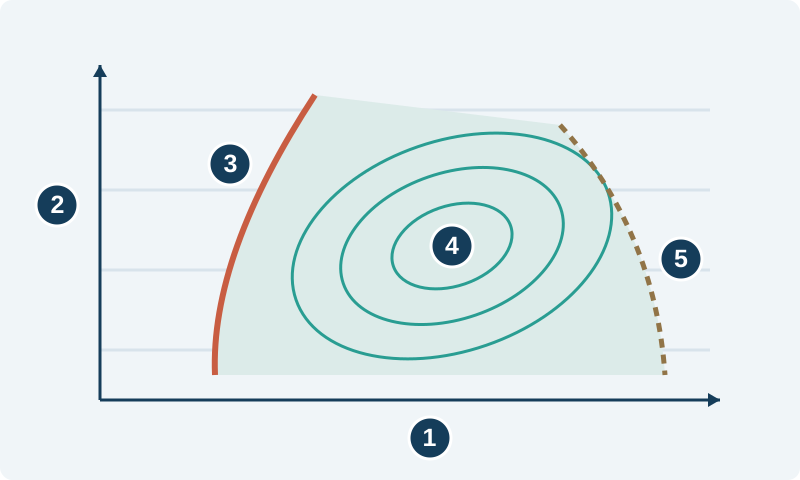
Horizontal axis: corrected air mass flow.
Vertical axis: absolute pressure ratio.
Low-flow boundary: surge limit.
Contours: efficiency islands inside the operating map.
High-flow boundary: choke region.
Qualitative schematic, not measured test data or operating limits.
Turbocharger Surge vs Flutter: Throttle Lift and Load
Throttle-lift surge
On a throttled gasoline engine, lifting the accelerator can close the throttle quickly. Engine airflow drops, but the turbocharger still has rotational energy and the charge piping still contains pressurized air.
A compressor bypass valve, also called a diverter valve, typically routes air back toward the compressor inlet. A blow-off valve vents it elsewhere, commonly to the atmosphere. Either arrangement, when correctly designed and controlled, helps maintain compressor flow while charge pressure falls.
If that path does not open quickly enough or cannot pass enough air, the compressor can briefly surge. This is one common source of turbocharger flutter after throttle lift.
Steady-state or sustained surge
Turbocharger surge under load occurs while the engine is still demanding power. The operating point may sit too close to, or beyond, the compressor's stable low-flow boundary.
Typical conditions include high boost at low engine speed, an unsuitable compressor match, or incorrect boost control. The driver may notice repeated chuffing, boost oscillation, or uneven torque while holding the accelerator steady.
“Steady-state surge” describes the sustained operating condition; the airflow itself is oscillating. A lift-off valve usually cannot solve this mismatch while remaining closed during normal boosted operation.
What Causes Turbocharger Surge?
Several faults can produce similar symptoms:
- A bypass valve that stays closed: A sticking mechanism, damaged diaphragm, wiring fault, or incorrect control signal can prevent pressure relief during throttle closure.
- Incorrect valve setup: An unsuitable spring, restricted recirculation hose, or insufficient valve capacity can delay or limit airflow. Adjustments must follow the valve and vehicle requirements.
- An oversized compressor: A compressor selected for high peak output may be poorly matched to the engine's airflow at low speed.
- Aggressive tuning: Requesting substantial boost before the engine can consume enough air can reduce surge margin. Abrupt control changes can also provoke instability.
- Restricted intake airflow: A clogged filter, collapsed hose, or obstructed inlet changes compressor inlet conditions and can reduce operating margin. Its effect depends on the system and control response.
- Boost-control faults: Incorrect wastegate or variable-geometry operation can demand an unsuitable pressure ratio.
For the control side of the diagnosis, see how wastegates and VGT systems control boost.
Many diesel engines do not regulate normal power by closing an intake throttle in the same way as gasoline engines. For diesel turbocharger surge at low rpm, check turbo matching, boost control, and intake restrictions. Do not assume a diesel pickup needs an aftermarket blow-off valve simply because it makes a fluttering noise.
Why Repeated Surge Can Damage a Turbo
Surge produces changing aerodynamic loads on the rotating assembly. Pressure fluctuations change axial force, which the thrust bearing must control. Severe or repeated events can increase bearing loading and contribute to wear or fatigue.
The compressor blades also experience unsteady forces. Repeated loading can contribute to wheel fatigue, particularly when combined with other problems such as overspeed or existing damage.
This does not mean every brief flutter destroys a turbo. Risk depends on the severity, duration, repetition, and turbocharger design. Sound volume alone is not a reliable damage gauge.
If inspection reveals excessive axial movement, wheel contact, or related wear, review turbo thrust bearing failure causes and signs. Replacing damaged parts without correcting the operating problem leaves the replacement exposed to the same loads.
What to Check Before Replacing Parts
Start with the circumstances, then inspect the system. Avoid repeatedly provoking the noise to demonstrate it.
- Record when it happens: Note engine speed, gear, load, throttle position, and whether the sound starts during acceleration, steady pulling, or throttle lift.
- Review recent changes: A tune, intake, valve adjustment, turbo replacement, or hose repair may explain when the symptom began.
- Inspect the inlet with the engine off and cool: Check the filter, hose condition, clamps, and possible obstructions. Keep objects away from the compressor.
- Check the bypass system, if equipped: Inspect reference hoses, connectors, recirculation plumbing, and valve movement using the appropriate service procedure.
- Read fault codes and available logs: Compare commanded and actual boost, throttle position, airflow, and actuator commands. Ordinary scan data may miss fast pressure oscillations.
- Check charge piping appropriately: Use the vehicle's specified leak-test procedure and pressure limits.
- Assess mechanical condition: Grinding, scraping, damaged blades, or a sudden change in oil consumption warrants inspection before further loaded testing.
A turbo surge noise cannot be confirmed from an audio clip alone. Valve cycling, boost-control hunting, leaks, and mechanical noises can overlap. A continuous whine also calls for a different investigation; see why a turbo may whine.
For a broader inspection sequence, use how to diagnose a failed turbocharger before replacement.
How to Fix Turbocharger Surge and Confirm the Result
For throttle-lift surge, restore the intended bypass operation. Correct routing or electrical faults, replace failed components, and verify the valve suits the application. Deliberately tightening a valve to create flutter works against its pressure-relief function.
Keep the engine's airflow-metering strategy in mind. Venting air that has already passed an airflow meter can upset fueling on systems designed to recirculate it.
For surge under load, review the boost request and turbo match. A qualified calibrator may need to reduce low-speed boost demand or revise wastegate or VGT control. A different compressor may be necessary if the engine's operating points cannot fit safely within the existing map.
If internal damage exists, determine the repair scope separately from the airflow fix. CHRA versus complete turbocharger replacement explains the component choices. Neither option corrects a faulty valve or unsuitable calibration by itself.
Confirm the repair under controlled conditions with appropriate data. Quieter operation is helpful evidence, but stable boost and correct control behavior matter too.
The Other Extreme: Choke and Overspeed
Moving toward the right side of the map raises a different concern. Near choke, local flow passages approach sonic limits, and the compressor struggles to deliver additional airflow efficiently. Outlet temperature and power demand can rise as operation moves into inefficient regions.
Trying to force more output may require excessive shaft speed. Overspeed increases centrifugal stress and can damage the rotating assembly.
Choke and overspeed are separate limits: a compressor can approach choke without exceeding its speed rating, and overspeed can occur elsewhere on the map. Turbo selection must respect both the useful airflow range and the manufacturer's speed limits.
Common Questions
Is turbo flutter always compressor surge?
No. Surge can create flutter, but a cycling bypass valve or other intake noises can sound similar. When the sound occurs, whether boost fluctuates, and how the vehicle behaves are more useful than the sound alone.
Does a blow-off valve prevent all surge?
No. A correctly functioning valve helps prevent throttle-lift surge by providing an escape or recirculation path for compressed air. It cannot correct an oversized compressor or excessive boost demand during sustained engine load.
Can compressor surge happen on a diesel?
Yes. A diesel compressor can surge when airflow is too low for the required pressure ratio. Turbo matching, boost control, intake restrictions, and operating conditions matter. Many diesels do not create the same throttle-closing event as a gasoline engine.
Does flutter mean the turbo is already damaged?
No. Flutter alone does not establish damage. Repeated or severe surge can contribute to fatigue and bearing wear, but inspection is needed. Grinding, wheel contact, increased oil consumption, or a sudden loss of boost makes further diagnosis more urgent.
Will a larger turbo fix compressor surge?
Not necessarily. A larger compressor may put low-speed engine operation closer to its surge boundary. Select a turbo using the engine's airflow and pressure requirements across its operating range, rather than peak horsepower alone.
Can I fix surge with a repair kit?
A repair kit does not change the compressor's operating range or correct a valve or tuning problem. If internal wear is present, the turbo also needs appropriate inspection, measurement, and balancing. Correct the cause before returning repaired components to service.
Will replacing a turbocharger fix surge?
Not necessarily. A different compressor may be needed if the existing turbo does not match the engine's airflow and pressure requirements, but replacement alone cannot fix a faulty bypass valve or unsuitable tuning. Check valve operation, intake restrictions, and boost control, and correct the cause before returning the turbo to service.
Need help identifying replacement parts? Contact LeadTurbo with your turbo part number, vehicle details, and symptoms, including when the noise occurs.