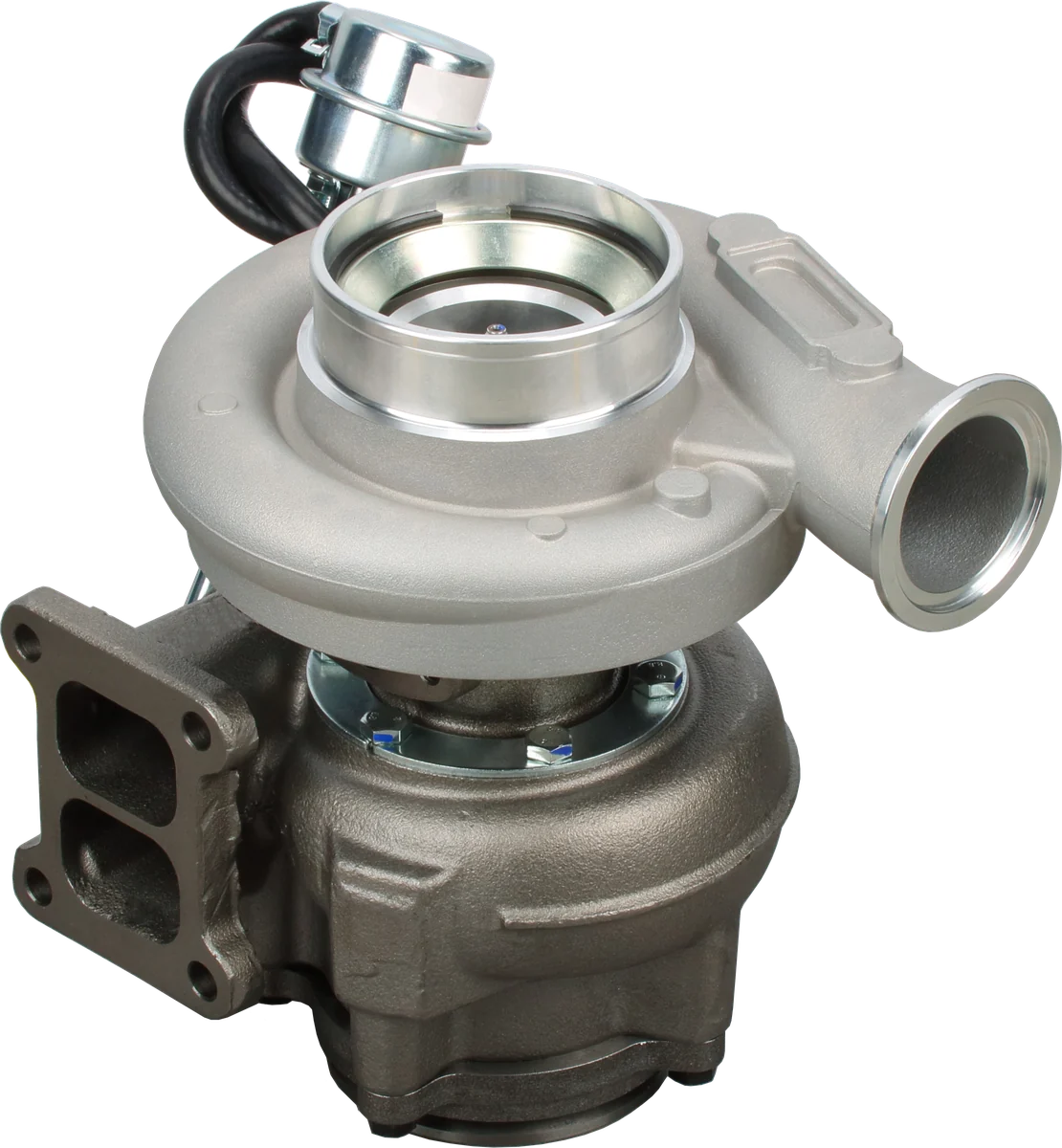
A turbo whistle noise does not automatically mean the turbocharger needs replacing. Air moving through the compressor produces sound, and intake or exhaust changes can make it more noticeable. However, a new siren-like howl, scraping sound, or whistle accompanied by lost boost deserves attention.
For turbocharger whine when accelerating, ask what changed—and whether the noise follows turbo speed, boost pressure, engine speed, or temperature.
Normal vs Abnormal Turbocharger Noise
Normal spool sound is usually smooth and repeatable. It builds as the turbocharger works harder and fades as load drops. Its loudness varies with the vehicle, intake plumbing, insulation, and operating conditions.
An aftermarket intake may expose a sound that the original airbox muffled. This can explain turbocharger whine after intake installation, but it does not rule out a loose connection introduced during installation.
Investigate when:
- A familiar whistle becomes noticeably louder or changes character.
- A rising whine develops into a siren or howl.
- Noise appears with reduced power, boost faults, smoke, or increased oil consumption.
- You hear scraping, grinding, or irregular metallic sounds.
- The sound begins immediately after intake, exhaust, oil-system, or turbo work.
Avoid repeated hard acceleration to reproduce a worsening noise. With scraping, heavy smoke, rapid oil loss, or an oil-pressure warning, stop safely and shut the engine off.
Two Mechanical Noise Families: Speed-Tracking Whistle and Oil-Whirl Tone
For turbocharger noise diagnosis, two useful mechanical categories are synchronous rotor vibration and subsynchronous bearing vibration. These sit alongside airflow noise, leaks, and other sound sources; they do not explain every whistle.
Synchronous 1X: The “Unbalance Whistle”
A rotor with uneven mass distribution applies a repeating force once per revolution. Engineers call that 1X, meaning one vibration cycle for each turbo shaft revolution.
The resulting whistle generally rises in pitch as shaft speed increases. Its loudness can peak where the rotor or surrounding structure responds strongly to that vibration.
Possible causes include:
- Residual imbalance or an incorrectly balanced rebuild.
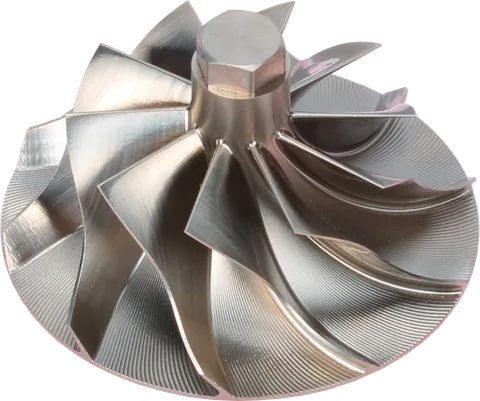
- Compressor or turbine blade damage.
- Foreign object damage, often called FOD.
- Deposits that change wheel balance.
- Wheel-to-housing contact that removes material.
- Loose or incorrectly assembled rotating components.
Bearing wear can allow greater shaft movement and contribute to contact, but imbalance and wear are different findings.
Turbo shaft speed is also different from engine RPM. At the same engine RPM, climbing a hill may demand much more turbo work than gentle cruising. A dashboard tachometer alone cannot identify a 1X turbo noise.
Subsynchronous: Oil Whirl and a “Constant Tone”
Many automotive turbochargers use floating-ring journal bearings. Oil films support the shaft inside the ring and the ring inside the bearing housing.
Those films provide support and damping, but their pressure forces can also encourage the shaft center to orbit within the bearing. This self-excited motion is called oil whirl. It can occur even when the rotor is well balanced.
Its vibration frequency is below shaft rotational frequency, so it is called subsynchronous. In some floating-ring systems, the audible tone changes relatively little while shaft speed changes substantially. Drivers may describe a steady hum, whine, or “constant tone.” Constant here means comparatively steady, not perfectly fixed.
Oil-film behavior depends on bearing geometry, clearances, ring motion, oil viscosity, temperature, and supply conditions. Wear and contamination can alter those conditions. A temperature-dependent noise is therefore useful evidence, but it does not prove oil whirl.
Oil whirl is also distinct from oil whip, a more serious instability in which vibration becomes tied to a rotor natural frequency. A steady audible tone alone cannot establish oil whip or predict failure.
Confirming these mechanisms usually requires specialist vibration analysis referenced to shaft speed. Neither the sound nor a phone recording justifies changing bearing clearances or restricting the oil feed.
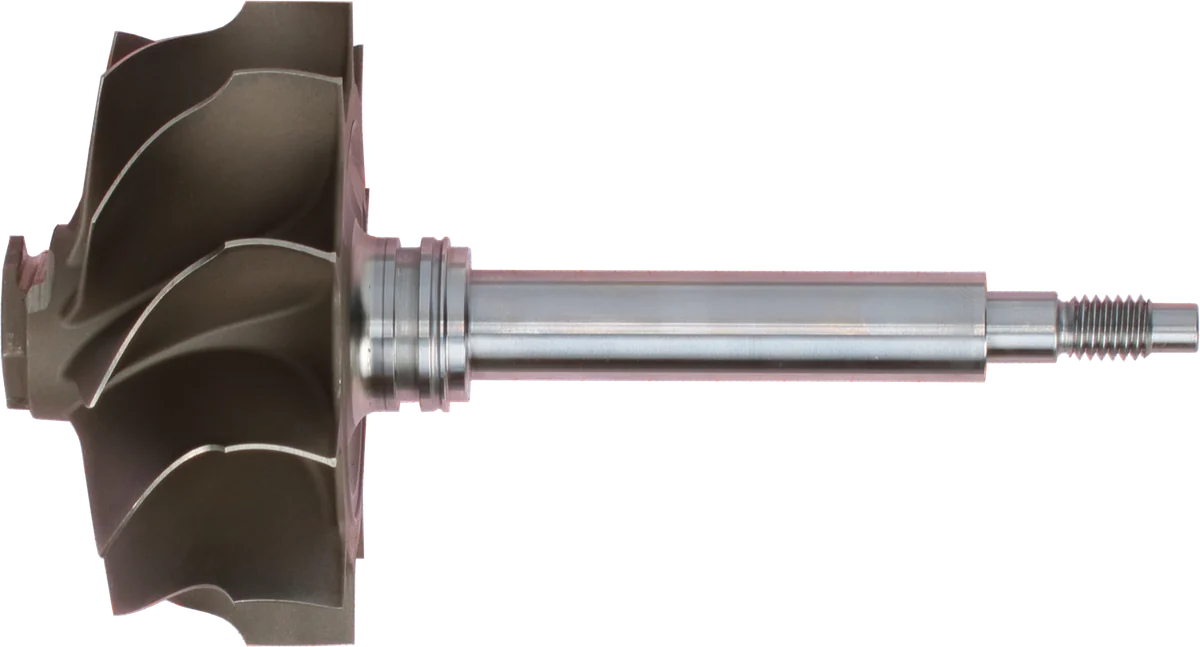
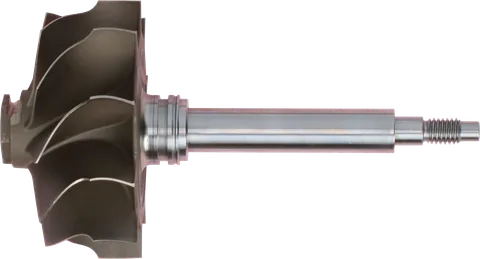
Turbine wheel: exhaust energy drives the shaft.
Shaft surface: inspect wear and scoring before reuse.
Shaft end: connects to the compressor-side rotating parts.
Product photograph from 2026. Numbers identify the features explained below.
Noise Symptom → Likely Cause → What to Check
These are diagnostic leads, not confirmed faults.
| Noise symptom | Likely cause or possibility | What to check |
|---|---|---|
| Familiar, smooth whistle as boost builds | Normal spool and airflow sound | Compare with previous behavior; check performance and connections |
| New whistle or hiss under boost | Charge-pipe, hose, or intercooler leak | Couplers, clamps, seals, intercooler seams; regulated leak test |
| Sharp whistle or ticking under load | Exhaust leak before the turbine | Manifold, gaskets, joints, and soot tracks |
| Rising siren or howl | Rotor imbalance, wheel damage, or bearing deterioration | Blade condition, clearances, contact marks, and oil system |
| Nearly steady hum across changing load | Oil-film vibration or another resonant component | Oil condition, temperature relationship, accessories; specialist analysis |
| Brief buzz or squeak during boost-control movement | Wastegate or VGT mechanism/actuator | Linkage, commanded operation, position feedback, fault codes |
| Whine that follows engine RPM even without boost | Belt drive, pulley, accessory, or vacuum pump | Localize sound and follow component-specific testing |
| Scrape or grind near the turbo | Wheel contact or severe internal damage | Stop operation; inspect rotating assembly and housings |
Other problems that sound like turbo whine
Boost leaks can make a narrow, musical whistle rather than an obvious hiss. A split hose may open only under pressure. Check the entire charge-air route, including intercooler end tanks and connections hidden underneath pipes.
Exhaust leaks before the turbo can whistle as hot gas escapes through a small gap. They may also reduce energy reaching the turbine. Soot near a manifold joint is a useful clue, although its absence does not exclude a leak.
Wastegate and variable-geometry turbo mechanisms can buzz, rattle, or squeak. Actuator noise may occur during commanded movement or a self-check. Binding linkages and control faults require diagnosis before replacing the rotating assembly.
Belts, tensioners, pulleys, and accessories often produce a whine that follows engine speed. A vacuum pump can also sound surprisingly close to a turbo fault. Sound travels through brackets, pipes, and the engine structure, so the loudest location is not always the source.
How to Diagnose Turbocharger Whine
1. Record the conditions before disturbing anything.
Note whether the sound occurs cold or warm, at idle or under load, during acceleration or lift-off. Record engine RPM, gear, approximate load, and recent repairs.
Read fault codes and compare requested versus actual boost where supported. Underboost indicates a system problem; it does not identify the failed component. Start with this broader guide to diagnosing a failed turbocharger before replacement.
2. Compare engine speed with load.
For diesel turbocharger whine under load, compare gentle and moderate acceleration at similar engine speeds if safe. Noise that appears mainly with boost suggests a pressure-dependent leak or turbo-related source. Noise present while stationary without meaningful boost makes accessories worth checking.
Free-revving cannot reproduce every turbo fault. If the symptoms suggest damage, skip the road test.
3. Inspect intake, charge-air, and exhaust connections.
With the engine off and cool:
- Check the air filter and intake duct for restriction, collapse, or loose fittings.
- Inspect hoses, clamps, seals, and intercooler connections.
- Look for rubbing damage, splits, and oily tracks around charge-air joints.
- Inspect accessible exhaust joints for cracks, loose fasteners, and soot.
Oil staining can help locate a leak, but a light oily film alone does not prove turbo failure.
4. Perform a controlled boost-leak test.
Use a smoke test and, where appropriate, a regulated pressure test following the vehicle procedure. Observe specified pressure limits and isolate the system correctly.
Smoke can reveal small leaks, while some splits require pressure to open. Unregulated shop air can damage components or pressurize unintended parts of the engine.
5. Inspect the wheels and check shaft movement.
With the engine off, cool, and protected against accidental starting, remove the inlet duct as the service procedure allows.
- Look for chipped, bent, eroded, or missing blade material.
- Inspect the housing for rub marks.
- Check accessible rotation gently for binding or scraping.
- Measure radial movement and axial end play using the specified method.
Some journal-bearing turbos have noticeable radial movement without operating oil films. There is no universal finger-feel clearance limit. Axial movement also requires measurement against the exact specification.
Do not force the wheel sideways, adjust its retaining nut, or spin it with compressed air. A clean compressor inspection does not clear the turbine side or internal bearings.
6. Verify oil supply and drainage.
Check oil level, specified grade, service history, contamination, and any pressure warnings. Inspect the feed line for restrictions or damage and verify supply against the applicable procedure.
Check the drain for kinks, deposits, poor routing, or sealing errors. Excessive crankcase pressure can also interfere with drainage. See turbocharger oil leak causes when noise accompanies smoke or oil carryover.
7. Escalate unresolved noise to targeted testing.
If leaks and accessories check out, a turbo specialist can assess internal wear, balance, and vibration. A recording helps document the symptom, but identifying 1X or subsynchronous motion requires an appropriate speed reference.
Does a Whining Turbocharger Need Replacing?
Fix the surrounding system when testing identifies a leaking hose, exhaust gasket, accessory, actuator issue, or oil-supply problem and the turbo passes inspection. Correcting the cause comes first; oil starvation may already have damaged the turbo even after supply is restored.
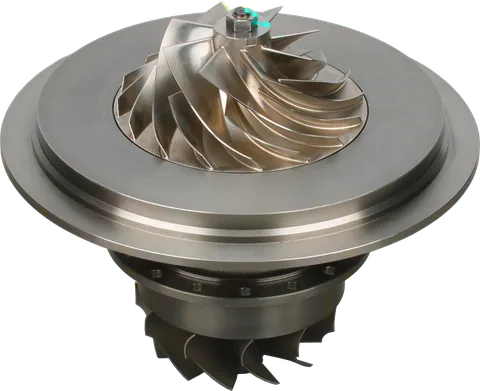
Choose a CHRA when damage is confined to the center housing rotating assembly and the reusable housings and control hardware pass inspection. Confirm exact compatibility and assembly requirements. Our CHRA vs. complete turbocharger guide explains the choice before you compare replacement cores.
Use a repair kit only for a properly assessed rebuild. New bearings and sealing rings cannot repair damaged blades, worn journals, or an out-of-spec bearing housing. Rebuilding requires measurement, appropriate equipment, and balancing of the assembled rotating group. See how to choose a turbocharger repair kit.
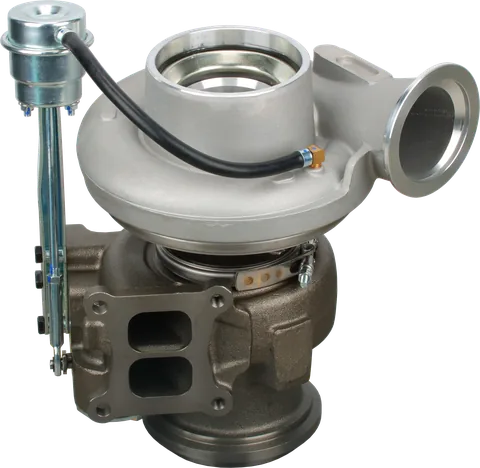
Choose a complete turbocharger when housing damage, extensive internal failure, or unsuitable reusable components makes a CHRA replacement impractical. Integrated control hardware may also affect the decision. Verify fitment and calibration requirements when selecting a complete replacement turbocharger.
A noise description alone is not a parts-selection method.
Preventing Repeat Turbo Noise
- Use the specified oil and filter. Follow the service schedule, including severe-service guidance where applicable.
- Warm the engine progressively. Avoid heavy boost immediately after a cold start.
- Manage heat after hard use. Ease the load before stopping after towing or sustained boost, and follow manufacturer cool-down guidance.
- Maintain the air filter and intake seals. Prevent dirt and loose debris from reaching the compressor.
- Investigate oil consumption and leaks early. Do not wait for a whistle to become a scrape.
- Correct the original failure cause before installation. Follow the priming and system checks in what to check before installing a replacement turbocharger.
Common Questions
Is turbo whine normal?
A smooth, familiar whistle that builds with boost can be normal. A new, louder, or rougher sound deserves inspection, especially with power loss, smoke, or increased oil consumption. Sound alone cannot confirm whether a turbo is healthy.
Can I drive with a whining turbo?
Avoid heavy boost until a new whine is diagnosed. If the noise becomes a siren, scrape, or grind, or comes with heavy smoke, rapid oil loss, or an oil-pressure warning, stop safely, shut the engine off, and arrange inspection.
Why does my turbo whistle only when accelerating?
Acceleration increases exhaust energy, turbo speed, and charge-air pressure. This can make normal spool sound louder, expose a boost leak, or amplify rotor vibration. Compare the sound under different loads and check for leaks before condemning the turbo.
Does shaft play mean the turbo is bad?
Not automatically. Some journal-bearing turbos have noticeable radial movement with the engine stopped because operating oil films are absent. Measure radial and axial movement against the exact turbo specifications. Wheel contact, binding, or damaged blades requires further investigation.
Will thicker oil stop oil whirl noise?
Changing viscosity may change the sound, but it does not establish or repair the cause. Use the specified oil grade and approval. Check oil supply, temperature, contamination, and bearing condition instead of using thicker oil or additives to mask noise.
Will a repair kit fix turbo whine?
Only if inspection confirms repairable internal wear and the remaining components meet specifications. A kit cannot restore damaged wheels or worn shaft journals. Proper rebuilding requires measurement and balancing; some failures call for a CHRA or complete turbo.
Why is my turbocharger whining?
Your turbocharger may whine from normal airflow, a boost or exhaust leak, rotor imbalance, or bearing wear. Check whether the sound is new, changes with load, or comes with power loss, smoke, or increased oil consumption. With the engine off and cool, inspect hoses, clamps, and exhaust joints; sound alone cannot confirm the cause.
Need help matching parts? Contact LeadTurbo with your turbo part number, vehicle details, and symptoms.