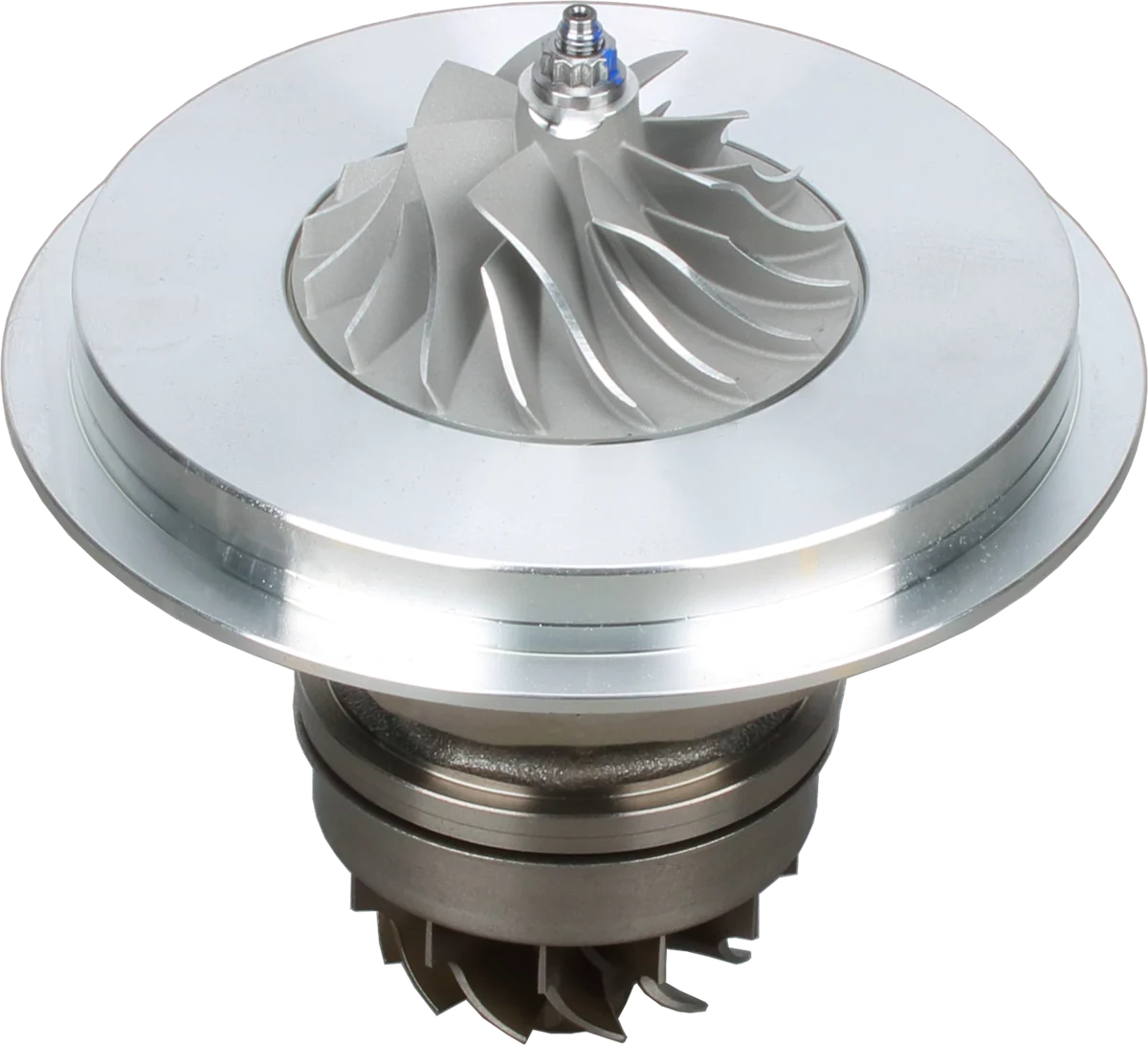
What turbo blue smoke actually tells you
The term “turbo blue smoke” describes a symptom, not a confirmed failure. Oil entering the cylinders or hot exhaust can produce blue or blue-gray smoke, but its appearance varies with temperature, lighting, and exhaust aftertreatment.
Start by confirming that smoke comes from the tailpipe. Oil dripping onto a hot turbine housing creates underhood smoke and requires a different investigation. Cold-weather condensation can also make exhaust look cloudy; color alone is not enough to identify the fluid.
Record when the smoke appears, whether the engine is cold or warm, and whether oil consumption has increased. Check the oil level using the vehicle’s specified procedure. A rising level can indicate contamination and needs investigation.
If smoke becomes heavy, oil disappears quickly, or the engine accelerates without pedal input, stop safely and arrange recovery. A diesel can burn ingested oil as fuel and may not stop when the ignition is switched off.
How Oil Gets Through a Turbocharger
Pressurized engine oil lubricates and cools the turbocharger’s bearings. After passing through them, it normally drains from the center housing back to the engine. On most installations, that return depends on gravity and a clear drainage path.
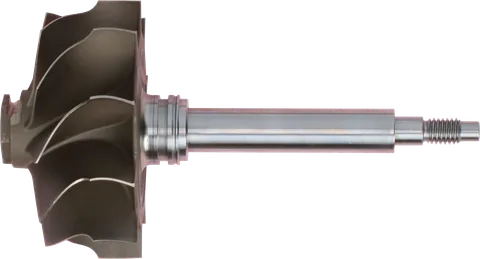
Typical turbo shaft seals use metal piston-ring-type sealing elements and associated oil-control features. They are dynamic sealing systems, not rubber lip seals that hold back a reservoir of oil. Effective oil control depends on drainage, local pressure differences, and the condition of the rotating assembly.
If oil backs up in the center housing, or pressure conditions become unfavorable, oil can cross the sealing area. That can happen with worn components, but it can also happen to a mechanically serviceable turbocharger.
There are two main paths:
- Compressor side: Oil enters the intake airflow, travels through charge pipes and the intercooler, and eventually reaches the cylinders. It may collect at low points before being carried into the engine.
- Turbine side: Oil enters the exhaust housing and encounters hot exhaust components and gases. This can produce tailpipe smoke without leaving significant oil in the charge pipes.
Bearing wear can make oil control worse by allowing excessive shaft movement, but smoke does not prove bearing damage. Likewise, describing a fault as “turbo burning oil” does not establish which path the oil followed.
For a fuller explanation of leakage mechanisms and external leaks, see Turbocharger Oil Leak Causes. This guide focuses on using smoke patterns and inspection evidence to locate the source.
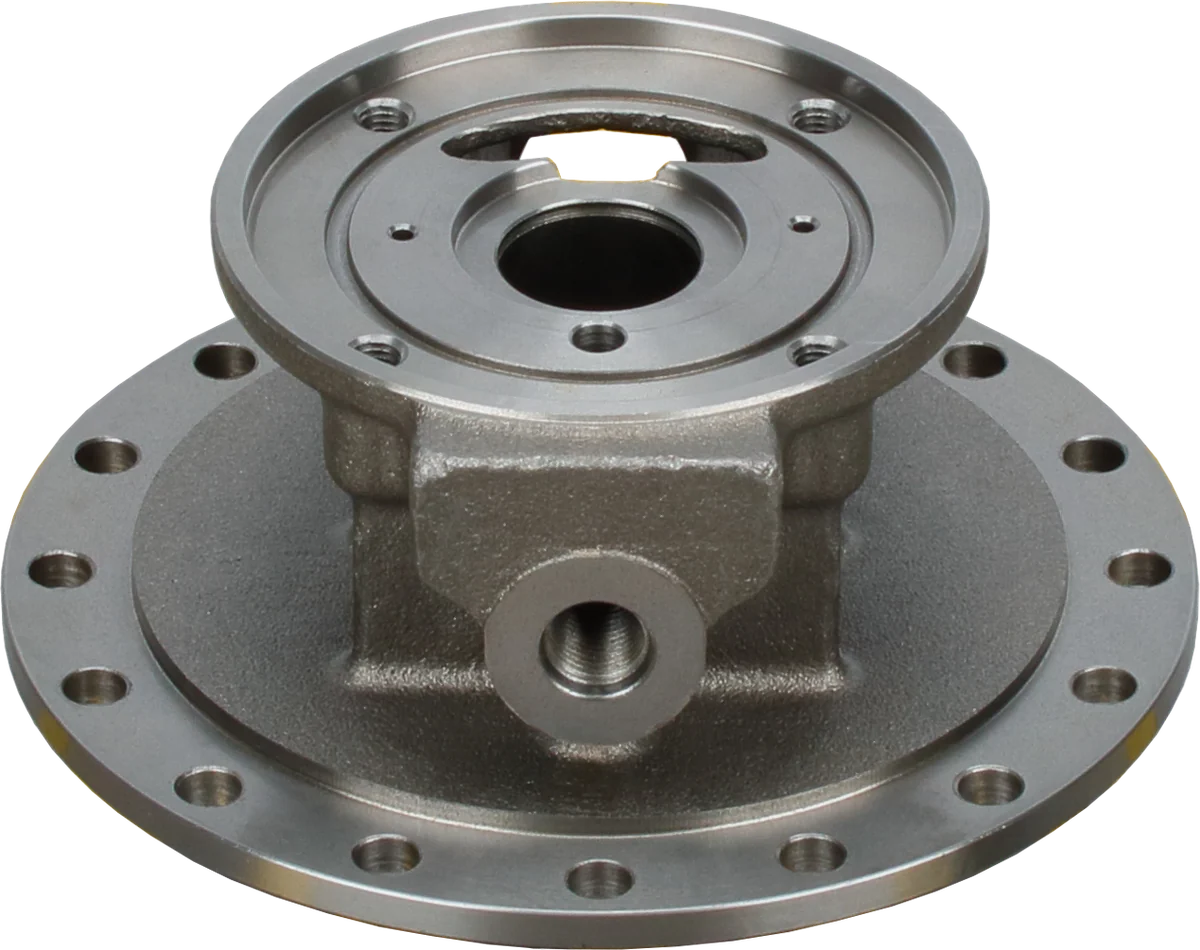
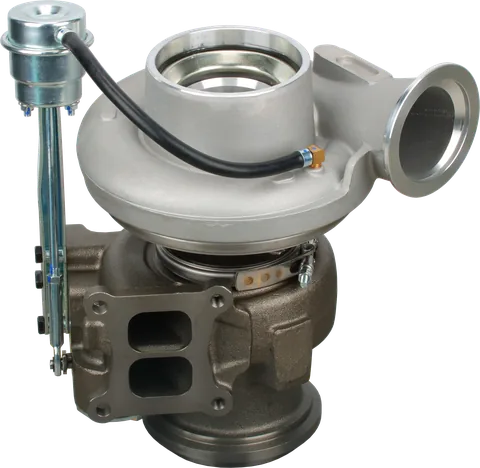
Central bore: houses the shaft and bearing system.
Mating surface: check cleanliness and damage.
Product photograph from 2026. Numbers identify the features explained below.
What the Smoke Pattern Suggests
Smoke timing helps prioritize checks. It cannot identify a failed part by itself, especially when oil has accumulated upstream of the engine or inside the exhaust.
| Smoke pattern | Possible explanation | Best next clue |
|---|---|---|
| Brief puff at cold start | Oil collected while parked; valve stem seals, turbo leakage, or oil already in the intake may be involved | Compare overnight starts with warm restarts and locate fresh oil |
| Smoke at warm idle | Turbo drainage or pressure problem, ventilation fault, or oil entering through valve guides | Check crankcase pressure and turbo return routing |
| Cloud after a long idle | Oil accumulated during idle, then moved or burned when airflow and temperature increased | Inspect both turbo oil paths; consider valve stem seals |
| Smoke under boost or load | Compressor-side oil carryover, increased blow-by, piston/ring problems, or turbine-side leakage | Check oil accumulation, crankcase pressure under relevant conditions, and consumption |
| Smoke on lift-off or when accelerating again | On throttled gasoline engines, intake vacuum can expose valve stem seal or PCV faults; previously accumulated oil can also move | Evaluate ventilation and valve sealing alongside turbo evidence |
A puff after prolonged idle is often blamed on the turbo because it appears when the driver accelerates. The oil may actually have accumulated before boost developed.
Lift-off behavior also differs between engines. A gasoline engine with a closing throttle can develop substantial intake manifold vacuum. Many diesel operating conditions do not create the same vacuum pattern. When investigating suspected blue smoke from a diesel turbocharger, avoid applying gasoline diagnostic shortcuts to every diesel pickup.
Turbocharger Smoke vs Engine Smoke: Check Ventilation Too
Several non-turbo faults can produce blue smoke from the exhaust of a turbocharged vehicle.
Valve stem seals and guides: Oil can enter through worn guides or deteriorated stem seals. Startup smoke and smoke following idle or deceleration can fit this pattern, but none is exclusive to valve sealing problems.
Piston rings and cylinders: Worn or stuck oil-control rings can leave excess oil on cylinder walls. Compression-ring or cylinder wear can also increase blow-by, raising crankcase pressure and interfering with turbo drainage. Compression and leak-down tests help assess cylinder sealing, but normal results do not rule out an oil-control-ring problem.
PCV or crankcase ventilation faults: A restricted separator, failed regulating valve, or damaged hose can upset crankcase pressure. Depending on the system, ventilation faults may also carry excess oil directly into the intake. That oil can pass through a healthy compressor and make it look responsible.
Overfilled oil: Excess oil can increase aeration and oil carryover through ventilation, and may interfere with turbo drainage depending on the engine layout. Correct an overfill and establish why it occurred before condemning components.
These faults can overlap. An engine with excessive blow-by may push a healthy turbo into leaking, so finding oil at the turbo does not necessarily identify the original cause.
How to Diagnose Turbocharger Blue Smoke
Before disassembly, record oil level, recent oil additions, fault codes, and repair history. Work with the engine stopped and cool for physical inspections. Keep debris out of open ports, and never inspect an exposed compressor wheel with the engine running.
1. Check the turbo oil drain
Start with the route oil must take out of the turbo. A turbocharger smoking at idle may have a drainage or pressure problem.
- Look for kinks, crushed sections, internal deposits, and damaged return hoses.
- Check for a gasket or sealant obstructing the opening.
- Verify that routing and center-housing orientation match the installation requirements.
- Inspect the engine-side return connection as well as the visible pipe.
An externally clean pipe may still be restricted internally. If the installation uses a scavenge pump, check its operation according to the service procedure. Replacing the turbo cannot correct a blocked return.
2. Check crankcase pressure and ventilation
Inspect ventilation hoses, the oil separator, and any specified serviceable components. Measure crankcase pressure using the manufacturer’s method and compare it with the applicable limits.
An oil-cap “dance test” is not a reliable substitute. Normal behavior varies by engine, and a problem that develops under load may not appear at idle.
If pressure is excessive, determine whether ventilation restriction or engine blow-by is responsible. Also identify where the breather connects to the intake; oil upstream of the compressor can be an important clue.
3. Check intake restriction
Inspect the air filter, inlet ducting, and hoses for blockage, collapse, or incorrect parts.
Restriction ahead of the compressor changes inlet pressure and can contribute to compressor-side oil leakage. Follow the specified restriction test if visual inspection is inconclusive.
Do not road-test with the filter removed. Correct the airflow problem and assess whether oil continues to accumulate.
4. Check shaft play and wheel condition
Inspect accessible wheel blades and housing surfaces for damage or contact marks. Assess rotation and movement gently, following the turbo manufacturer’s instructions.
Some journal-bearing turbos have noticeable radial movement without their operating oil film. Acceptable movement depends on the design; there is no reliable universal finger-feel limit.
Rubbing, binding, or movement outside specification supports mechanical damage. Normal-feeling movement does not exclude leakage. See Turbo Shaft Play: How Much Is Normal? before treating movement as a replacement decision.
5. Trace oil through the charge pipes and intercooler
Compare the compressor inlet, compressor outlet, charge pipes, and accessible intercooler connections.
- A light coating may come from crankcase ventilation.
- Oil before the compressor suggests an upstream contribution.
- A relatively dry inlet with fresh oil appearing at the outlet increases suspicion of compressor-side leakage.
- Pooled oil or rapid reaccumulation requires investigation.
Oil in intercooler plumbing may remain from an earlier failure, so one inspection cannot establish an active leak. Document findings and follow the prescribed cleaning and reinspection procedure. Significant pooled oil must be addressed before restarting, particularly on a diesel.
6. Inspect the turbine outlet
Where access and service procedures permit, inspect the turbine outlet and adjacent exhaust for fresh oily deposits.
Wet oil near the outlet supports investigation of turbine-side leakage, especially with a relatively dry charge tract. However, oil from the engine can reach the turbine through the exhaust manifold, and soot mixed with fuel or condensation can look oily.
Consider upstream evidence when accessible. A dry-looking outlet also cannot conclusively exclude leakage because heat may burn oil away. Exhaust disassembly is best left to a shop when access, sensors, or seized hardware make it difficult.
When a New Turbo Will Not Fix the Smoke
A replacement turbo will not solve excessive blow-by, faulty crankcase ventilation, an obstructed oil return, intake restriction, overfilled oil, or oil entering through the engine’s valves and rings. The replacement may start smoking for the same reason.
Build a diagnosis from evidence that agrees: smoke timing, measured consumption, pressure checks, where fresh oil appears, and mechanical condition. If those clues conflict, continue testing. The failed turbocharger diagnostic guide can help organize the broader assessment.
After correcting the cause, address oil left in the intake and exhaust according to the vehicle’s service requirements. Do not assume persistent smoke is harmless residue or attempt to clear pooled oil with a hard drive.
Before fitting replacement hardware, use the replacement turbocharger installation checklist to catch conditions that could repeat the failure.
Common Questions
Does blue smoke always mean the turbo has failed?
No. Valve stem seals, piston rings, crankcase ventilation problems, and excess oil can produce similar smoke. A restricted turbo oil drain can also cause leakage without the turbo being the original fault.
Why is my turbo smoking on startup?
Oil may have collected in the intake, exhaust, or cylinders while the vehicle sat. Valve stem seals and turbo leakage are possibilities. Check where fresh oil appears and whether the smoke returns after warm idle.
Is oil in the intercooler normal?
A light coating can come from crankcase ventilation. Pooled oil, rapid accumulation, or oil accompanied by smoke and measurable consumption needs investigation. There is no universal acceptable quantity for every vehicle.
Can a turbo leak oil without excessive shaft play?
Yes. Restricted drainage, excessive crankcase pressure, or an unfavorable pressure difference can cause leakage even when shaft movement remains within specification. Shaft play alone cannot confirm or rule out a turbo oil leak.
Can I keep driving with blue smoke?
Heavy smoke, rapid oil loss, abnormal turbo noise, or an engine accelerating by itself calls for stopping safely and arranging recovery. A diesel ingesting oil can run uncontrollably. Even intermittent smoke should be diagnosed before further loaded driving.
Will replacing a turbocharger stop blue smoke immediately?
Only if the turbo was the cause and related faults are corrected. Residual oil in the intercooler or exhaust may remain after repair. Significant pooled oil must be removed using the vehicle’s service procedure before restarting.
If you need help identifying replacement options after diagnosing turbo blue smoke, contact LeadTurbo with your turbo part number, vehicle details, smoke pattern, and inspection findings.