Diesel turbocharger bearing wear and failure often result from a problem elsewhere. Installing another turbo without finding that problem can expose fresh components to the same restricted feed, dirty oil, or damaging operating conditions.
The useful question is not simply whether the bearing is worn. To identify what causes turbocharger bearing wear, ask what disrupted lubrication or overloaded the bearing—and whether that condition still exists.
Assess turbo bearing wear before cleaning the parts
In a journal-bearing turbocharger, an oil film separates the rotating shaft from the bearing during normal operation. Floating-ring designs also have an oil film between the bearing’s outside surface and the housing. Our guide to how floating-ring bearings work explains that arrangement.
Once separation becomes inadequate, contact generates heat and debris. Those particles can create additional wear. When comparing adhesive vs abrasive turbocharger bearing wear, remember that the final damage may contain several overlapping mechanisms.
Photograph the parts before cleaning. Record where deposits, scoring, and discoloration appear, and preserve an oil sample if contamination is suspected. If warranty assessment is possible, check the supplier’s inspection requirements before disassembly.
| Wear mechanism | What happens | Bearing and shaft clues | What to investigate |
|---|---|---|---|
| Adhesive wear | The oil film becomes inadequate. Surface high spots touch, locally stick, and tear apart. | Smeared bearing material, metal transfer onto the shaft, scuffing, and possible heat discoloration. | Interrupted oil delivery, unsuitable viscosity, excessive heat, or overload. |
| Abrasive wear | Hard particles cut or plow through surfaces; particles embedded in a soft bearing can scratch the shaft repeatedly. | Circumferential grooves, fine scoring, embedded particles, or broad polished tracks. | Dirty oil, residual failure debris, filtration problems, and assembly contamination. |
| Fatigue | Repeated stress develops cracks that can release fragments of material. | Cracked or flaked bearing areas; ball-bearing races may show pitting or spalling. Shaft scoring can follow from released debris. | Repeated overload, imbalance, lubrication problems, and component condition. |
| Corrosive wear | Chemical attack damages the surface, which subsequent motion can remove. | Etching, staining, irregular pits, or roughened bearing and shaft surfaces. | Water or coolant entry and degraded oil. |
| Erosion or cavitation damage | Particle-laden flow erodes material, or vapor bubbles collapse near a surface and cause localized damage. | Localized washed-looking areas or pitting on bearing surfaces; shaft marks alone rarely identify this mechanism. | Oil condition, passage condition, and supply behavior; specialist examination may be needed. |
A smooth, bright track alone does not establish failure. Likewise, dark oil varnish is different from heat-altered metal. Evaluate appearance alongside measured clearances, surface condition, and the failure history.
1. Oil Starvation: Delivery Arrives Late or Falls Short
Oil starvation means insufficient oil reaches the bearing when needed. It can occur despite an acceptable oil level or a normal pressure reading elsewhere in the engine.
Possible causes include a blocked feed, a kinked line, a restricted inlet fitting, low sump level, or an oil pickup problem. Delayed delivery at startup also matters, particularly after installation or oil-system work. This is lubrication delay, not the boost response commonly called turbo lag.
With inadequate supply, the bearing loses both lubrication and cooling. Adhesive wear can produce smeared material and shaft scuffing. Fragments then circulate locally and add abrasive damage.
Before replacement:
- Inspect the entire feed path, including application-specific screens and fittings.
- Check for internal deposits; a clean-looking line exterior proves little.
- Verify delivery using the engine or turbo supplier’s specified pressure and flow checks.
- Investigate delayed pressure buildup, low oil level, and pickup or pump faults.
- Follow the specified prelubrication and priming procedure before the first start.
Do not add a generic restrictor or enlarge a fitting based on assumptions. Different bearing systems have different supply requirements.
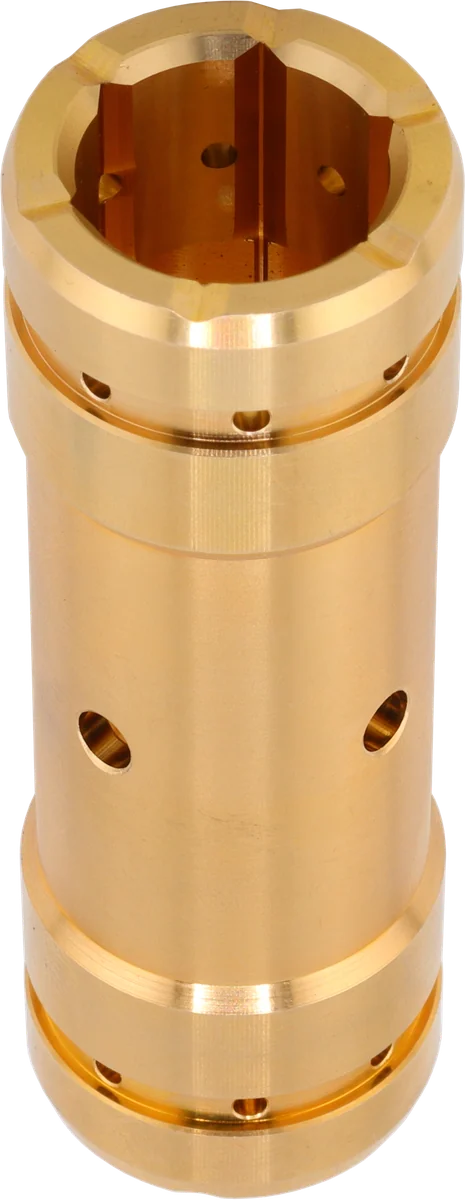
Bearing bore: the inner oil film supports the shaft.
Oil passages: keep the lubrication path clear.
Outer bearing surface: inspect the fit and condition.
Product photograph from 2026. Numbers identify the features explained below.
2. Solid Contamination: Particles Keep Cutting
Turbocharger bearing wear from contaminated oil can begin with engine wear debris, dirt introduced during service, hardened deposits, or fragments from the previous failure.
An oil filter cannot guarantee that every damaging particle is removed. A bypass valve may allow oil around the filter media when pressure differential rises. That protects oil delivery, but bypassed oil has not passed through the media. Investigate the filter specification, condition, installation, and bypass system rather than assuming bypass automatically means a defective valve.
Hard particles can become embedded in softer bearing material. The trapped particle then repeatedly cuts the rotating journal, producing turbo shaft scoring even though the shaft is harder than the bearing.
Check for:
- Grooves around the shaft and matching tracks inside the bearing.
- Embedded specks or debris near oil holes.
- Metal in the drained oil or filter media.
- Dirt, sealant fragments, or deposits in feed components.
Determine where debris could have traveled. Depending on the engine’s oil circuit, contaminated galleries, coolers, or filter housings may need cleaning or replacement under the service procedure. Avoid assuming one oil change has removed everything.
Keep replacement parts and open oil connections covered during installation. Clean assembly practices are part of the repair.
3. Unsuitable or Diluted Oil: Supply Without Adequate Protection
Oil can reach the turbo and still fail to support an adequate film. Incorrect viscosity, oil degradation, and contamination with fuel or coolant can change its protective properties.
Fuel dilution can reduce viscosity. Coolant contamination may cause deposits and chemical attack as well as lubrication problems. Water and degraded lubricant can contribute to corrosion. The resulting damage may combine polishing, scuffing, staining, and pitting.
A rising oil level deserves attention, especially when accompanied by fuel odor or unexplained coolant loss. Appearance and smell are screening clues, not reliable measurements of contamination.
Before fitting the replacement:
- Confirm the required oil viscosity and performance specification for the engine.
- Investigate fuel dilution, coolant loss, or abnormal oil-level changes.
- Use oil analysis when the contamination source or severity remains uncertain.
- Repair the source before filling with fresh oil and installing the correct filter.
Do not choose thicker oil simply to quiet a worn turbo or compensate for excessive clearance. Follow the engine’s requirements and account for its operating conditions, including Canadian cold starts.
4. Coking and Heat: Deposits Restrict the Next Oil Supply
After sustained heavy operation, heat can move from the turbine housing into the center housing after shutdown. Under unfavorable conditions, oil left in hot areas can degrade and form hard deposits.
Those deposits may restrict feed passages, interfere with drainage, or shed particles. Coking therefore connects several turbo bearing failure causes: reduced supply, excessive temperature, and abrasive contamination.
Inspect for hard deposits around the bearing housing, turbine-side areas, and oil connections. Distinguish them from removable oily residue. Also inspect heat shielding, line routing, and coolant connections on water-cooled units.
Correct the conditions that promoted deposit formation. Use the specified oil, observe the applicable service interval, and follow the vehicle manufacturer’s cooldown guidance after heavy towing or sustained load. There is no single idle time suitable for every turbocharged vehicle.
A restricted drain is another problem that deserves correction. It can cause oil backup and leakage, although leakage alone does not prove bearing wear. The guide to turbocharger oil leak causes explains the related drainage and crankcase-pressure checks.
5. Imbalance, Foreign Object Damage, and Excessive Loads
Bearing damage can start with the rotating assembly rather than the oil system.
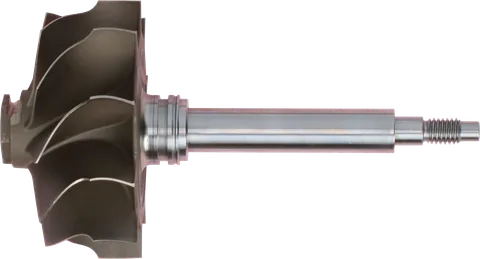
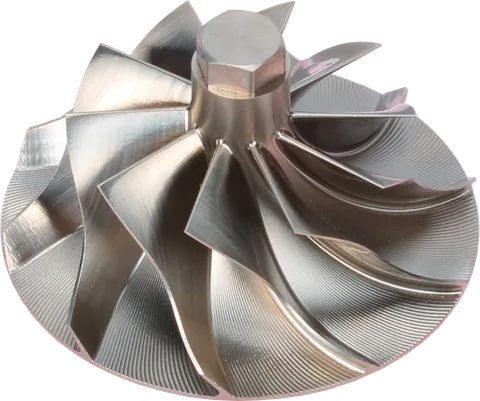
Foreign object damage, often abbreviated FOD, can remove or deform wheel material and disturb rotor balance. Deposits can also change mass distribution. The resulting rotating forces increase bearing loading and may reduce the minimum oil-film thickness enough to promote contact.
Repeated loading can contribute to fatigue. Abnormal axial loads also affect the thrust bearing, which controls end movement.
Inspect both wheels and housings:
- Look for chipped blades, bent edges, impact marks, and missing material.
- Check for rubbing and identify whether wheel damage likely preceded or followed bearing failure.
- Trace possible debris sources through the intake or exhaust path.
- Investigate relevant boost-control faults, overspeed conditions, or unsuitable modifications.
Wheel rubbing can be a consequence of excessive bearing clearance, so it does not automatically prove an original balance problem. Preserve the sequence of evidence.
A rebuilt rotating assembly needs the appropriate balancing process. Paint marks and careful reassembly do not establish acceptable balance; see turbocharger balancing explained.
Oil-film instability can also produce vibration. Whine alone cannot distinguish it from imbalance, an air leak, or contact damage. Avoid choosing a replacement based only on sound.
Checklist before fitting: how to prevent turbocharger bearing wear
Complete the root-cause repair before the replacement reaches its first start.
- Document the evidence: Keep photos, fault codes, operating symptoms, oil findings, and measurements. Separate confirmed causes from possibilities.
- Verify the oil supply: Resolve restrictions and delayed delivery. Replace feed components where required by the applicable installation instructions.
- Check return and ventilation: Confirm the drain is unobstructed and correctly routed, and investigate excessive crankcase pressure.
- Resolve contamination: Correct fuel or coolant entry and address remaining debris in affected oil-system components.
- Inspect the air path: Check the filter, intake plumbing, and charge-air system. Remove accumulated oil and fragments according to the service procedure before restarting.
- Inspect related hardware: Check wheel damage sources, cooling connections, heat shields, and relevant boost-control components.
- Choose a sound assembly: Assess shaft journals, bearing bores, thrust surfaces, and wheels against service limits. New bearings cannot restore worn geometry.
- Prime and verify: Follow the specified installation procedure, establish lubrication as directed, and check for leaks and abnormal behavior before applying load.
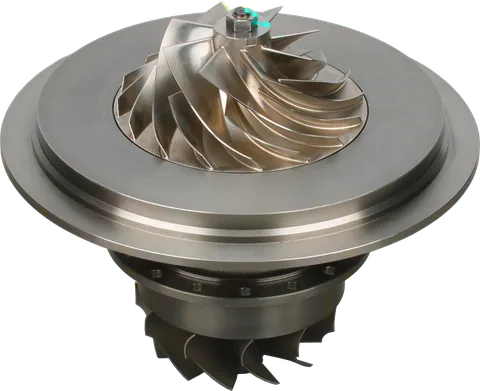
A CHRA versus complete turbocharger assessment helps establish repair scope when the housings or controls may also be damaged.
Common Questions
What does turbo bearing wear look like?
Typical signs include grooves, smeared metal, abnormal polished patches, embedded particles, and damaged thrust surfaces. Heat discoloration or pitting may also appear. No single mark proves the cause; compare the bearings, shaft, oil passages, and wheel condition.
Does shaft play mean the turbo bearings have failed?
Not by itself. Some journal-bearing turbos have noticeable radial movement without operating oil pressure. Measure radial and axial movement against the specifications for that turbo. Wheel contact, binding, or movement outside specification requires further investigation.
Can oil starvation occur with normal engine oil pressure?
Yes. A restricted turbo feed line or inlet fitting can limit local oil delivery while pressure elsewhere in the engine appears normal. Check supply at the turbo using the applicable service procedure, including startup delivery where specified.
Will fresh oil fix a scored turbo shaft?
No. Fresh oil cannot restore damaged journal geometry or remove particles embedded in a bearing. Correct the oil problem, then have the shaft and housing assessed against service limits. Replace damaged components or the appropriate turbo assembly.
Can a repair kit solve turbo bearing wear?
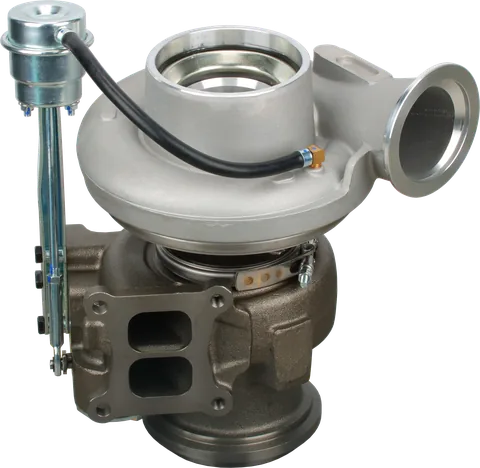
Only when the reusable components remain within specification and the repair includes the required inspection, measurements, and balancing. New bearings cannot compensate for a scored shaft, worn housing bore, or damaged wheels. A CHRA or complete turbo may be more appropriate.
Does turbo whine prove bearing wear?
No. Air leaks, wheel damage, imbalance, and bearing-system vibration can produce similar complaints. A changing sound is a reason to investigate, especially with smoke or lost performance, but it does not identify a wear mechanism by itself.
Can worn turbocharger bearings be replaced?
Yes, but only if the reusable parts are within specification and the repair includes the required inspection, measurements, and balancing. Check the shaft, bearing bores, thrust surfaces, and wheels against service limits. New bearings cannot fix worn geometry, so a CHRA or complete turbo may be more appropriate.
For help identifying replacement options after turbo bearing wear, contact LeadTurbo with your turbo part number, vehicle details, and symptoms.