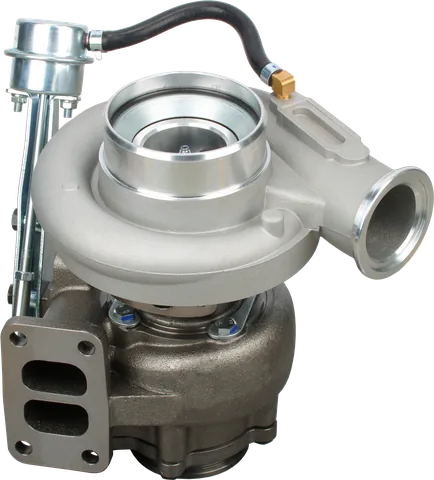
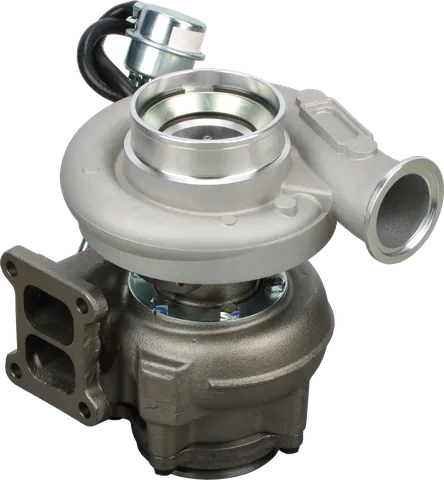
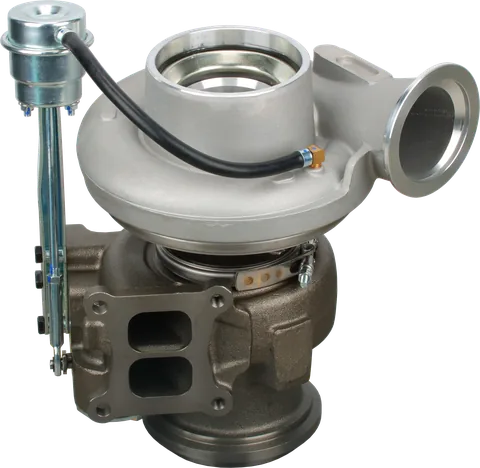
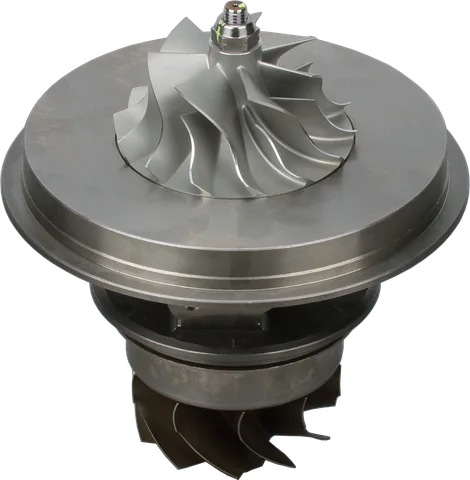
A Volvo D13 turbo replacement starts with two jobs: identifying the installed assembly and finding out why it stopped performing. Low boost, smoke, or oil in a charge pipe can point toward the turbocharger, but each can also result from an engine or installation problem.
The D12, D13, and D16 are heavy-duty inline-six diesel engine families. The LeadTurbo catalog spans truck, construction, industrial, and marine applications, including Volvo Penta D16 turbocharger replacement listings. These applications impose different operating conditions and installation requirements.
Turbocharger condition matters because the compressor supplies the air needed to burn fuel effectively under load. Bearing damage, air leaks, restricted exhaust flow, or incorrect boost control can reduce performance and increase thermal stress. Replacing the turbocharger without correcting the original cause risks another failure.
How to Identify a D13 Turbocharger Before Ordering
Start with the turbo identification plate or stamped identification area, commonly on or near the compressor housing. Its exact position varies. Clean it carefully and photograph every line; a mirror may help when the tag faces the engine.
Record the complete assembly number, turbo model, and any customer or OE number. Also record the engine designation and equipment application. If the tag is missing, collect engine identification details and clear photographs of the housings, connections, and actuator for cross-reference checking.
A turbo model such as HX55 describes a design family. An OE part number identifies a particular service application, while a turbo manufacturer's assembly number identifies a specific build. A number cast into a housing may identify only that casting. These identifiers are not automatically interchangeable.
Volvo D12 turbocharger replacement options in the catalog include GT4288, GT4594, HX52, and HX55 models. D13 and MD13 listings include HX55, HX55W, HE431VE, HE400VG, HE500WG, and HE500FG. D16-related entries include S500, S500C, HE551W, HE551, and HX60W. These names identify possibilities, not a universal interchange list.
Variants may differ in:
- Housing A/R: The relationship between scroll area and radius affects exhaust flow capacity and turbine response.
- Boost control: Free-floating assemblies have no wastegate or variable geometry; wastegated units bypass exhaust around the turbine; VGT units vary turbine flow geometry.
- Wheel specifications: Compressor and turbine dimensions and trim affect flow and operating behavior.
- Connections: Oil fittings, coolant connections where fitted, mounting flanges, outlets, and housing orientation must match.
Do not infer the installed control arrangement solely from a model suffix or catalog title.
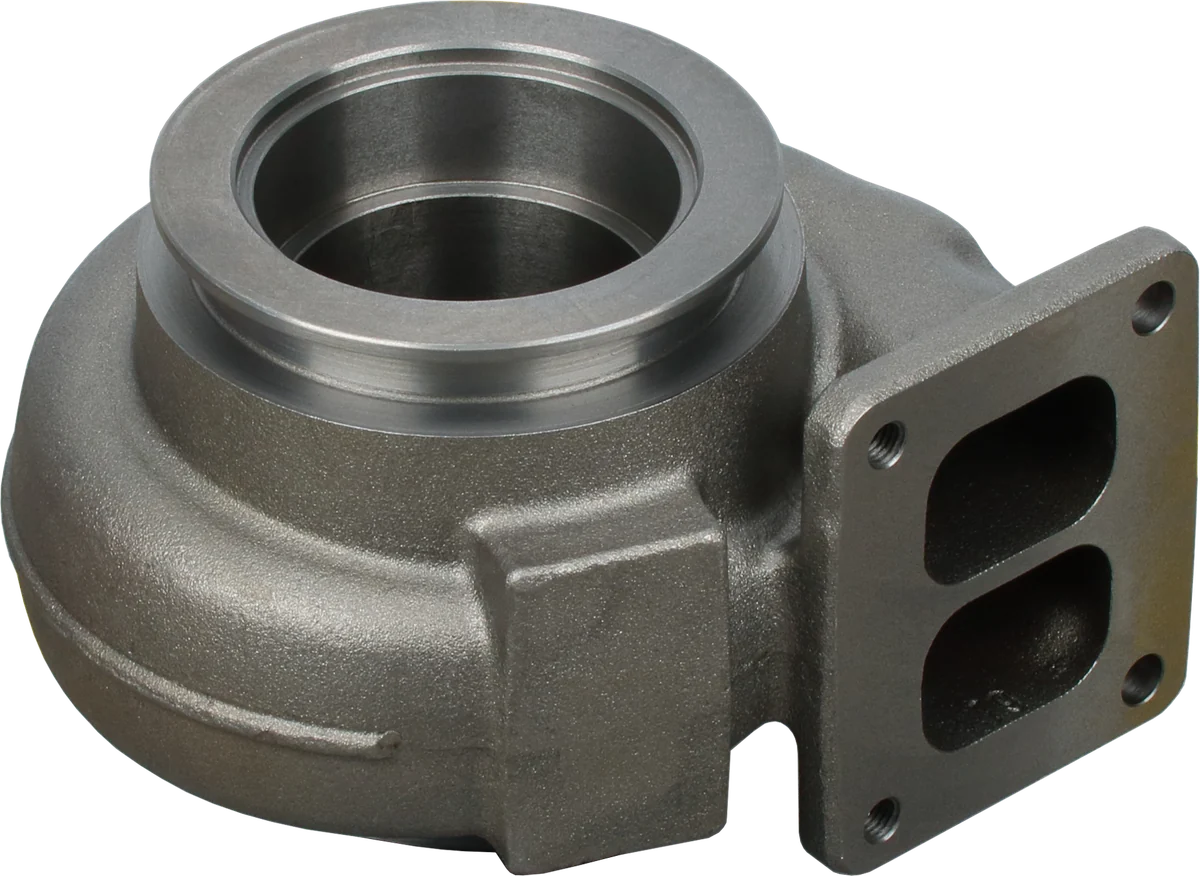
Exhaust inlet: verify the flange and passage geometry.
Turbine cavity: check clearance and contact damage.
Mounting face: the replacement must match the interfaces.
Product photograph from 2026. Numbers identify the features explained below.
Representative Catalog Examples
These examples reproduce selected catalog identifiers and applications. Verify every choice against the turbo data plate and OE part number before ordering. A shared number across component types does not mean the products contain the same parts.
| Part number | Turbo model | Product type | Application |
|---|---|---|---|
| 11030482 | GT4594 | Complete turbocharger | Volvo D12C |
| 452101 0002 | GT4288 | Complete turbocharger | Volvo D12A |
| 20488006 | HX52 | Complete turbocharger | Volvo D12C |
| 15144169 | HX55 | Complete turbocharger | Volvo D12 L220F |
| 15196770 | HX55W | Complete turbocharger | Volvo D13 |
| 20728220 | HX55 | Complete turbocharger | Volvo MD13 (Ref 3790510) |
| 4047372 | HE431VE | Complete turbocharger | MACK Volvo D13 Engines |
| 21042278 | HE400VG | CHRA/cartridge | Volvo MD13 440HP |
| 21701449 | HE500WG | Turbine housing | Volvo MD13 Tier 2 |
| 3781029 | HE500FG | CHRA/cartridge | Volvo D13 480HP |
| 15009989487 | S500 | Complete turbocharger | Volvo Penta D16 |
| 3801381 | S500C | CHRA/cartridge | Volvo Penta D16 |
An MD13 turbo search can return complete assemblies, cartridges, and housings. Always check the product type as well as the number. Likewise, the S500 and S500C Penta entries above should not be treated as a confirmed turbo-and-cartridge pairing.
Symptoms, Mechanisms, and Checks
Boost loss or slow response. Split charge-air boots, a leaking intercooler, or loose clamps can release compressed air before it reaches the engine. An exhaust leak upstream of the turbine reduces available driving energy. Intake restrictions, exhaust restrictions, wheel damage, and control faults can produce similar complaints.
Pressure-test the charge-air system using the equipment's approved procedure and limits. Inspect the filter, intake ducting, manifold joints, and exhaust path. Where diagnostics support it, compare commanded and actual boost and actuator position before removing the turbo.
Black, blue, or white smoke. Black smoke can indicate insufficient air for the injected fuel, but fuel-system faults also deserve attention. Blue smoke suggests oil burning; possible sources include the turbo, crankcase ventilation, and engine wear. White smoke is not a reliable turbo diagnosis and may involve fuel combustion or coolant.
Assess smoke alongside oil consumption, operating conditions, fault codes, and engine condition. Visible smoke alone cannot identify the failed component.
Oil leakage. Turbo oil control depends on pressure relationships and unobstructed drainage, not simply a rubber seal around the shaft. A restricted return line or excessive crankcase pressure can prevent oil from draining properly and encourage leakage into the compressor or turbine.
Check the crankcase breather, oil level, return-line routing, and drain passages. Inspect external feed and drain joints separately. A light oil film in charge piping can come from ventilation carryover; pooling oil or rising consumption needs investigation. If substantial oil has accumulated in the intake, address it before restarting.
Whine, whistle, or scraping. A new whistle may come from an air or exhaust leak. Check for loose connections, and pressure-test the charge-air system using the equipment's approved procedure and limits. A pronounced siren-like whine can accompany wheel damage, rotor imbalance, or bearing deterioration. Inspect for damage and rub marks; sound alone cannot establish rotor balance. A pronounced siren-like whine can accompany wheel damage, rotor imbalance, or bearing deterioration. Scraping suggests possible wheel-to-housing contact.
Inspect for loose connections, foreign-object damage, and rub marks. Noise can travel through housings and pipework, so its apparent location may mislead. Do not diagnose rotor balance by sound alone or spin the turbo with shop air.
Shaft play. Journal-bearing turbos can have perceptible radial movement when stopped because the operating oil film is absent. That does not make all movement acceptable. Axial clearance, radial clearance, wheel condition, and evidence of contact must be evaluated against the exact assembly's service limits.
A hand check cannot establish remaining service life. A shaft that binds, damaged blades, or visible rubbing warrants further inspection before operation.
Cracked turbine housing. Repeated heating and cooling create thermal stress. Abnormal exhaust temperatures, restricted exhaust flow, or external loads from poorly supported pipework can worsen damage. Cracks may leak exhaust or affect a wastegate seat or internal flow path.
Evaluate crack location and severity against applicable service criteria. Repair the underlying operating or mounting problem before installing another housing.
Actuator or variable-geometry faults. Where fitted, sticking vanes, worn linkage, failed control plumbing, wiring damage, or an actuator fault can prevent the turbo from reaching its commanded position. An actuator-related code does not by itself prove the actuator needs replacement.
Check power, grounds, connectors, control signals, and mechanical movement using the specified procedure. Avoid forcing an electronic actuator or changing stops and linkage settings without instructions.
Across these symptoms, verify lubrication early. Dirty oil abrades bearing surfaces; interrupted supply damages the supporting oil film. Inspect the feed system and investigate contamination, overheating, and oil-pressure problems before fitting new rotating parts.
Volvo D13 turbo: Choose the Right Replacement Scope
Complete turbocharger. Choose a complete assembly when several major components are damaged, housing condition is uncertain, or a controlled assembly replacement best suits the repair. Confirm what the listing includes: “complete” does not automatically establish actuator, gasket, or installation-hardware contents.
CHRA/cartridge. A cartridge replaces the center rotating assembly while retaining compatible outer housings and other serviceable components. It suits a repair where bearing or rotor damage is isolated and the retained parts pass inspection. Verify the exact cartridge specification and balance documentation; matching the broad turbo model is insufficient.
Repair kit, journal bearing, or thrust bearing/collar. These options suit specialist rebuilding after measurement confirms that reusable components remain within specification. New bearings cannot correct a scored shaft, distorted bore, or damaged wheel. Reassembly requires appropriate cleanliness, clearances, and balancing procedures.
Individual housings or rotating parts. The family catalog also includes turbine housings, compressor housings, bearing housings, compressor wheels, and turbine wheel/shaft assemblies. A housing replacement requires correct geometry and inspection of the parts it surrounds. Changing wheels or disturbing the rotating assembly requires specialist balance verification.
Actuators are another listed product type. Replace one only after confirming compatibility and separating an actuator fault from mechanical sticking or an electrical problem.
LeadTurbo supplies aftermarket replacement parts. Verify the exact product and application rather than assuming an OE affiliation or universal compatibility.
Volvo D13 Turbocharger Installation Priorities for Heavy Diesels
-
Remove the cause and the debris. Inspect the complete intake and charge-air path after wheel damage or oil discharge. Clean or replace affected ducting and the intercooler according to service guidance. Trapped fragments can damage the engine or replacement turbo; pooled oil can be drawn into the cylinders.
-
Restore a reliable oil supply and return. Inspect the feed for restrictions, heat damage, and contamination. Replace suspect lines as required. Confirm the drain is unobstructed, correctly routed, and free from gasket intrusion. Check crankcase pressure and breather operation rather than assuming drainage is satisfactory.
-
Use correct gaskets and support the assembly. Fit specified new gaskets and seals, observe tightening procedures, and align pipework without pulling it into place with bolts. Heavy exhaust sections need proper support. Keep sealant and debris out of oil passages.
-
Prime before loading the bearings. Follow the supplier's priming instructions with clean, specified engine oil. Where the engine procedure calls for cranking with fueling disabled, use the approved method to establish lubrication. Do not substitute an improvised starting procedure.
-
Complete control and startup checks. Perform electronic actuator alignment, calibration, or relearn where required. Check coolant connections where fitted. At startup, inspect for oil, coolant, intake, and exhaust leaks before applying load. Verify boost response and fault status during a controlled operational check.
For a Volvo Penta turbo installation, also inspect the marine exhaust arrangement for water intrusion or restriction where applicable. Shared engine naming does not establish that truck and marine assemblies are interchangeable.
Common Questions
How do I identify the correct Volvo D13 turbo?
Record the complete turbo data-plate number and OE part number, then confirm the engine designation and application. Compare housing connections, mounting flanges, and actuator configuration. The engine name or turbo model alone does not establish fitment.
Are all HX55 Volvo turbos interchangeable?
No. The catalog includes HX55 listings for different Volvo applications. Housing geometry, wheel specifications, connections, and control arrangements can differ. Verify the complete assembly number and OE cross-reference before ordering.
Does oil in the charge-air piping mean the turbo has failed?
Not necessarily. Oil can enter through crankcase ventilation, and restricted drainage or excessive crankcase pressure can cause turbo oil leakage. Investigate the amount of oil, consumption trend, drain condition, and breather system before condemning the turbo.
Can I replace only the CHRA?
Yes, when the exact cartridge is matched and the reused housings and control components pass inspection. A CHRA will not correct a cracked housing, damaged vane mechanism, or faulty actuator. Confirm balance verification and follow the supplier's assembly instructions.
Does a replacement electronic actuator need calibration?
It may require installation alignment, calibration, or a relearn procedure using suitable diagnostic equipment. Follow the procedure for the exact turbo and engine. Do not assume a matching electrical connector means the actuator is correctly configured.
Can a truck turbo replace a Volvo Penta turbo?
Only with a verified cross-reference for the exact marine application. A shared engine designation or similar appearance does not establish compatibility. Confirm the complete assembly number, connections, housing configuration, and installation requirements.
Why does my D13 turbocharger whistle?
A new whistle may come from an air or exhaust leak. Check for loose connections, and pressure-test the charge-air system using the equipment's approved procedure and limits. A pronounced siren-like whine can accompany wheel damage, rotor imbalance, or bearing deterioration. Inspect for damage and rub marks; sound alone cannot establish rotor balance.
Volvo D13 CHRA vs complete turbocharger: which should I choose?
Choose a matched CHRA when bearing or rotor damage is isolated and the retained housings and control components pass inspection. Choose a complete turbocharger when several major components are damaged or housing condition is uncertain. Verify exact cartridge specifications and balance documentation; for a complete assembly, confirm whether the actuator, gaskets, and installation hardware are included.
Send the turbo data-plate number, OE part number, engine details, and photos to LeadTurbo to confirm fitment for your Volvo D13 turbo, other Volvo truck turbocharger, or marine application.