A Cummins ISL turbo replacement starts with identification, not engine displacement or appearance. The same broad engine family can appear beside several turbo models in a catalog, and even two units labeled HX40W may have different installation requirements.
For fleet and bus/truck mechanics, the job has two priorities: select the correct assembly and find out why the previous turbo stopped working properly. Replacing a damaged unit without correcting oil starvation, intake contamination, or a control fault can put the replacement at risk immediately.
LeadTurbo supplies aftermarket replacement parts. Catalog applications provide a starting point; the turbo data-plate number and OE part number must be verified before ordering.
The engine family and why turbo condition matters
The Cummins C/L family includes the 8.3-liter 6CT and 8.9-liter ISL, both inline-six diesels. In heavy vehicles and industrial service, these engines depend on adequate airflow under sustained load.
The turbocharger uses exhaust energy to drive a compressor that increases intake-air density. Reduced airflow can mean weaker pulling performance, smoke, and higher thermal stress under some operating conditions. An electronically controlled engine may also limit fueling or enter a derate when measured conditions fall outside its control limits.
Turbo condition therefore affects more than acceleration. Damaged bearings, leaking charge-air plumbing, or a sticking control mechanism can interrupt a working vehicle’s duty cycle. However, low power alone does not identify the turbo as the failed component.
Identify the Cummins ISL turbo before choosing a replacement
Look for an identification plate, tag, or marked identification pad on the turbo, commonly on the compressor housing. Location varies, and installed pipework or shielding may obscure it. With the engine cool, clean the area gently and photograph every readable field.
Record the complete assembly number, any listed OE/customer number, model designation, and serial number. Keep prefixes and suffixes. A casting number on an individual housing may identify only that casting, not the complete turbo.
The model describes a turbocharger family; an OE part number identifies a more specific service application. When checking which turbocharger fits a Cummins ISL, neither should be substituted casually for the other.
The LeadTurbo catalog includes H1E, H2D, HX35, HX35W, HX40, HX40W, HE400WG, HE400VG, and HE431V entries across the listed applications. Some HX35W entries refer to QSC or ISC applications, so they should not be treated as evidence of fitment to every 6CT or ISL. For an ISLe turbocharger search, note that the relevant catalog titles commonly use “ISLE.” The application wording helps narrow the search, but it does not establish interchangeability.
Important differences include:
- Turbine housing geometry: A/R, where specified, describes a housing area-to-radius relationship. Housing geometry affects exhaust flow and response; matching the outside shape is insufficient.
- Boost control: A wastegate bypasses exhaust around the turbine. A free-floating configuration has no wastegate or variable-geometry control. A VGT changes turbine flow geometry. Verify the actual arrangement rather than assuming it from the engine name.
- Wheel specification: Compressor and turbine diameters, trim, and blade geometry must match the intended assembly.
- Connections: Check oil-feed fittings, drain position, water connections if fitted, inlet and outlet sizes, mounting flanges, and housing orientation.
- Actuation: Confirm the actuator type, mounting, connector where applicable, and required setup.
When comparing HX40W vs HE400WG turbocharger listings, similar application wording does not make the units automatically interchangeable.
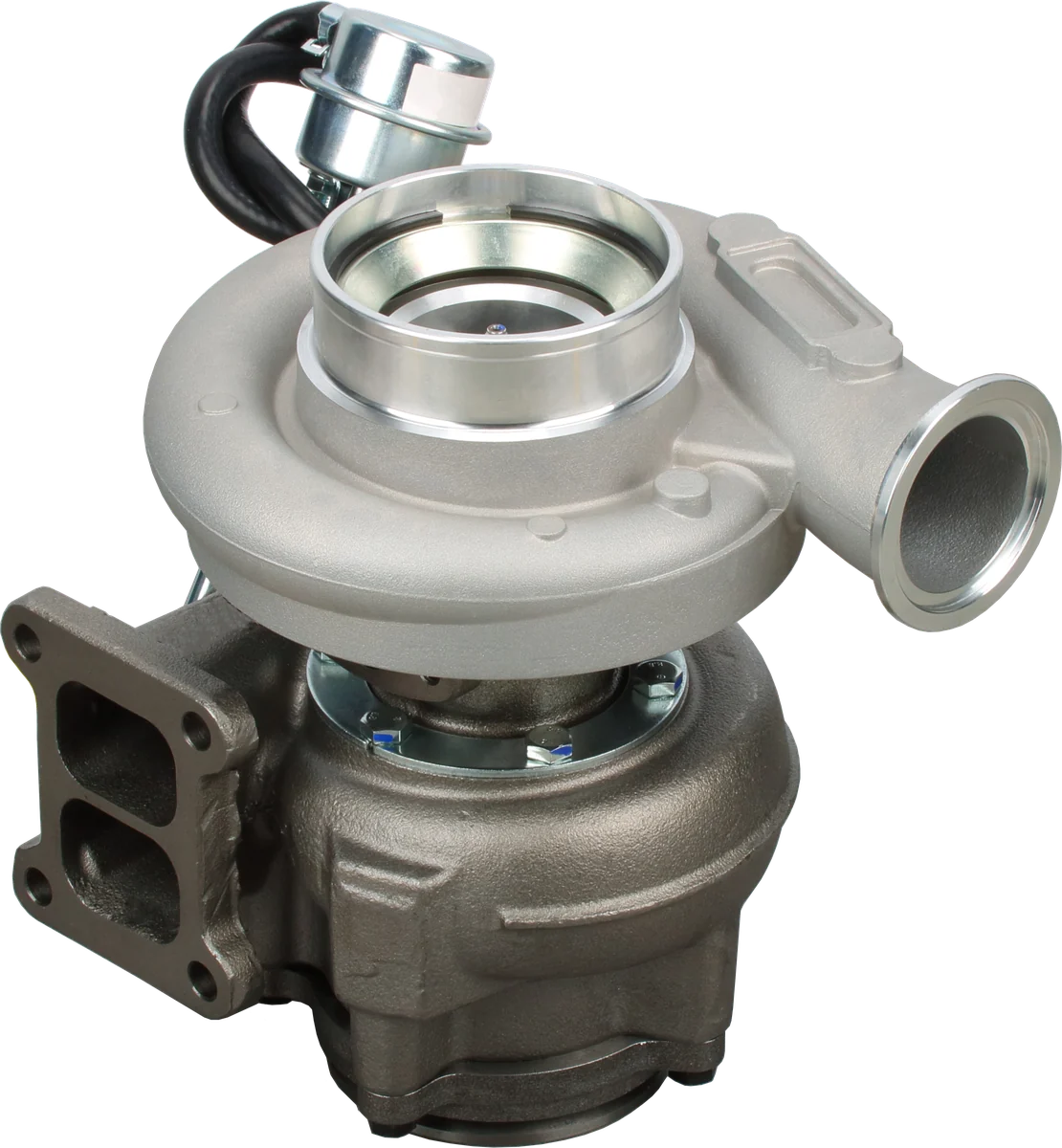
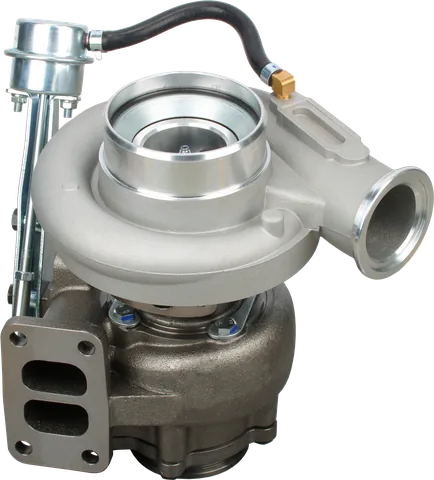
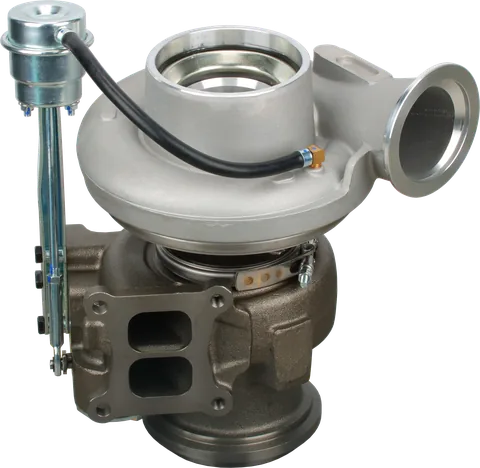
Compressor housing: guides the compressed air.
Turbine housing: guides exhaust gas to the turbine.
Actuator: check its type, linkage and calibration.
Product photograph from 2026. Numbers identify the features explained below.
Representative catalog examples—verify against the data plate
These examples come from the LeadTurbo catalog. They are identification references, not a universal compatibility chart.
| Part number | Turbo model | Product type | Application |
|---|---|---|---|
| 2834174 | HX40W | Complete turbocharger | Cummins ISLE Engines |
| 2834288 | HX40W | Complete turbocharger | Cummins ISLE Engines |
| 3524034 | H1E | Complete turbocharger | Cummins 6CT Engines |
| 3533000 | HX40 | Complete turbocharger | Cummins 6CTAA |
| 3596987 | HX40 | Complete turbocharger | Cummins 6CT |
| 3596987 | HX40 | CHRA/cartridge | Cummins 6CT |
| 3770664 | HE400WG | Complete turbocharger | Cummins ISLE Engines |
| 3778554 | HE400VG | Complete turbocharger | Cummins ISL |
| 4090052 | HE431V | Complete turbocharger | Cummins ISL ISLE |
| 4034000 | HE431V | CHRA/cartridge | Cummins ISL |
| 3545751 | H2D | CHRA/cartridge | Cummins 6CTA 430HP Marine |
| 3526038 | H2D | Turbine housing | Cummins 6CTA 430HP |
The repeated 3596987 entry illustrates why product type matters: a complete turbo and a cartridge are different purchases even when the catalog uses the same reference number.
Cummins ISL turbocharger failure symptoms, mechanisms, and checks before replacement
Boost loss and black smoke. A split charge-air hose, leaking intercooler, restricted air cleaner, or exhaust leak ahead of the turbine can reduce air delivery. A wastegate stuck open can divert too much exhaust away from the turbine. Variable-geometry faults can also impair boost control.
Black smoke indicates incomplete combustion and can accompany insufficient air, but fueling and injector problems also belong in the diagnosis. Inspect the intake ducting and pressure-test the charge-air system using the applicable service procedure. Check for exhaust soot tracks, restrictions, fault codes, and plausible sensor readings before condemning the turbo.
Oil leakage and blue smoke. Turbo oil control depends partly on pressure conditions and unrestricted oil drainage. A restricted drain or excessive crankcase pressure can make oil escape even when a simple seal replacement would not address the cause. Bearing wear can contribute, while crankcase ventilation may introduce oil into the intake independently.
Check engine oil level, consumption, breather condition, crankcase pressure, and the feed and drain lines. Inspect the charge-air cooler for accumulated oil. Substantial pooling or heavy oil smoke warrants investigation before restarting because ingested oil can fuel uncontrolled engine acceleration.
Whine, whistle, or scraping. Some airflow noise is normal. A new whistle under load can come from a charge-air or exhaust leak. A siren-like whine may accompany rotating damage or imbalance; scraping suggests possible wheel contact.
Noise alone cannot establish bearing condition. Damaged blades and deposits can change rotor balance, while disrupted lubrication can damage bearing surfaces. Inspect for foreign-object damage and contact marks. Do not adjust oil supply or bearing clearances as an improvised noise fix.
Shaft play and bearing damage. An unpressurized journal-bearing turbo may have perceptible radial movement. That does not make every amount acceptable. Measure clearances using the correct inspection method and limits; check axial movement, free rotation, and evidence of wheel contact.
Oil starvation weakens the lubricating film that separates moving surfaces. Contaminated oil can abrade bearings and shaft surfaces. Investigate restricted supply lines, incorrect oil, filter problems, and contamination from earlier engine damage.
Cracked turbine housing. Repeated heating and cooling create thermal stress. Excessive temperature, mounting stress, or unsupported exhaust pipework can worsen cracking. Cracks may leak exhaust externally, interfere with wastegate sealing, or affect internal flow, depending on location.
Assess cracks against the relevant inspection criteria. An external leak, loose material, or damage affecting wheel clearance calls for corrective action, not an assumption that all heat-related cracking is harmless.
Actuator and control faults. Where a pneumatic wastegate is fitted, inspect its signal hose, linkage, and movement according to the service procedure. For electronic actuation, check wiring, connectors, power supply, fault codes, and commanded versus actual position where available.
A seized mechanism can resemble an actuator fault, and a wiring fault can resemble a failed turbo. Do not alter linkage settings to hide a boost-control problem.
Cummins ISL turbocharger replacement options after inspection
A complete turbocharger is appropriate when damage affects several sections, housing condition is questionable, or reliable rebuilding is impractical. Confirm what the assembly includes, particularly actuator hardware, rather than assuming every complete listing arrives with identical accessories.
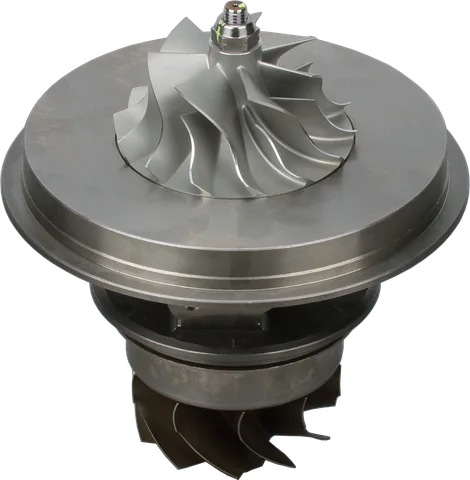
A CHRA/cartridge replaces the central rotating assembly. It can make sense when the reusable housings, mounting surfaces, and control mechanism remain serviceable. Match the exact cartridge specification and confirm the supplier’s balancing and assembly requirements. A cartridge does not repair a cracked turbine housing or a sticking external mechanism.
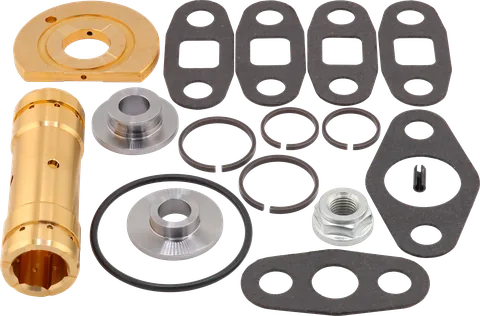
A repair kit suits a controlled rebuild when the reusable parts meet dimensional limits. New bearings and sealing components cannot restore a scored shaft or damaged bearing bore. Rebuilding requires inspection, cleanliness, accurate measurement, and the appropriate balancing process.
The catalog summary also includes turbine housings, compressor housings, bearing housings, turbine wheel/shafts, and compressor wheels. These allow targeted repairs when the remaining components are sound. Wheels must match the assembly precisely; replacing rotating parts requires professional balancing verification, not visual alignment alone.
For a working fleet, compare the full repair burden for a Cummins ISL turbo—including inspection, setup, and downtime—rather than only the component being replaced.
How to replace a Cummins ISL turbocharger without repeat failures
Before fitting a Cummins 6CT turbocharger replacement or an ISL unit, correct the diagnosed cause and prepare the surrounding systems.
-
Remove debris and accumulated oil. Inspect the air cleaner, intake pipes, charge-air hoses, and intercooler. After wheel damage, locate fragments and clean or replace affected components using an approved procedure. Replace a cooler if debris cannot be reliably removed.
-
Restore the lubrication path. Inspect the oil feed for restriction, heat damage, and internal contamination. Check the drain for kinks, deposits, and correct routing. Replace suspect lines and use the specified engine oil and filter.
-
Check crankcase ventilation. Confirm that the breather works and investigate excessive crankcase pressure. A replacement turbo cannot correct engine blow-by or a blocked ventilation system.
-
Use new specified gaskets and seals. Clean mating surfaces and follow the required tightening procedure. Keep excess sealant out of oil passages. Align and support the heavy exhaust and intake connections so they do not load the turbo housings.
-
Prime before starting. Follow the replacement supplier’s instructions for introducing clean oil and establishing oil pressure. Where directed, use the engine’s approved cranking procedure with starting disabled. Avoid a dry first start.
-
Complete control setup and verification. Perform electronic actuator calibration or learning if required. At first start, check lubrication and leaks before applying load. Then verify boost-control behavior, fault status, and connections during a controlled operating check.
Common Questions
Does every Cummins ISL use an HX40W turbo?
No. The catalog includes HX40W, HE400WG, HE400VG, and HE431V entries across ISL and ISLE applications. These are not automatically interchangeable. Match the turbo data-plate number and OE part number before ordering.
Can I order an 8.3 Cummins turbo by engine displacement alone?
No. Displacement does not identify the housing, wheel specification, boost-control arrangement, or connections. Use the turbo identification numbers, engine information, and photos to confirm the replacement.
Is some turbo shaft play normal?
Some radial movement can be present in an unpressurized journal-bearing turbo. Acceptability depends on the specified clearances and inspection method. Wheel contact, binding, or axial movement outside specification requires further investigation.
Does oil in the intercooler prove the turbo has failed?
No. Oil can also enter through crankcase ventilation, and restricted drainage or excessive crankcase pressure can cause turbo oil leakage. Pooling oil, rising oil consumption, or heavy blue smoke requires investigation before restarting.
When is a CHRA a reasonable replacement?
A CHRA can be appropriate when the rotating assembly or bearings are damaged but the reusable housings and control mechanism pass inspection. Confirm the exact cartridge specification and correct the original failure cause.
Does an electronic turbo actuator need calibration?
Depending on the assembly and service procedure, actuator installation may require calibration or a position-learning routine with compatible diagnostic equipment. Confirm the requirements before fitting the replacement, and verify operation afterward.
Send the Cummins ISL turbo data-plate number, OE part number, engine details, and photos to LeadTurbo to confirm fitment before ordering.