A Cummins 6BT turbo replacement begins with identification, followed by diagnosis. “5.9 Cummins” describes an engine family, but it does not identify one interchangeable turbocharger.
The 5.9L Cummins B-series uses an inline-six diesel layout. The 6BT, 6BTA, and 6BTAA designations appear across truck, bus, equipment, pickup, and other working applications. Installation details and turbo specifications vary with the application.
The turbocharger uses exhaust energy to compress incoming air. When it cannot deliver the required airflow, a hard-working diesel may lose pulling power, produce more smoke, or operate with excessive exhaust temperatures under load. Bearing or wheel damage can also introduce oil or debris into the intake. Correct fitment and correction of the original failure cause matter equally.
Which Cummins 6BT turbo models appear in the catalog?
The LeadTurbo catalog associates HX35, HX35W, H1C, H1E, TA3406, and TA3407 complete turbochargers with 6BT or 6BTAA applications. HY35W and TA3408 entries include 6BTA applications, and an H1C entry also lists 6BTA.
The catalog also contains ISB and ISBE listings. Their presence does not establish interchangeability with a 6BT, 6BTA, or 6BTAA installation. Likewise, a marine listing should not be assumed suitable for a truck or machine.
An HX35W turbo or H1C turbo designation narrows the search, but the complete assembly number is the stronger fitment reference.
Representative Catalog Examples—Verify Against the Data Plate
These examples reproduce catalog identifiers and application wording. They are starting points for identification, not an interchange chart. Application text may describe listing coverage without documenting every installation detail.
| Part number | Turbo model | Product type | Application |
|---|---|---|---|
| 2882132 | HX35 | Complete turbocharger | Cummins 6BT |
| 3502449 | H1C | Complete turbocharger | Cummins 6BT 180PS |
| 3520055 | TA3406 | Complete turbocharger | Cummins 6BT5.9 |
| 3529883 WH1C | — | Complete turbocharger | Cummins 6BTAA |
| 3532042 | HX35W | Complete turbocharger | Cummins 6BTAA 210PS |
| 3534377 | H1E | Complete turbocharger | Cummins 6BT |
| 3592811 | HY35W | Complete turbocharger | Dodge Ram Cummins 6BTA |
| 466575 0002 | TA3408 | Complete turbocharger | Cummins 6BTA |
| 3529008 | H1C | Complete turbocharger | Cummins 6BTA |
| 447450 0065 | TA3406 | CHRA/cartridge | Cummins 6BT5.9 |
| 451567 5005 | TA3407 | Turbine housing | Cummins 6BT |
| 3599644 | H1E | Compressor wheel | Volvo TD73E Cummins 6BTAA |
How to Identify a 6BT Turbocharger Before Ordering
Look for a metal identification plate or engraved identification area, commonly on the compressor housing. Placement varies; dirt, paint, pipework, or heat shielding may hide it. Clean carefully and photograph the entire tag without sanding away its markings.
Record every readable identifier, including the Cummins 6BT turbo assembly number, model, serial number, and any customer or OE number. A housing casting number may identify only that casting, so it should not be used alone to order a complete turbocharger.
The OE part number identifies an original-equipment reference; the turbo model identifies a broader design family. A LeadTurbo catalog identifier should be checked against the installed assembly’s numbers rather than automatically treated as an OE number.
Also photograph the complete installation, both housing outlets, manifold connection, oil lines, and actuator. Include the engine identification and equipment details. Previous repairs or conversions may mean the installed hardware differs from what the engine designation suggests.
Why Similar-Looking Turbos Differ
Several details can prevent an otherwise similar turbo from being a correct replacement:
- Housing size and A/R: A/R describes housing flow area relative to radius. Different housing specifications affect response and flow capacity. Some housings use other size markings.
- Boost control: A wastegate bypasses exhaust around the turbine. A free-floating configuration has no wastegate; “free-floating” here does not describe the bearings. VGT changes turbine flow geometry. These systems require different hardware and controls.
- Compressor and turbine trim: Wheel dimensions and geometry affect airflow and operating range. A shared model name does not guarantee identical wheels.
- Oil and water connections: Feed fittings, drain mounting, and coolant connections, where fitted, must suit the installation. Do not assume every unit is water-cooled.
- Flanges and orientation: Manifold flange, divided or undivided passages, exhaust outlet, compressor connections, and housing orientation must match.
The catalog includes HE300VG listings for ISB/ISBE applications. That does not establish VGT fitment for the 6BT entries. Verify the actual configuration when choosing a 6BTA turbocharger or a turbocharger for a Cummins 6BTAA.
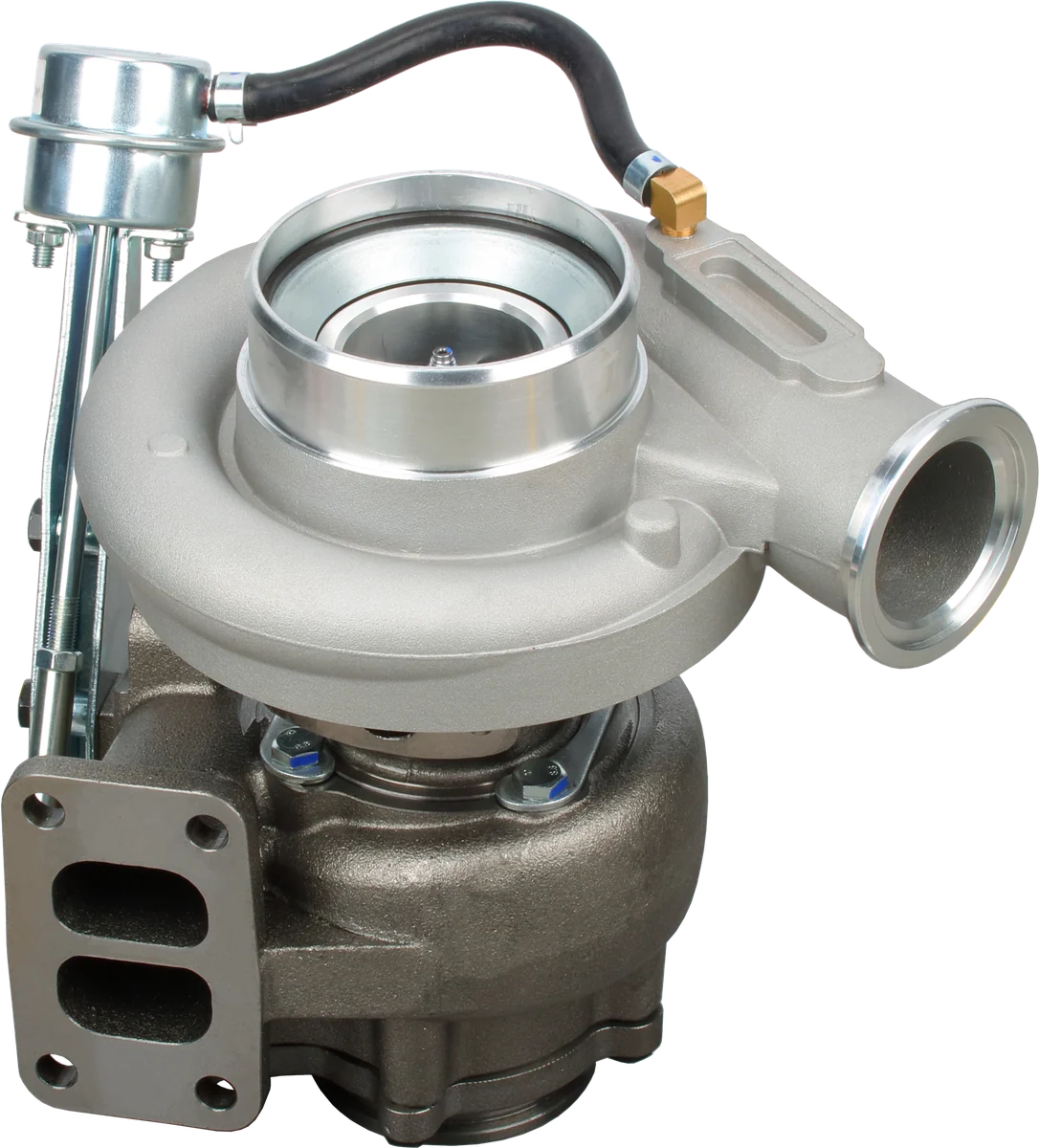
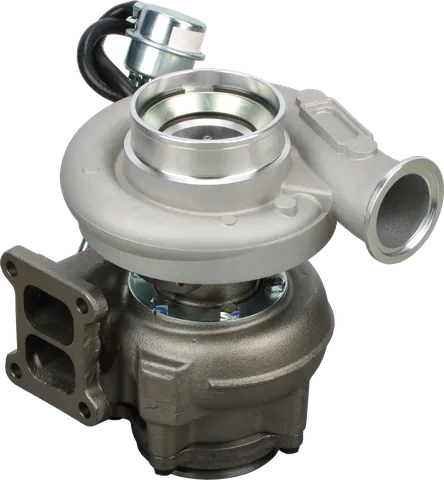
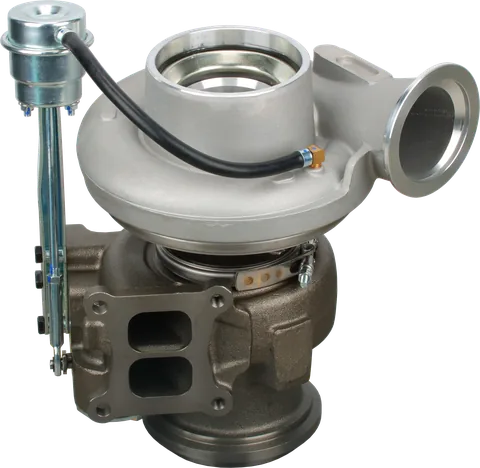
Compressor housing: guides the compressed air.
Turbine housing: guides exhaust gas to the turbine.
Actuator: check its type, linkage and calibration.
Product photograph from 2026. Numbers identify the features explained below.
Cummins 6BT Turbocharger Failure Symptoms and What They Mean
Boost Loss and Black Smoke
Reduced boost can result from damaged wheels or excessive internal wear, but split charge-air boots, loose clamps, and leaking intercoolers are common alternative causes. Exhaust leaks before the turbine reduce the energy available to drive it.
Black smoke indicates incomplete combustion and can accompany insufficient air for the injected fuel. It can also involve fueling or engine problems. Inspect the air filter and intake ducting, pressure-test the charge-air system using the applicable procedure, and check for exhaust restriction before condemning the turbo.
Oil Leaks and Blue Smoke
External oil at a feed fitting is different from oil entering the compressor or turbine. Turbo sealing depends on operating pressure conditions and effective oil drainage, as well as internal component condition.
A restricted drain or excessive crankcase pressure can interfere with oil return and promote leakage. Intake restriction can also disturb the pressure conditions around the compressor-side seal.
Trace the source, inspect the crankcase ventilation system, and check engine oil consumption. An oily intake film alone does not prove turbo failure, particularly where crankcase ventilation feeds the intake. Pooled oil or rapid oil loss needs investigation before further operation.
Whine, Whistle, or Scraping
Airflow and rotating blades naturally generate sound. A new whistle may come from a leaking hose joint or exhaust gasket. A rising siren-like whine can accompany bearing damage, wheel damage, or rotor imbalance, but sound alone cannot identify the failed component.
Scraping or visible wheel contact warrants stopping operation. With the engine stopped and cool, inspect the accessible wheel and housing for damaged blades, rub marks, and foreign material. Do not spin the turbo with compressed air.
Shaft Play
Journal-bearing turbos rely on an oil film during operation. With the engine stopped, some radial movement may be detectable because that film is not pressurized.
Judge radial and axial clearances against the exact turbo’s service limits. Finger feel is only a screening check. Binding, blade contact, or damaged wheels requires professional inspection.
Cracked Turbine Housing
Repeated heating and cooling, excessive exhaust temperature, and mechanical stress can contribute to cracks. Their importance depends on location, depth, and whether they affect sealing, structural integrity, or wastegate operation.
Soot tracks can reveal an external exhaust leak. Have cracks assessed against the applicable service criteria; appearance alone cannot establish whether a housing is reusable.
Actuator Problems
Where fitted, a wastegate stuck open can reduce boost. A gate that cannot open properly can allow excessive boost under some conditions. Damaged pressure hoses, a leaking actuator diaphragm, seized linkage, or incorrect adjustment can cause control problems.
For electronically controlled installations, inspect wiring and follow the specified diagnostic procedure. Do not adjust rods or stops by trial and error.
Find the Root Cause
Oil starvation can collapse the protective film between shaft and bearings. Contaminated oil can abrade those surfaces even when oil pressure appears normal. Inspect feed-line restrictions, oil condition, filter history, and evidence of contamination.
Check for missing air-filter seals, damaged intake plumbing, or debris upstream of the compressor. Investigate abnormal crankcase pressure and engine wear. Correcting these faults before replacement helps prevent the same damage from recurring.
Choosing the Replacement Scope
Complete Turbocharger
A complete aftermarket replacement turbocharger for a Cummins 6BT is often appropriate when multiple areas are damaged, housings are cracked or worn, or the assembly’s repair history is uncertain.
It can simplify replacement, but “complete” does not establish which installation accessories are included. Confirm the actuator, connection arrangement, and required gaskets against the listing and installed turbo.
CHRA or Cartridge
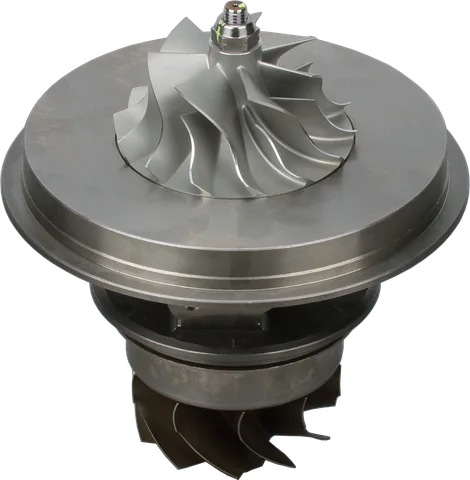
A CHRA replaces the center housing and rotating assembly while allowing serviceable outer housings to be reused.
Choose this route only after confirming exact cartridge compatibility and checking the housings for cracks, erosion, wheel contact, and damaged locating surfaces. Wastegate components also need inspection. Confirm the assembly’s balancing specification and installation requirements.
Repair Components and Repair Kits
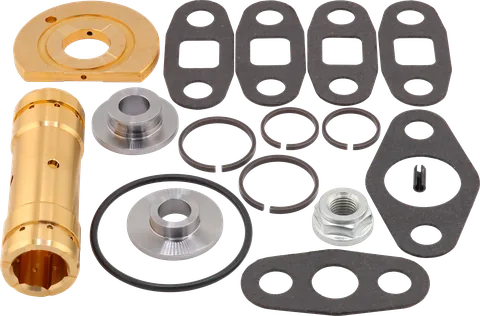
For this family, LeadTurbo lists individual rebuild components such as journal bearings, thrust bearings/collars, piston/seal rings, and shaft nuts. When choosing Cummins 6BT turbocharger repair kits, confirm exactly which parts a rebuild requires before ordering.
Component repair requires measurements of the shaft, bearing housing, thrust surfaces, and seal-ring grooves. New bearings cannot restore a scored shaft or enlarged bore. Rebuilding also requires appropriate balancing and assembly procedures.
Individual Housings and Wheels
The catalog summary includes turbine housings, compressor housings, bearing housings, compressor wheels, and turbine wheel/shaft assemblies.
These can support a targeted repair when the remaining parts are serviceable. Wheel replacement changes the rotating assembly and requires appropriate balancing. A housing must match the intended wheel clearances, flow specification, connections, and control arrangement.
Installation Tips for Working Diesels
Use the engine and turbo supplier’s procedures for the exact Cummins 6BT turbocharger installation.
- Remove contamination. Inspect and clean intake plumbing and the intercooler, where fitted. After wheel failure, locate and remove debris throughout the affected air path. Replace components that cannot be reliably cleaned or verified.
- Use correct new gaskets. Clean mating faces and check flange condition. Keep sealant out of oil passages and follow specified fastener torques.
- Inspect oil feed and drain. Check for coking, internal restrictions, damaged fittings, and collapsed lines. Ensure the drain has the required orientation and an unobstructed return path.
- Check crankcase pressure. Inspect the breather and investigate excessive blow-by. An unresolved drainage problem can make a replacement turbo leak.
- Prime before starting. Introduce clean specified engine oil as directed by the turbo supplier. Where prescribed, disable fueling and crank according to the engine procedure to establish lubrication.
- Verify controls and operation. Check wastegate hose routing and specified adjustment. Perform electronic actuator calibration or learning if required. Start and inspect for leaks, then confirm operation under controlled load before returning the vehicle or machine to service.
Common Questions
Which turbo fits my Cummins 6BT?
The catalog includes several turbo models for 6BT applications. Match the installed turbo’s data-plate number and OE part number, then confirm housings, connections, flange configuration, and control hardware. The engine designation alone is insufficient.
H1C vs HX35W turbocharger: is a direct swap possible?
Do not assume a direct swap. Both appear in the catalog for this engine family, but mounting, housing size, outlet orientation, oil connections, and wastegate requirements can differ. Confirm the exact replacement specification before ordering.
Does shaft play mean the turbo is worn out?
Some radial movement can be normal in an unpressurized journal-bearing turbo. Acceptable clearance depends on the exact unit. Wheel contact, binding, damaged blades, or movement beyond the specified limits requires further inspection.
Will a new turbo fix blue smoke or oil in the intake?
Only if the turbo is the actual cause. Restricted oil drainage, excessive crankcase pressure, intake restriction, or engine wear can create similar symptoms. Diagnose those conditions before replacing the turbo.
When is a CHRA a reasonable replacement?
A CHRA can be suitable when the rotating assembly is damaged but both outer housings and the control hardware remain serviceable. Confirm exact cartridge compatibility, housing condition, and the replacement assembly’s balancing and installation requirements.
Can I rebuild the turbo with bearings and seal rings?
Possibly, after a specialist measures the shaft, bearing bores, thrust surfaces, and seal-ring grooves. New bearings and rings cannot correct damaged hard parts. Reassembly requires the specified clearances, fastening procedures, and appropriate balancing.
Why is my 6BT turbocharger failing?
Oil starvation can collapse the oil film between shaft and bearings, while contaminated oil can abrade those surfaces. Inspect oil feed restrictions, contamination, intake plumbing, crankcase pressure, and engine wear.
Send the Cummins 6BT turbo data-plate number, OE part number, engine details, and photos to LeadTurbo to confirm fitment before ordering.