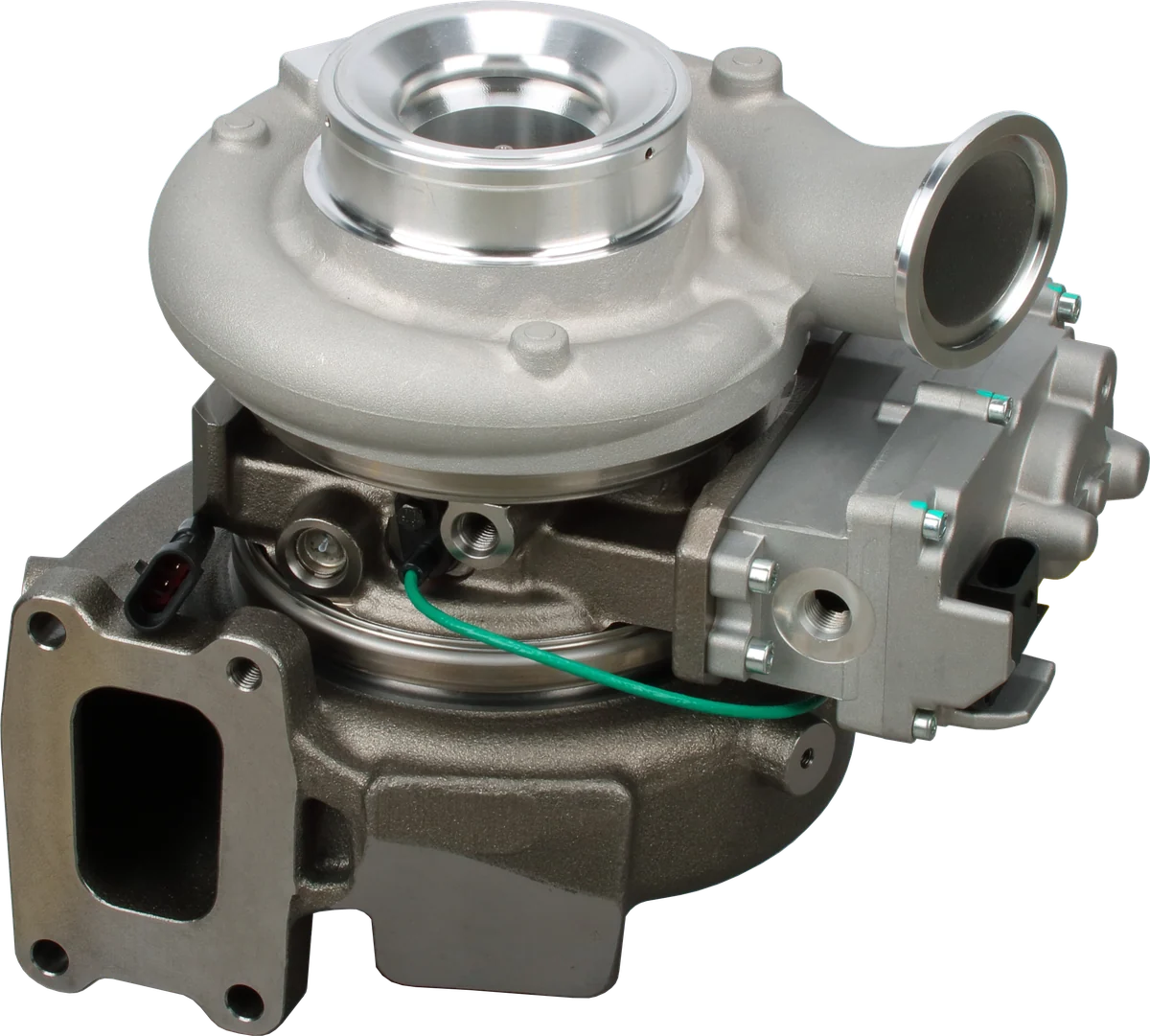
Diesel turbocharger boost limits vary; there is no universal safe PSI number. For context only, many factory pickup-class diesels run roughly 20–35 psi of gauge boost at full load, and many modern heavy-duty engines run more; those are factory calibrations for specific hardware, not limits you can transfer to another engine. The practical answer to “how much boost can a diesel handle” is the range validated for its engine rating, turbocharger, and duty cycle. A pressure that works in one application may overload another. For an engine that has just overboosted, the highest gauge reading alone cannot tell you whether damage occurred.
Turbocharger boost vs cylinder pressure
Most dashboard boost gauges show pressure above local atmospheric pressure. Scan data may instead show manifold absolute pressure. Confirm the units, reference, and sensor location before comparing readings. Pressure measured at the compressor outlet can differ from intake manifold pressure because the charge cooler and plumbing introduce losses.
Neither reading directly measures the force of combustion. The engine compresses the incoming charge, then fuel burns in it. Compression ratio, injection timing, fuel quantity, air temperature, and valve timing all influence the pressure developed inside the cylinder.
| Limit | What can go wrong | What establishes the boundary |
|---|---|---|
| Peak cylinder pressure | Excess combustion force overloads engine structures and bearings. | Engine design and a validated combustion calibration. |
| Thermal load | Pistons, valves, oil, and coolant carry more heat than the system can manage. | Component temperature limits and cooling capability under sustained load. |
| Turbocharger speed | The rotating assembly exceeds its permitted operating range. | Turbo speed limits and a correctly matched airflow requirement. |
These limits overlap, but none can stand in for the others. A normal coolant gauge does not prove piston temperatures are acceptable, and a normal exhaust gas temperature reading does not prove cylinder pressure is safe.
How does turbocharger boost increase cylinder pressure?
Higher intake pressure generally raises the pressure present during compression. With the same compression ratio and broadly similar combustion conditions, this raises the starting point from which combustion pressure develops. When a tune also adds fuel or changes injection timing, the resulting peak can rise further.
Peak cylinder pressure in a diesel is the highest pressure reached during the combustion cycle, not the boost reading on the dash. It pushes down on the piston and tries to separate the cylinder head from the block. That force travels through the connecting rod, crankshaft, and bearings.
| Component | Effect of increased loading | Possible damage |
|---|---|---|
| Head gasket and head joint | Greater combustion force challenges clamping and sealing. | Combustion leakage, coolant pressurization, or gasket failure. |
| Rods, crankshaft, and engine bearings | Higher firing loads increase structural stress and oil-film loading. | Fatigue, deformation, or bearing damage. |
| Pistons and ring lands | Greater pressure combines with combustion heat. | Cracking, ring-land damage, or heat-related distress. |
Low engine speed deserves particular attention when a tune requests more torque. The amount of fuel burned per firing event can be high even though the tachometer reading is modest. A boost limit that ignores engine speed and commanded torque misses an important part of the load.
The rate of pressure rise and when the peak occurs also matter. You cannot calculate a dependable cylinder pressure limit by multiplying dashboard boost by compression ratio. Nor does a small percentage increase in boost guarantee an equally small increase in stress.
More air does not automatically mean more heat everywhere. At unchanged fueling, additional air can reduce smoke and sometimes exhaust temperature. However, that does not remove compression loads, compressor discharge heating, or the possibility of turbo overspeed.
How manufacturers support higher boost
An original equipment (OE) manufacturer can develop a version with higher output by changing several parts of the system together. That is why a factory engine using more boost is not evidence that a version with a lower power rating can safely copy its pressure target.
| Design or calibration choice | Why it helps | What still needs attention |
|---|---|---|
| Lower compression ratio | Reduces compression pressure for a given intake condition, creating room for higher boost. | Starting behavior, efficiency, combustion design, and the final pressure limit. |
| Retarded injection timing | Can move heat release later and reduce peak cylinder pressure. | Excessive retard can increase exhaust temperature and reduce efficiency. |
| Charge cooling | Lowers intake temperature and increases air density. | Denser air changes cylinder filling; cooling does not cancel combustion loads. |
| Matched hardware and boost control | Keeps airflow and boost aligned with the intended operating range. | Turbo speed, transient response, component strength, and sustained cooling capacity. |
Higher boost with lower compression is therefore an engineering combination, not a shortcut. The manufacturer must validate fuel delivery, combustion timing, component temperatures, and durability together. Simply fitting a thicker head gasket to reduce compression can disturb sealing and combustion geometry; it is not a substitute for a designed piston and combustion system.
The turbocharger has its own limit
An engine may tolerate a certain manifold pressure while its turbocharger cannot produce that pressure safely at the required airflow. Altitude, inlet restriction, charge-system pressure losses, and operating efficiency all affect how hard the compressor must work.
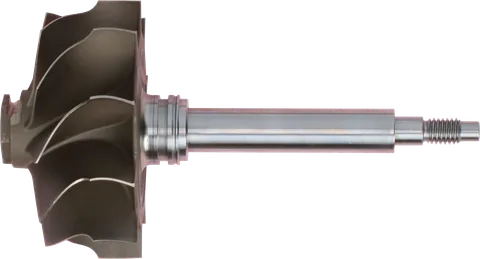
Overboost can accompany excessive shaft speed, exposing the wheels and shaft to damaging stress. Compressor and turbine pressure conditions also influence axial thrust. An unsuitable operating point can overload the thrust bearing; speed and heat can challenge the shaft bearings and lubricating oil film.
Boost alone cannot establish turbo speed or thrust load. A larger compressor wheel, stronger engine fasteners, or an upgraded bearing does not create unlimited capacity elsewhere. A turbocharger must be matched to the engine's airflow and operating range.
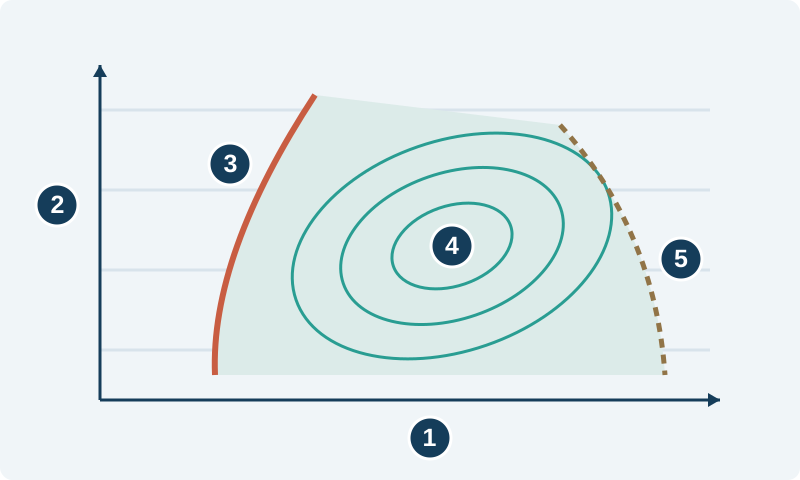
Horizontal axis: corrected air mass flow.
Vertical axis: absolute pressure ratio.
Low-flow boundary: surge limit.
Contours: efficiency islands inside the operating map.
High-flow boundary: choke region.
Qualitative schematic, not measured test data or operating limits.
Diesel turbocharger overboost symptoms and what to do next
An overboost fault means the control system detected pressure outside its expected criteria; it does not specify which part, if any, was damaged. A sensor or control fault must also be considered. Symptoms that warrant attention include:
- An overboost warning, repeated power reduction, or actual pressure exceeding the commanded value.
- Coolant being pushed out, unexplained coolant loss, or abnormal cooling-system pressure.
- New knocking, rough running, increased blow-by, or loss of compression.
- New turbo noise, oil consumption, smoke, or reduced power.
- Rising exhaust, coolant, or oil temperatures during the same workload.
These signs are not proof of a particular failure, and some damage produces no immediate symptom. Avoid repeating full-load pulls to see whether the problem returns. Save fault codes and freeze-frame data before clearing them, and record engine speed, load, measured boost, and the conditions when the event happened.
There is no universal safe duration for an overboost spike. A transient allowance built into a factory calibration is different from an uncontrolled excursion, and the absence of a fault code cannot certify that a modified setup stayed within its mechanical limits.
Stop heavy operation and follow the equipment's shutdown and inspection procedure if there is severe new noise, overheating, coolant discharge, or low oil pressure. Have the pressure measurement, boost control, and engine condition checked using the manufacturer's diagnostic instructions before returning to demanding service.
Before you tune: what to verify
Start with the exact engine serial number, power rating, existing calibration, and turbocharger part number. Related engines can share displacement or a block casting while using different pistons, compression ratios, injectors, head fasteners, and cooling packages.
Duty cycle matters as much as the advertised peak. A short acceleration run does not establish durability during a loaded climb, continuous generator operation, or sustained marine duty. Repeated pressure cycles contribute to fatigue, while sustained load exposes heat-rejection limits.
- Establish a healthy baseline: resolve cooling, lubrication, fueling, and boost-control problems first.
- Use the OE pressure specification for the relevant speed, load, and ambient conditions.
- For an upgrade, require documented compatibility between the engine hardware, turbo, fuel system, and calibration.
- Ask how cylinder pressure, component temperatures, and turbo speed were validated across the intended duty cycle.
- Keep working protection strategies and verify the final setup under controlled, representative conditions.
Can a replacement turbocharger handle more boost? A unit that fits the manifold is not evidence of a safe package for higher output. Neither is a clean dyno pull or a boost figure reported for someone else's truck. If the engine's allowable cylinder pressure is not published for service use, a boost gauge cannot supply the missing engineering data.
The safe default is to stay within the OE calibration. Move beyond it only with an engineered combination backed by suitable validation, rather than choosing a pressure first and hoping the components will tolerate it.
Common Questions
Can extra boost be safe without adding fuel?
Additional air may reduce smoke or exhaust temperature when fueling stays fixed, but it can still raise compression pressure and push the turbocharger harder. Whether it is acceptable depends on the complete operating point and validated limits.
Does a larger turbocharger make higher boost safe?
A suitable larger unit may supply the required airflow more efficiently. It does not increase the engine's cylinder pressure limit, head clamping force, or cooling capacity. Turbo sizing and engine durability require separate validation.
Will stronger head studs prevent boost damage?
Correctly specified fasteners can improve clamping in an engineered build. They do not strengthen pistons, rods, bearings, or the turbocharger, and they cannot correct poor sealing surfaces or an unsuitable calibration.
Does normal EGT mean cylinder pressure is safe?
No. Exhaust temperature and peak cylinder pressure describe different conditions. Injection timing can change pressure without producing an obvious EGT warning, and sensor location affects the temperature reading.
Does a brief overboost event always cause damage?
No, but a brief event is not automatically harmless. Severity, engine speed, fueling, temperature, and prior condition all matter. Check the recorded event against the manufacturer's diagnostic procedure before returning to heavy work.
On stock internals, how much boost can a diesel handle?
Use the manufacturer's specified operating range for the exact engine rating and calibration. A shared block or displacement does not establish the same limit. Without validated data for that build, an added-boost target is a guess.
Can overboost damage a turbocharger?
Yes. Overboost can come with excessive shaft speed that puts damaging stress on the wheels and shaft. Boost pressure alone cannot tell you turbo speed or thrust load. Save fault codes and freeze-frame data, then have pressure readings and boost control checked using the manufacturer's diagnostic instructions before returning to heavy work.
Contact us with your turbocharger part number, engine details, and application for help choosing a suitable replacement turbocharger or matching parts.