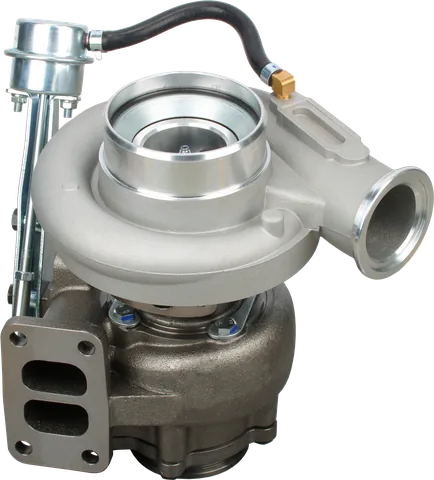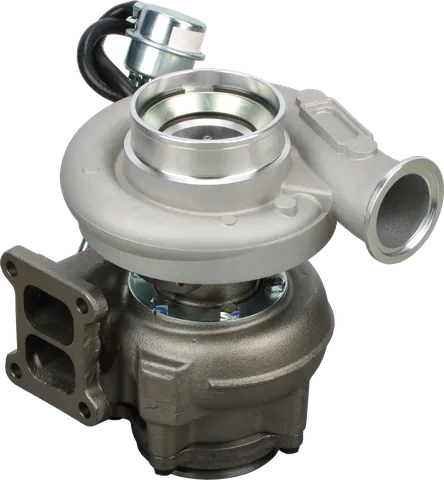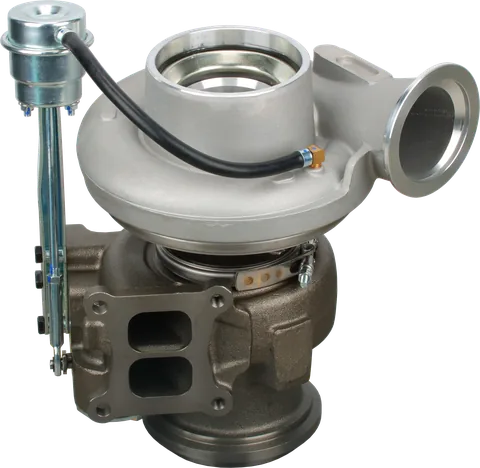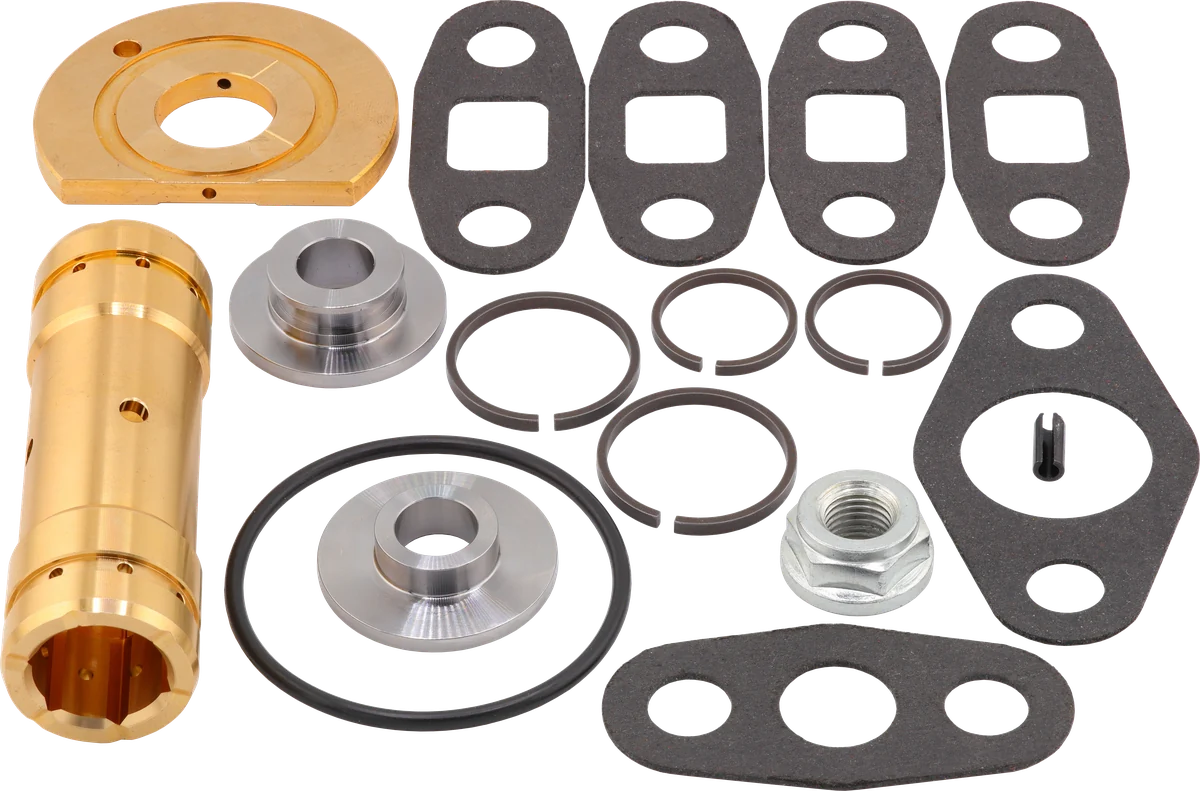
A tired Hino J08 turbo can make a working truck or bus struggle under load, but low power does not automatically mean the turbocharger has failed. Split charge-air hoses, restricted filters, exhaust leaks, and engine problems can produce similar symptoms.
Planning a Hino P11C turbocharger replacement or J08 repair has two parts: identify the exact turbo variant and determine why performance changed. Replacing a damaged unit without correcting its oil supply, airflow, or crankcase pressure problem can damage the replacement.
Understanding the Hino applications
Hino J08 and P11C engines serve demanding diesel applications where sustained load makes reliable airflow and lubrication essential. The LeadTurbo catalog distinguishes J08C and J08E applications and several P11C listings. It also includes N04C turbo and H06CT applications; these are separate engine designations, not interchangeable versions of a J08 turbo.
A turbocharger uses exhaust energy to drive a compressor that supplies additional air to the engine. When airflow falls below what the engine needs for its fueling and load, power can drop and soot production can increase. Bearing damage or oil leakage can turn a performance complaint into a more serious engine problem.
LeadTurbo’s catalog entries are aftermarket replacement products. When determining which turbocharger fits a Hino J08, an engine designation or a similar-looking housing is only a starting point for matching them.
Identify your Hino J08 turbo or P11C unit before ordering
Look for the turbocharger identification plate, attached tag, or engraved identification area, commonly on the compressor housing. Its exact position varies, and installed plumbing or heat shields may obstruct the view. With the engine cool, clean the area gently and photograph all markings.
Record the complete identification, including suffixes. An OE part number identifies an original-equipment service part or assembly specification. A turbo model, such as GT3576 or GT3271LS, identifies a turbo design series; it does not necessarily identify one interchangeable assembly.
The catalog lists GT3576 for HINO J08C applications and GT3271LS for Hino J08E and HINO J08 applications. It also lists GT2259LS for N04C applications and GT2263KLNV for a Hino J05E N04C application. Variants can differ in:
- Housing A/R: The housing passage area relative to its radius affects flow capacity and turbine response.
- Control arrangement: A wastegate bypasses exhaust around the turbine; a free-floating turbo has no wastegate or variable-geometry mechanism; VGT changes turbine inlet geometry. Confirm the actual arrangement rather than inferring it from the engine name.
- Wheel dimensions and trim: Compressor and turbine geometry must match the intended assembly.
- Connections and orientation: Oil feed, oil drain, water connections where fitted, housing orientation, and mounting flanges must suit the installation.
Photograph the inlet and outlet flanges, oil connections, and any actuator alongside the tag. If the tag is unreadable, use the OE part number and physical details to obtain a verified match before ordering.
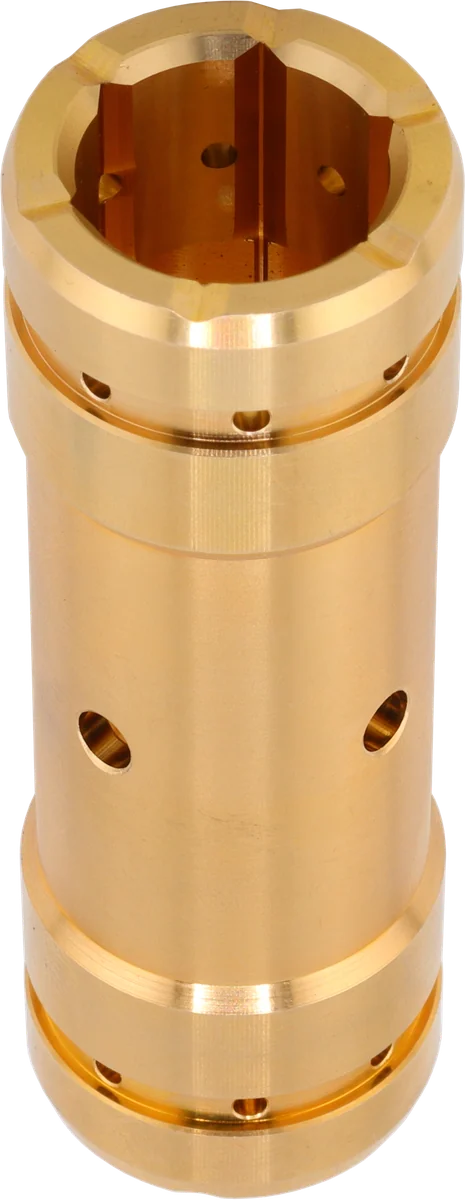
Bearing bore: the inner oil film supports the shaft.
Oil passages: keep the lubrication path clear.
Outer bearing surface: inspect the fit and condition.
Product photograph from 2026. Numbers identify the features explained below.
Representative catalog examples: verify against the data plate
These examples reproduce catalog identifiers and applications. They are identification aids, not an interchangeability chart.
| Part number | Turbo model | Product type | Application |
|---|---|---|---|
| 17201E0A40 | GT3576 | Complete turbocharger | HINO J08C |
| 1760E0200 K | GT3271LS | Complete turbocharger | Hino J08E |
| 24100 4640 | GT3271LS | Complete turbocharger | KOBELCO SK350 8 HINO J08 |
| 447685 0113 | GT3271LS | Turbine housing | KOBELCO SK350 HINO J08E |
| 434292 0007 | GT3576 | Compressor wheel | HINO J08C |
| 451360 0004 | GT3576 | Turbine wheel/shaft | HINO J08C |
| 17201 E0220 RHG6 | — | Complete turbocharger | HINO P11C T1 |
| 17201 E0480 RHG7 | — | Complete turbocharger | HINO P11C |
| 24100 2771 | — | Complete turbocharger | Hino P11C YF67 |
| 17201 E0081 | GT2259LS | Complete turbocharger | Hino N04C TK |
| 433352 0063 | GT2259LS | CHRA/cartridge | HINO N04C Turbocharger Replacement |
| 24100 1690C G RHC7 | — | Complete turbocharger | Hino H06CT (VX29) |
An industrial application containing J08 or J08E does not establish truck or bus fitment. Verify the turbo data-plate number and OE part number even when the listed engine designation matches.
Symptoms, causes, and checks before replacement
Why is my J08 turbocharger losing boost?
Check the air filter, intake ducting, charge-air hoses, clamps, and intercooler first. A split hose or leaking cooler lets compressed air escape. An exhaust leak before the turbine reduces the energy available to drive it.
Inspect for soot around exhaust joints and oil-stained areas around charge-air leaks. Have the charge-air system tested using the applicable service procedure. Fuel delivery faults, inaccurate sensor readings, and engine control limits can also reduce power without a failed turbo.
Black, blue, or white smoke
Black smoke can indicate insufficient air for the fuel being injected, although injection problems can also cause it. Check restrictions and leaks before condemning the compressor.
Blue smoke suggests oil burning. Possible sources include the turbo, crankcase ventilation, and engine wear. White smoke is not a reliable turbo diagnosis; depending on conditions, it may involve unburned fuel, coolant, or condensation.
Consider smoke together with oil consumption, engine behavior, and inspection findings.
Oil leaks and oil in the intake
First distinguish an external pipe or gasket leak from oil passing into the compressor or turbine housing.
Turbo oil control depends on drainage and operating pressure conditions as well as component condition. A restricted drain, excessive crankcase pressure, or unsuitable oil level can cause leakage even when replacing sealing components would not solve the underlying problem.
Check the crankcase breather and measure crankcase pressure where indicated. A light oil film in intake plumbing is not conclusive evidence of turbo failure; pooling oil or rapidly increasing consumption deserves immediate investigation.
Hino J08 turbocharger whine, whistle, and scraping
Some turbo sound is normal. A changed whistle may come from escaping charge air or an exhaust leak. A siren-like whine can accompany rotating-assembly damage or imbalance, while scraping suggests possible wheel contact.
Debris impacts and worn bearings can disturb rotor motion. Sound alone cannot identify the failed component. Stop operation if new noise accompanies heavy smoke, rapid oil loss, or suspected wheel contact.
Shaft play and wheel damage
With the engine stopped and cool, a technician can inspect accessible blades and check shaft movement against the correct specification.
Some journal-bearing turbos have perceptible radial movement without operating oil pressure. Hand feel alone cannot establish serviceability. Excessive axial movement, damaged blades, housing rub marks, or rough rotation require further inspection. Never spin the turbo with compressed air.
Cracked turbine housing or actuator problems
Thermal cycling and excessive exhaust temperature can contribute to turbine-housing cracks. Location, depth, leakage, and distortion determine significance; a qualified inspection should assess whether the housing remains serviceable.
Where an actuator is fitted, check its wiring, hoses, linkage, and commanded operation. Sticking mechanisms or control faults can produce incorrect boost with an otherwise functional rotating assembly. Do not adjust a rod or stop screw to mask an unresolved fault.
Across these symptoms, investigate lubrication. Low oil supply can weaken the protective bearing film, while contaminated oil can abrade bearing surfaces. Correct blocked feeds, unsuitable oil, contamination, and engine wear before installing another turbo.
Hino J08 CHRA vs complete turbocharger and other replacement options
Complete turbocharger: Usually the practical choice when damage affects several components, a housing is unusable, or the existing assembly has an uncertain repair history. Confirm the exact specification and which control components are included.
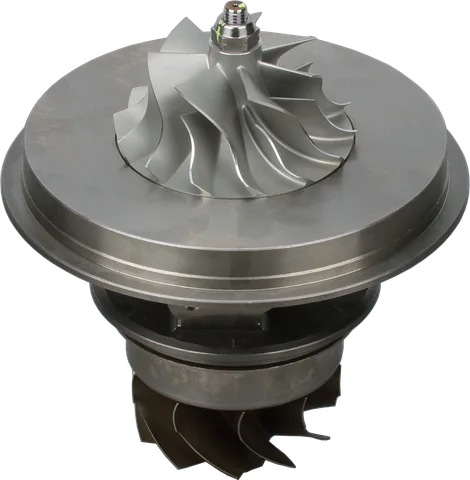
CHRA/cartridge: Replaces the center assembly containing the rotating group and bearings. It can make sense when the correct cartridge is confirmed and the original housings remain dimensionally sound. It will not repair a cracked turbine housing or a defective external actuator.
Repair kit: Appropriate for a rebuild only after inspection shows the reusable parts meet specifications. New bearings and sealing components cannot correct worn bores, shaft damage, or damaged blades. Rebuilding requires suitable measuring equipment and balancing procedures.
Individual components: The catalog summary includes compressor wheels, turbine wheel/shaft assemblies, turbine housings, and bearing housings. These support targeted repairs by a qualified turbo rebuilder. Wheel replacement requires exact dimensional matching and appropriate balancing of the rebuilt rotating assembly.
The catalog summary does not establish that every product type fits every Hino truck turbocharger. Confirm component compatibility separately from complete-assembly fitment.
Installation tips for working diesels
- Find and correct the original cause. Investigate lubrication faults, foreign-object damage, restrictions, and excessive crankcase pressure before fitting the replacement.
- Clean the entire affected air path. Remove intake and intercooler debris and accumulated oil. Replace components that cannot be reliably cleaned. Retained fragments can damage the engine, and accumulated oil can fuel uncontrolled diesel acceleration.
- Inspect the oil feed and drain. Check for coke, restrictions, damaged fittings, and poor drain routing. Replace suspect lines and use the specified oil and filter.
- Use new specified gaskets and seals. Keep debris and excess sealant out of oil passages. Support heavy exhaust sections and align piping without forcing it against the turbo.
- Prime before starting. Follow the turbo supplier’s lubrication instructions and the engine’s approved procedure for establishing oil supply. Do not start a dry bearing assembly.
- Verify control setup. Where electronic actuation is fitted, complete required calibration or relearn procedures. Follow the correct setting procedure for other actuator types.
- Check operation progressively. Verify oil pressure and inspect for oil, coolant where applicable, exhaust, and charge-air leaks. Confirm performance under controlled load and follow the engine’s shutdown guidance after heavy work.
Common Questions
Does every Hino J08 engine use the same turbo?
No. The catalog lists GT3576 units for J08C applications and GT3271LS units for J08E and J08 applications. These model names do not establish interchangeability. Verify the turbo data-plate number, OE part number, connections, and control arrangement before ordering.
How do I identify a Hino P11C turbo?
For Hino P11C turbocharger identification, record every number on the turbo tag and photograph the housings, connections, and any actuator. The catalog includes several P11C entries, so the engine designation alone is insufficient. Match the data-plate number and OE part number before selecting a replacement.
Does a whistling turbo need replacement?
Not necessarily. A new whistle can come from a charge-air leak or an exhaust leak. A rising siren, scraping sound, or noise accompanied by smoke and power loss requires prompt inspection for wheel damage, contact, or bearing problems.
Is oil in the intercooler proof of turbo failure?
No. Oil can enter through crankcase ventilation, while restricted turbo drainage or excessive crankcase pressure can also cause leakage. Pooling oil or increasing consumption needs investigation. Significant accumulated oil must be removed before restarting because a diesel can ingest it as fuel.
Can I install a CHRA instead of a complete turbo?
Only when an exact matching cartridge is confirmed and the reusable housings and control components pass inspection. The catalog includes CHRA products, but that does not establish cartridge availability for every J08 or P11C variant.
Will a repair kit fix a damaged turbo wheel?
No. A repair kit cannot restore damaged blades, a bent shaft, or a cracked housing. Rebuilding requires inspection, dimensional checks, and appropriate balancing. Compare the total repair work with a correctly matched complete replacement.
How does a Hino J08 turbocharger work?
A Hino J08 turbocharger uses exhaust energy to drive a compressor that supplies additional air to the engine. If airflow is too low for the engine’s fueling and load, power can drop and soot production can increase. Check the air filter, charge-air hoses, intercooler, and exhaust joints for restrictions or leaks.
For Hino J08 turbo or P11C fitment, send the turbo data-plate number, OE part number, engine designation, and clear photos to LeadTurbo.