For an owner, the practical question is whether to idle before switching off. For a mechanic, it is why a center housing contains hard black deposits and damaged bearings. Both questions involve heat management, but deposits alone cannot prove that a driver caused the failure.
What Is Turbo Oil Coking?
Turbo oil coking is the formation of carbonaceous deposits when lubricating oil suffers severe thermal degradation. Heat and oxidation can also produce sticky varnish. Inside a turbocharger, these residues may collect in oil passages, bearing areas, drain cavities, and seal-ring grooves.
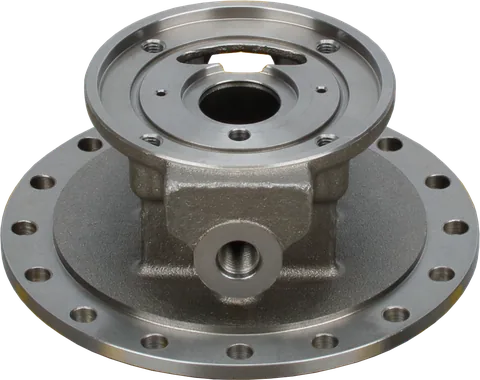
The center housing contains the shaft’s bearing system and sits beside the hot turbine housing. Oil flowing through it lubricates the bearings and carries heat away. When that flow stops, residual oil films and small pockets of trapped oil can remain against hot metal.
Given enough temperature and exposure, that oil degrades instead of remaining a useful lubricant. Repeated heating can build deposits gradually.
Dark oil alone is not evidence of coking. Neither is every dark stain inside a used turbo. Hard deposits, restricted passages, and associated component damage provide more useful evidence than color by itself.
Why Turbocharger Heat Soak After Shutdown Matters
During towing, a long climb, or sustained hard acceleration, exhaust gas transfers substantial heat into the turbine wheel and housing. Reducing engine load lowers the incoming heat, but the metal does not cool immediately.
After shutdown, stored heat continues moving into cooler neighboring components, including the center housing. This is heat soak. Some internal areas can temporarily become hotter even though combustion has stopped.
Meanwhile, the engine-driven oil pump has stopped supplying fresh oil. Any engine-driven coolant pump also stops. Residual oil may therefore experience substantial heat without the flow that previously removed it.
This explains why the operating conditions immediately before parking matter. Pulling straight into a stopping area after a loaded climb creates a different thermal situation from arriving after several minutes of gentle neighborhood driving.
One hot shutdown does not establish that a turbo is damaged. Coking risk reflects the combination of heat exposure, oil condition, oil circulation, cooling design, and repeated operating habits.
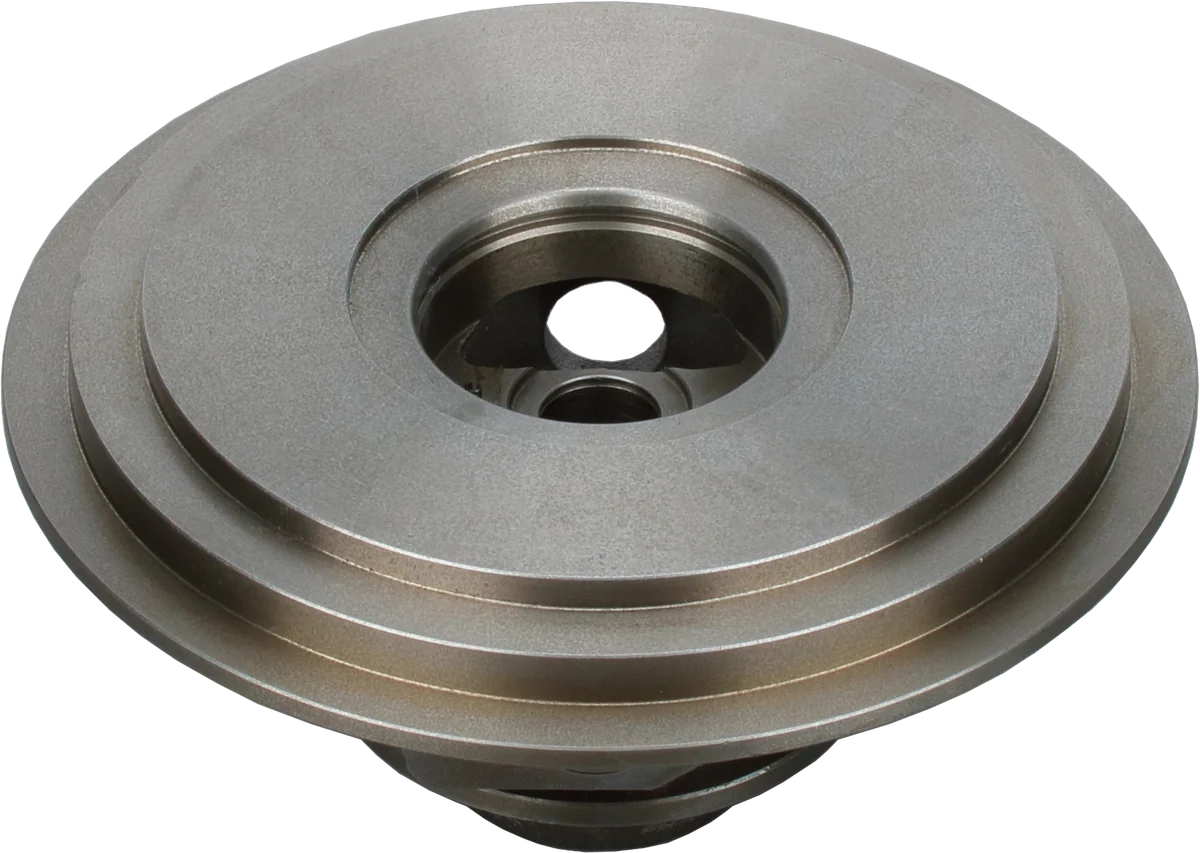
Central bore: houses the shaft and bearing system.
Mating surface: check cleanliness and damage.
Product photograph from 2026. Numbers identify the features explained below.
How Deposits Damage Bearings and Seals
Deposits can affect both sides of the turbo’s oil circuit: the supply that feeds the bearings and the return that lets oil leave.
- Restricted oil feed: Deposits in a feed connection or internal passage can reduce local oil delivery. Bearings lose lubrication and cooling, increasing the risk of metal contact.
- Restricted oil drain: Accumulation in the drain cavity or return line can impede drainage. Oil may back up inside the housing and escape toward the compressor or turbine.
- Stuck seal rings: Where piston-ring-style seals are used, deposits can interfere with ring movement and the designed sealing clearances. These metal rings are not conventional rubber shaft seals.
- Bearing and shaft scoring: Loose deposit fragments can contribute to abrasive damage. Restricted flow can also collapse the protective oil film, allowing direct contact that scores bearing surfaces and shaft journals.
These problems can reinforce one another. Reduced flow creates more heat, damaged surfaces generate debris, and additional deposits further interfere with circulation.
Oil leakage does not automatically mean the seal rings need replacing. Drain restrictions, crankcase pressure, and other system faults can produce similar symptoms. Our guide to turbocharger oil leak causes explains those checks.
What Modern Cooling Systems Change
Many modern turbochargers have water-cooled center housings. Coolant helps control bearing-housing temperature during operation and limits the temperature rise associated with heat soak.
Some installations support natural coolant circulation after shutdown through a thermosiphon effect: heated coolant rises and cooler coolant replaces it. This depends on the intended coolant routing and installation.
Other vehicles use an electric after-run coolant pump to continue circulation when the engine is off. Its operation may depend on temperatures and control logic. An electric coolant pump does not necessarily keep engine oil circulating.
These features reduce the need for a blanket idle routine on every trip. They do not make a turbo immune to dirty oil, a blocked feed, poor drainage, low coolant, or cooling-system faults.
If the vehicle has an after-run system, follow its service procedure when checking operation. Hearing a fan after shutdown does not, by itself, confirm that coolant is circulating through the turbo.
Practical Turbo Cool Down Guidance
Begin with the owner’s manual. Turbocharger construction, cooling systems, and vehicle duty vary too much for one universal shutdown time.
The useful habit is to reduce load before the final stop, especially after towing or hard driving. A gentle final stretch allows heat input to fall while oil and coolant still circulate. If the manufacturer calls for an idle period, follow it.
| Driving situation | Practical approach | Reason |
|---|---|---|
| Ordinary driving with a gentle approach to parking | Follow the normal OEM shutdown procedure | The low-load approach has already reduced heat input |
| Highway towing followed by an immediate stop | Ease load beforehand when practical; follow the specified idle procedure | The turbine housing may retain substantial heat |
| Long uphill pull ending at a parking area | Allow the manufacturer’s recommended cooling period | High load can leave significant stored heat |
| Sustained hard driving | Finish with low-load driving where safe, then follow OEM guidance | Circulation continues while exhaust heat falls |
| Suspected overheating or lubrication fault | Follow the vehicle’s warning instructions and diagnose the fault | A cool-down routine cannot correct failed lubrication or cooling |
Do not rev the engine immediately before switching it off. It provides no useful cooling benefit.
Likewise, avoid treating the coolant gauge as a turbo temperature gauge. Normal engine coolant temperature does not reveal the temperature of oil films near the turbine-side bearing area.
When comparing a turbo timer vs idling manually, remember that a timer simply automates a period of engine operation after the driver initiates shutdown. It is not a substitute for the correct shutdown procedure or a functioning oil system.
Oil Quality and Service Intervals Matter
Cool-down habits cannot compensate for unsuitable or badly degraded oil.
Choose oil that meets the engine manufacturer’s required viscosity and approvals. The viscosity printed on the bottle is only part of the specification; oil formulation also affects oxidation resistance, deposit control, and performance under heat.
An approved synthetic oil can help resist thermal degradation, but “synthetic” is not permission to extend service indefinitely. Nor should an owner choose a thicker oil simply because the turbo runs hot. The engine and turbo oil circuit are designed around particular lubricant requirements.
For pickups used for towing and vehicles exposed to demanding duty, check whether the manufacturer specifies a severe-service schedule. Maintain the correct oil level and use the specified filter.
Fuel dilution, coolant contamination, and excessive soot loading can compromise lubricant performance. Investigate those conditions rather than repeatedly changing oil without addressing their cause. See what oil a turbocharged engine needs for selection guidance.
Signs of Coking at Teardown
Potential turbocharger oil coking symptoms include smoke, oil consumption, and bearing noise; these can justify inspection, but none uniquely identifies coking. A useful teardown documents deposits before cleaning and examines the complete oil path.
Inspection points include:
- Hard, baked deposits around the turbine-side bearing area or seal-ring groove.
- Sticky varnish or heavy deposits inside the bearing housing.
- Narrowed oil passages, obstructed feed fittings, or deposits inside a heat-exposed supply line.
- Carbon accumulation in the drain cavity and return connection.
- Seal rings stuck in their grooves, with deposits interfering with their movement.
- Scored journals, damaged bearings, or heat discoloration alongside evidence of restricted lubrication.
Exhaust-side soot is not automatically oil coke. Location, texture, and the condition of adjacent oil passages matter. Similarly, scoring can result from unrelated contamination or oil starvation.
Record the oil-service history, recent operating conditions, feed and drain condition, and cooling-system findings. This helps distinguish a likely cause from damage that developed later in the failure.
Follow a structured turbocharger diagnosis before replacement. If deposits obstruct passages or accompany bearing damage, use the applicable service limits to decide whether the assembly can be rebuilt or needs replacement.
Scraping visible carbon away does not establish that hidden passages are clear or bearing surfaces remain serviceable.
How to Prevent Turbocharger Oil Coking
Preventing repeat turbo oil coking means controlling heat and maintaining the oil circuit together.
- Plan the final approach: Reduce load before parking after towing, climbing, or sustained hard driving.
- Follow OEM shutdown guidance: Use the procedure for the specific vehicle and operating conditions.
- Use approved oil: Match the required viscosity and approvals, and maintain the correct level.
- Keep service current: Follow the applicable interval, including severe-service requirements when relevant.
- Maintain cooling: Address leaks, coolant problems, and confirmed after-run pump faults.
- Check feed and return paths: Correct damaged lines, restrictions, routing problems, and crankcase ventilation faults.
- Fix the cause before replacement: Inspect supporting systems and follow required priming and installation procedures.
For a replacement job, work through what to check before installing a replacement turbocharger. A new center assembly still depends on the vehicle supplying clean oil and allowing it to drain freely.
Common Questions
Do I need to idle before every shutdown?
Not necessarily. Normal driving followed by a gentle approach to parking may already reduce turbo heat sufficiently. After towing, climbing, or sustained hard driving, follow the vehicle manufacturer’s cool-down instructions. There is no single idle time that suits every turbo and operating condition.
How long should a turbocharger cool down after towing?
Use the procedure in your owner’s manual. Required cooling depends on recent load, the turbo’s design, and operating conditions. Ease off the load before stopping when practical, then use any specified idle period. A normal coolant gauge reading does not establish the turbo’s internal temperature.
Does a water-cooled turbo prevent oil coking?
Water cooling reduces heat soak in the center housing, but it does not make coking impossible. Protection depends on the cooling system’s condition and design. Correct oil, adequate oil flow, and appropriate maintenance still matter.
Will synthetic oil eliminate coking?
No. An approved synthetic oil can offer strong resistance to heat and oxidation, but it can still degrade under excessive heat or extended service. Use the required viscosity and manufacturer approvals, maintain the oil level, and follow the applicable service interval.
Do I need a turbo timer?
A turbo timer is not automatically necessary. It keeps the engine running for a preset period, but it cannot assess every heat condition or repair lubrication faults. Start with the manufacturer’s shutdown guidance and verify compatibility before considering an aftermarket timer.
Can an oil change remove existing turbo coke?
An oil change renews the lubricant but should not be expected to clear hardened deposits from restricted passages or stuck seal rings. Suspected turbo oil coking requires inspection of the turbo and its oil circuit. Cleaning, component replacement, or turbo replacement depends on the damage found.
Does turbocharger oil coking require replacement?
Not necessarily. Inspect the turbo and its oil circuit. The damage and applicable service limits determine whether cleaning, rebuilding, component replacement, or turbo replacement is needed.
Need help identifying a replacement? Contact LeadTurbo with your turbo part number, vehicle details, and symptoms.